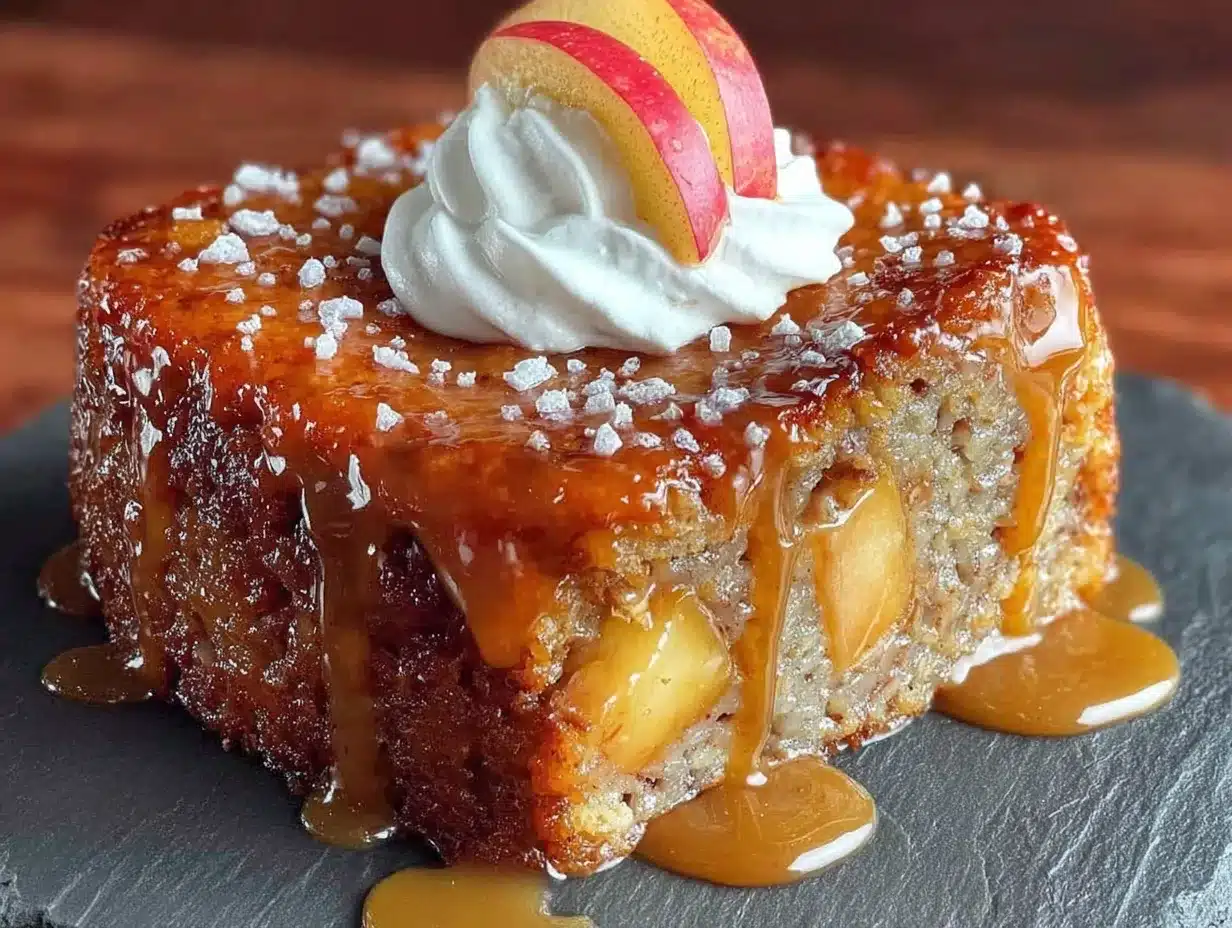
The way the caramel catches the light on this apple cider cake — that amber-gold slide, pooling in the crevices and dripping slow down the sides — is what I made this for, honestly. Everything else is secondary. I mean, the cake itself is tender and fine-crumbed, with that faint tang of reduced apple cider running through every bite. But the glaze? That’s the main character. It’s not a thick frosting situation, more of a loose, buttery ribbon that soaks into the top layer just enough to make it glisten.
I spent a whole weekend last October trying to get this right. The first batch of glaze seized up on me (I looked away for thirty seconds, and suddenly I had caramel rocks). The second cake came out dry because I skimped on the oil, thinking applesauce would save it — nope. But the third try, the one where I finally let the cider reduce to almost a syrup before adding it to the batter, and I poured the caramel while the cake was still warm? That one disappeared in about twelve hours. My husband ate a slice at midnight standing over the kitchen sink, which is how I know something’s actually good.
This recipe isn’t fussy. It’s the kind of cake you make on a Sunday afternoon when you want the house to smell like fall but you don’t feel like pulling out the stand mixer and dirtying every bowl you own. It comes together in one bowl, bakes up tall and golden, and then you drown it in that salted caramel glaze and suddenly it’s the star of the table. I think that’s why it stuck with me — because it doesn’t try hard, but it delivers every single time.
Why You’ll Love This Recipe
I’ve tested this apple cider cake more times than I care to admit, and here’s what I’ve learned: it’s the kind of dessert that makes people close their eyes and go quiet for a second. That’s the reaction you want. And the best part? It’s surprisingly simple to pull off.
- One-Bowl Wonder: No need to cream butter and sugar separately or whip egg whites. Everything gets mixed in a single bowl, and the batter comes together in under ten minutes. Less dishes, more time to enjoy that caramel.
- Real Apple Cider Flavor: We’re not using extract here. The cider gets reduced on the stove until it’s concentrated and almost syrupy, which gives the cake a deep, tangy apple flavor that you just can’t fake. It’s the same trick I use in my salted caramel apple upside-down cake, and it works like magic.
- That Salted Caramel Glaze: It’s loose, it’s buttery, it’s salty-sweet, and it seeps into the cake’s top crumb just enough to make every bite interesting. No stand mixer required — just a saucepan and a whisk.
- Perfect for Fall Gatherings: Whether it’s a casual Sunday dinner or a Thanksgiving dessert table, this cake fits right in. It’s rustic enough for a weekday treat but impressive enough to serve guests. Pair it with a warm mug of creamy brown sugar cinnamon pumpkin chai latte for the ultimate autumn moment.
- Crowd-Pleaser: I’ve brought this to potlucks and watched it disappear before the coffee was even poured. Kids love it, adults love it, and people always ask for the recipe.
This isn’t just another apple cake. It’s the one with the glossy, drip-worthy caramel and the cider flavor that tastes like you spent hours on it — when really, you just let the ingredients do the work.
What Ingredients You Will Need
This recipe relies on simple, pantry-friendly ingredients, but there are a few key players that make all the difference. Let’s walk through what you’ll need and why each one matters.
For the Apple Cider Cake:
- Apple cider (2 cups) — Not apple juice. You want the real stuff, unfiltered if you can find it. We’ll reduce it on the stove to concentrate the flavor, so don’t skip this step. I usually buy a half-gallon and use the extra for drinking or for my cozy cinnamon apple cider bar setup.
- All-purpose flour (2 ½ cups) — Spoon and level it. Scooping straight from the bag packs in too much flour and makes the cake dry.
- Granulated sugar (1 cup) — Adds sweetness and helps with that tender crumb.
- Light brown sugar (½ cup, packed) — Adds moisture and a hint of molasses that plays nicely with the apple cider.
- Vegetable oil (½ cup) — Keeps the cake incredibly moist. You can use canola or melted coconut oil too.
- Large eggs (2, room temperature) — Room-temperature eggs emulsify better into the batter, giving you a more even crumb.
- Vanilla extract (2 teaspoons) — Pure vanilla, not imitation. It rounds out the apple and caramel flavors beautifully.
- Baking soda (1 ½ teaspoons) — Helps the cake rise and gives it a soft, tender texture.
- Baking powder (½ teaspoon) — Adds a little extra lift.
- Salt (1 teaspoon) — Balances the sweetness and enhances the apple flavor.
- Ground cinnamon (2 teaspoons) — Non-negotiable. It’s the warm, cozy note that makes this taste like fall.
- Ground nutmeg (½ teaspoon) — Freshly grated if you have it. It makes a difference.
- Ground allspice (¼ teaspoon) — Just a pinch. It adds complexity without being loud about it.
For the Salted Caramel Glaze:
- Unsalted butter (6 tablespoons) — Use good butter here. It’s the base of the caramel, so quality matters.
- Light brown sugar (½ cup, packed) — The molasses in brown sugar gives the caramel its deep color and flavor.
- Heavy cream (¼ cup) — Don’t substitute with milk or half-and-half. The fat content is what makes the glaze silky.
- Vanilla extract (1 teaspoon) — Adds warmth and depth.
- Flaky sea salt (½ teaspoon, plus more for sprinkling) — Maldon or another flaky salt is ideal. It gives you those little bursts of saltiness that make the caramel sing.
Ingredient Tips: I recommend using a brand like Musselman’s or Martinelli’s for the apple cider — they’re widely available and consistently good. For the flaky sea salt, Maldon is my go-to. And if you’re out of brown sugar for the glaze, you can make a quick substitute by mixing ½ cup granulated sugar with 1 tablespoon molasses.
Equipment Needed
You don’t need a fully stocked bakery kitchen for this one. Here’s what you’ll actually use:
- 9-inch round cake pan — A standard metal or nonstick pan works great. Glass pans can cause the edges to overbake, so stick with metal if you can.
- Parchment paper — Cut a circle for the bottom of the pan. This guarantees the cake releases cleanly every time.
- Medium saucepan — For reducing the apple cider and making the caramel glaze. A heavy-bottomed pan is best to prevent scorching.
- Large mixing bowl — One bowl for the whole batter. I use a glass bowl, but any large bowl works.
- Whisk — For mixing the dry ingredients and the wet ingredients together.
- Rubber spatula — For scraping down the sides of the bowl and folding the batter.
- Cooling rack — Essential for even cooling. If you don’t have one, you can use the stovetop grates (just clean them first).
- Measuring cups and spoons — For accuracy. Baking is a science, after all.
Budget-Friendly Tip: If you don’t own a 9-inch round pan, an 8-inch square baking dish works too — just check for doneness a few minutes earlier since the batter will be thicker.
Preparation Method
Let’s get baking. I’ve broken this down into clear steps so you can follow along without any guesswork.
- Reduce the apple cider. Pour 2 cups of apple cider into a medium saucepan and bring it to a boil over medium-high heat. Once boiling, reduce the heat to medium-low and let it simmer, stirring occasionally, until it reduces to about ½ cup. This takes about 15-20 minutes. You’re looking for a syrupy consistency — it should coat the back of a spoon. Set it aside to cool slightly while you prep the rest.
- Preheat and prep the pan. Preheat your oven to 350°F (175°C). Grease a 9-inch round cake pan with butter or nonstick spray, then line the bottom with a circle of parchment paper. This step is non-negotiable if you want the cake to come out clean.
- Mix the dry ingredients. In a large mixing bowl, whisk together the flour, granulated sugar, brown sugar, baking soda, baking powder, salt, cinnamon, nutmeg, and allspice. Make sure there are no lumps — especially from the brown sugar.
- Add the wet ingredients. Make a well in the center of the dry ingredients and add the reduced apple cider, vegetable oil, eggs, and vanilla extract. Whisk everything together until just combined. Don’t overmix — a few small lumps are fine. Overmixing will make the cake tough.
- Pour and bake. Pour the batter into the prepared pan and smooth the top with a spatula. Bake for 35-40 minutes, or until a toothpick inserted into the center comes out clean or with a few moist crumbs. The top should be golden brown and spring back when lightly touched.
- Cool the cake. Let the cake cool in the pan for 10 minutes, then run a knife around the edges and invert it onto a cooling rack. Remove the parchment paper and let it cool completely. This is important — if the cake is too warm when you add the glaze, it’ll all soak in and you’ll lose that glossy finish.
- Make the salted caramel glaze. While the cake cools, make the glaze. In a small saucepan, melt the butter over medium heat. Add the brown sugar and heavy cream, and whisk until smooth. Bring the mixture to a gentle simmer and cook for 2-3 minutes, stirring constantly, until it thickens slightly. Remove from heat and stir in the vanilla and flaky sea salt.
- Glaze the cake. Let the glaze cool for about 5 minutes — it should be warm but not hot. Place the cooled cake on a serving plate or cake stand. Slowly pour the glaze over the center of the cake, letting it drip down the sides. Use a spatula to gently spread it if needed. Sprinkle a little extra flaky sea salt on top while the glaze is still wet.
- Let it set. Allow the glaze to set for at least 15 minutes before slicing. This gives it time to firm up just enough so it doesn’t run off the plate.
Cooking Tips & Techniques
I’ve made this cake enough times to know where things can go sideways. Here are the tips I wish someone had told me the first time.
Don’t rush the cider reduction. I know it’s tempting to crank up the heat and get it done faster, but you’ll end up with burnt cider and a bitter taste. Keep it at a gentle simmer and stir every few minutes. You’ll know it’s ready when it’s thick enough to leave a trail on the bottom of the pan when you stir.
Room-temperature eggs matter. Cold eggs can cause the batter to seize up, especially when mixed with oil. If you forgot to take them out of the fridge, place them in a bowl of warm water for 5 minutes before using. Same trick works for the ultra-moist one-bowl banana bread — it’s a game-changer.
Check for doneness early. Every oven runs differently. Start checking your cake at the 30-minute mark. If the top is browning too fast but the center isn’t done yet, tent the pan loosely with foil for the last 5-10 minutes.
The glaze consistency is key. If your caramel glaze is too thick, add a splash of heavy cream and whisk it in. If it’s too thin, let it simmer for another minute. The goal is a pourable consistency that still holds its shape slightly on the cake.
Let the cake cool completely. I learned this the hard way. The first time I made this, I poured the glaze onto a still-warm cake and ended up with a soggy top and a puddle of caramel on the plate. Patience pays off here.
Variations & Adaptations
One of the best things about this apple cider cake is how adaptable it is. Here are a few ways to make it your own.
- Gluten-Free Version: Substitute the all-purpose flour with a 1:1 gluten-free baking flour blend (I like King Arthur’s). Add ½ teaspoon of xanthan gum if your blend doesn’t already include it. The texture will be slightly more tender, but it’s still delicious.
- Dairy-Free Option: Use a neutral oil like avocado or canola instead of butter for greasing the pan. For the glaze, swap the butter with vegan butter and the heavy cream with full-fat coconut cream. The flavor will be slightly different, but the caramel still works beautifully.
- Spice It Up: Add ½ teaspoon of ground ginger or cardamom to the dry ingredients for a more complex spice profile. I’ve done this for holiday gatherings and it’s always a hit.
- Add Texture: Fold in ½ cup of chopped toasted pecans or walnuts to the batter before baking. The crunch is a nice contrast to the tender crumb and silky glaze.
- Bake as a Loaf: Pour the batter into a greased 9×5-inch loaf pan and bake for 45-50 minutes. The glaze amount stays the same — just drizzle it over the top and let it drip down the sides.
I once made this with a splash of bourbon added to the glaze (about a tablespoon, stirred in after removing it from the heat). It was for a friendsgiving dinner, and let’s just say the cake disappeared faster than the turkey. If you’re feeling adventurous, give it a try.
Serving & Storage Suggestions
This cake is best served at room temperature, when the glaze is set but still soft enough to give a little when you bite into it. I like to slice it into wedges and serve it on a simple plate — no need for extra frills. A dollop of lightly sweetened whipped cream or a scoop of vanilla ice cream on the side is never a bad idea, though.
Storage: Keep the cake covered at room temperature for up to 2 days. The glaze will stay glossy and the cake will remain moist. If your kitchen runs warm, you can store it in the fridge, but let it come back to room temperature before serving — the texture is much better that way.
Freezing: You can freeze the unglazed cake for up to 3 months. Wrap it tightly in plastic wrap and then foil. When you’re ready to serve, thaw it overnight in the fridge, bring it to room temperature, and then make the glaze fresh. I don’t recommend freezing the cake after glazing — the caramel can get grainy when thawed.
Reheating: If you want a warm slice, pop it in the microwave for about 15 seconds. The glaze will soften and get a little melty, which is honestly a wonderful thing. You can also reheat slices in a 300°F oven for 5-7 minutes.
Flavor Development: Honestly, this cake tastes even better on day two. The cider flavor deepens as it sits, and the glaze sinks into the crumb just a little more. If you can resist eating it all on day one, you’re in for a treat.
Nutritional Information & Benefits
Let’s be real — this is a dessert, and it’s meant to be enjoyed. But here’s a rough estimate of what you’re looking at per slice (based on 12 servings):
- Calories: ~380
- Fat: 18g
- Carbohydrates: 52g
- Sugar: 35g
- Protein: 4g
- Fiber: 1g
Health Highlights: Apple cider contains antioxidants called polyphenols, which are linked to various health benefits. Cinnamon has anti-inflammatory properties and can help regulate blood sugar. And while the caramel glaze isn’t exactly a health food, the flaky sea salt on top means you’re getting a little electrolyte boost — at least, that’s what I tell myself.
Dietary Notes: This recipe contains gluten, dairy, and eggs. For gluten-free and dairy-free adaptations, see the variations section above. It’s also naturally nut-free if you skip the optional pecans or walnuts.
I believe in balance. This cake is for the days when you want something indulgent and cozy, and it delivers on that front without apology.
Conclusion
This apple cider cake with salted caramel glaze is the kind of recipe that makes you look forward to fall all year. It’s simple enough for a Tuesday night baking project, but impressive enough to bring to a holiday table. The reduced cider gives it a depth of flavor that no extract can replicate, and that glossy, salty-sweet caramel on top? It’s the finishing touch that turns a good cake into a memorable one.
I hope you give this recipe a try and make it your own. Maybe you’ll add a little extra cinnamon, or swap in pecans, or pour the glaze on a little thicker than I do. That’s the beauty of baking — it’s flexible, and it’s personal. When you make it, I’d love to hear how it turned out. Drop a comment below or tag me in your photos. And if you’re looking for more cozy fall desserts, my cozy brown butter apple crisp is another favorite that never lasts long around here.
Happy baking, friends. Go make something that makes your kitchen smell amazing.
Frequently Asked Questions
Can I use apple juice instead of apple cider?
Technically yes, but the flavor won’t be as rich or tangy. Apple juice is sweeter and more mild, so the cake will taste less distinctly “apple cider.” If that’s all you have, go for it — just know the result will be different.
Why did my caramel glaze turn out grainy?
Grainy caramel usually happens when the sugar crystallizes. To avoid this, make sure your saucepan is clean (no leftover residue), and stir gently once the sugar is dissolved. If it does get grainy, you can try whisking in a tablespoon of heavy cream to smooth it out.
Can I make this cake in advance?
Absolutely. You can bake the cake a day ahead, wrap it well, and store it at room temperature. Make the glaze fresh on the day you plan to serve it for the best texture and appearance.
How do I know when the apple cider is reduced enough?
You’re looking for about ½ cup of syrupy liquid. It should coat the back of a spoon and have a slightly thicker consistency than maple syrup. If you tilt the pan, it should move slowly.
Can I double this recipe?
Yes! Double all the ingredients and bake in two 9-inch pans. The baking time stays roughly the same — just check for doneness a few minutes earlier since the pans might bake faster side by side.
Pin This Recipe!
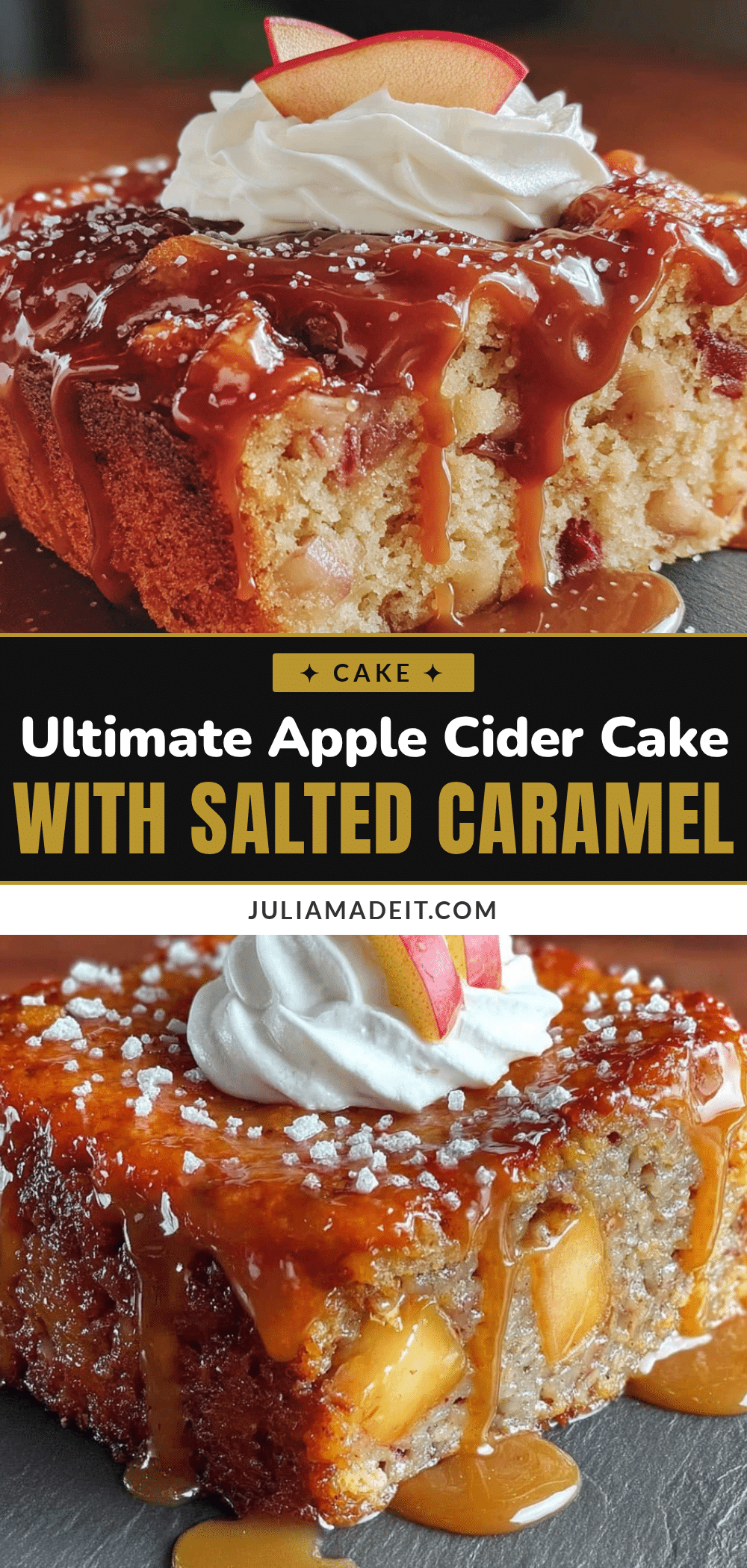
Best Apple Cider Cake with Easy Salted Caramel Glaze

A tender, fine-crumbed apple cider cake with a deep, tangy apple flavor from reduced cider, topped with a glossy, buttery salted caramel glaze. This one-bowl wonder is perfect for fall gatherings and delivers impressive results with minimal effort.
- Prep Time: 15 minutes
- Cook Time: 35-40 minutes
- Total Time: 1 hour 10 minutes (including cooling and glaze setting)
- Yield: 12 servings 1x
- Category: Dessert
- Cuisine: American
Ingredients
- 2 cups apple cider (unfiltered, if possible)
- 2 ½ cups all-purpose flour (spooned and leveled)
- 1 cup granulated sugar
- ½ cup light brown sugar (packed)
- ½ cup vegetable oil (or canola or melted coconut oil)
- 2 large eggs (room temperature)
- 2 teaspoons vanilla extract (pure)
- 1 ½ teaspoons baking soda
- ½ teaspoon baking powder
- 1 teaspoon salt
- 2 teaspoons ground cinnamon
- ½ teaspoon ground nutmeg (freshly grated if possible)
- ¼ teaspoon ground allspice
- 6 tablespoons unsalted butter (for glaze)
- ½ cup light brown sugar (packed, for glaze)
- ¼ cup heavy cream (for glaze)
- 1 teaspoon vanilla extract (for glaze)
- ½ teaspoon flaky sea salt (plus more for sprinkling, for glaze)
Instructions
- Reduce the apple cider: Pour 2 cups of apple cider into a medium saucepan and bring to a boil over medium-high heat. Reduce heat to medium-low and simmer, stirring occasionally, until reduced to about ½ cup (15-20 minutes). It should be syrupy and coat the back of a spoon. Set aside to cool slightly.
- Preheat and prep the pan: Preheat oven to 350°F (175°C). Grease a 9-inch round cake pan with butter or nonstick spray, then line the bottom with a circle of parchment paper.
- Mix the dry ingredients: In a large mixing bowl, whisk together flour, granulated sugar, brown sugar, baking soda, baking powder, salt, cinnamon, nutmeg, and allspice until no lumps remain.
- Add the wet ingredients: Make a well in the center of the dry ingredients and add the reduced apple cider, vegetable oil, eggs, and vanilla extract. Whisk until just combined (a few small lumps are fine). Do not overmix.
- Pour and bake: Pour the batter into the prepared pan and smooth the top with a spatula. Bake for 35-40 minutes, or until a toothpick inserted into the center comes out clean or with a few moist crumbs. The top should be golden brown and spring back when lightly touched.
- Cool the cake: Let the cake cool in the pan for 10 minutes, then run a knife around the edges and invert onto a cooling rack. Remove the parchment paper and let cool completely.
- Make the salted caramel glaze: In a small saucepan, melt the butter over medium heat. Add the brown sugar and heavy cream, whisking until smooth. Bring to a gentle simmer and cook for 2-3 minutes, stirring constantly, until slightly thickened. Remove from heat and stir in vanilla and flaky sea salt.
- Glaze the cake: Let the glaze cool for about 5 minutes (it should be warm but not hot). Place the cooled cake on a serving plate or cake stand. Slowly pour the glaze over the center, letting it drip down the sides. Use a spatula to gently spread if needed. Sprinkle extra flaky sea salt on top while the glaze is still wet.
- Let it set: Allow the glaze to set for at least 15 minutes before slicing.
Notes
Don’t rush the cider reduction; keep at a gentle simmer to avoid burning. Room-temperature eggs are important for proper emulsification. Check for doneness at 30 minutes. For the glaze, if too thick, add a splash of heavy cream; if too thin, simmer another minute. Let the cake cool completely before glazing to avoid a soggy top. The cake tastes even better on day two as the cider flavor deepens.
Nutrition
- Serving Size: 1 slice
- Calories: 380
- Sugar: 35
- Sodium: 320
- Fat: 18
- Saturated Fat: 8
- Carbohydrates: 52
- Fiber: 1
- Protein: 4
Keywords: apple cider cake, salted caramel glaze, fall dessert, one-bowl cake, apple cake, caramel cake, easy cake recipe