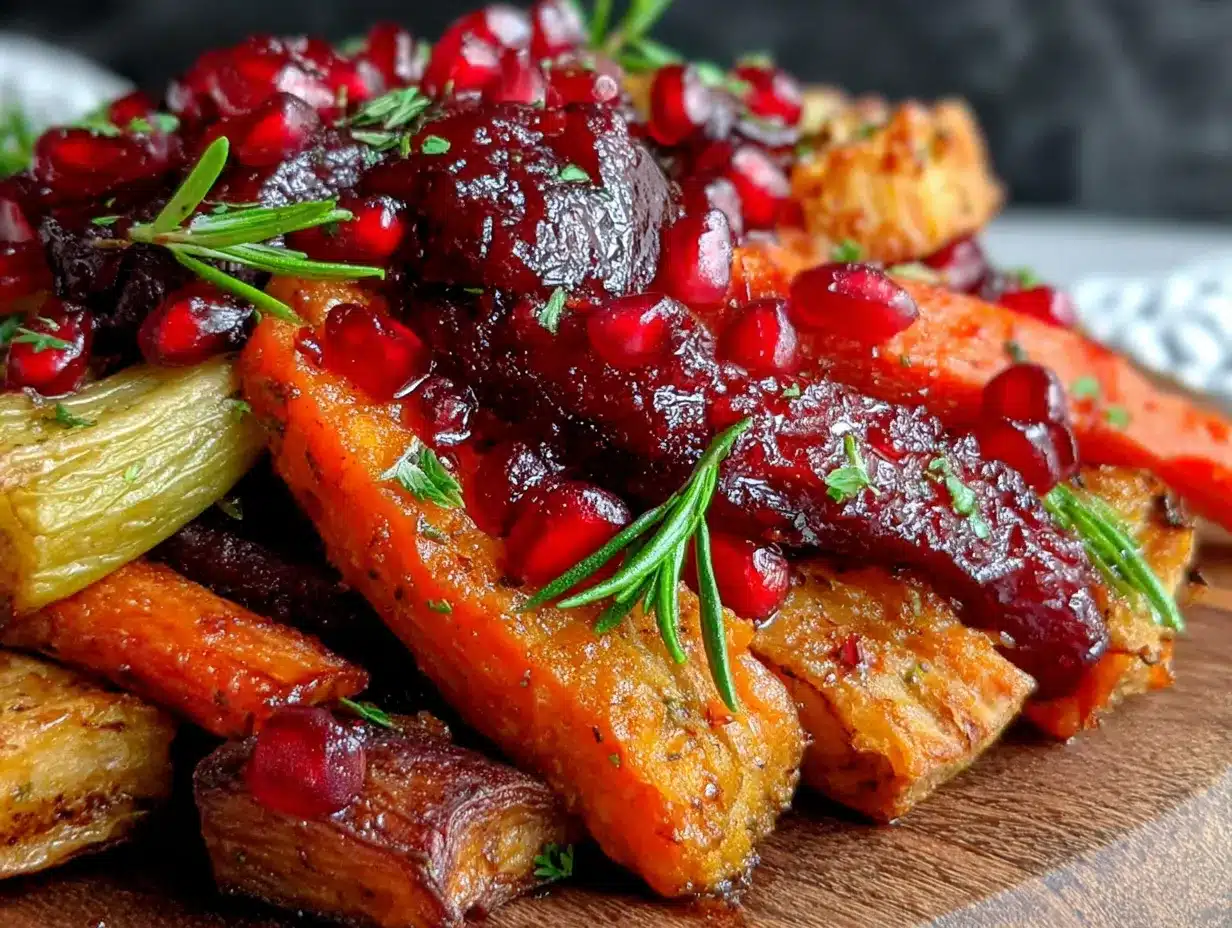
My neighbor Maria wasn’t trying to impress me. I’d stopped by to borrow a wrench—don’t ask—and this smell hit me before I even got past her screen door. Something sweet and caramelized, but not dessert. Something savory, but not heavy. She was standing there in her gardening clothes, pulling a sheet pan out of the oven with these roasted vegetables that looked like jewels. Red and orange and deep purple, all shiny and sticky. “Oh, those? Just something I threw together for the kids,” she said, shrugging. She handed me a fork and walked off to water her tomatoes.
One bite and I honestly forgot why I’d come over. The vegetables were tender in that perfect roasted way, but there was this tangy-sweet glaze that made them taste almost like candy. And the pomegranate seeds on top? They popped in my mouth like little flavor bombs. I stood there in her kitchen, eating straight off the pan like some kind of wild animal, while she yelled through the window about her hydrangeas. Maybe you’ve been there—that moment when you realize someone’s casual Tuesday dinner is about to change your whole cooking routine.
I asked for the recipe, obviously. She kind of waved her hand and said, “It’s nothing, really.” But it wasn’t nothing. It was the kind of nothing that makes you wonder why you’ve been working so hard on dinner all these years. I’ve tweaked it a bit since that afternoon—added a little more tang, tested it on my own picky eaters, figured out the timing so the glaze gets that perfect sticky finish without burning. This is the version that finally made my kids ask for seconds of vegetables. Vegetables, people. That’s not nothing.
Why You’ll Love This Recipe
Let me be straight with you—getting kids to eat roasted vegetables can feel like a negotiation you’re always losing. I’ve been there, standing over a pan of perfectly caramelized carrots while my youngest pushes them around her plate like they’re evidence of a crime. But this recipe? It’s different. The pomegranate glaze does something magical. It’s sweet enough to trick little taste buds, but tangy enough that us grown-ups actually want to eat it too.
- Kid-Approved Magic: The glaze tastes like a treat, so kids don’t realize they’re eating a plate of nutrient-packed root vegetables. My niece asked if she could have “those red candy things” for dessert.
- Simple Ingredients: You probably have most of this stuff already. Pomegranate juice is easy to find, and the rest is pantry staples. No fancy trips to specialty stores.
- Perfect for Family Dinners: This dish works on a busy Tuesday or a holiday table. It’s fancy enough for guests, simple enough for a Tuesday meltdown.
- Crowd-Pleaser: I’ve served this at three different family gatherings now, and every time someone asks for the recipe. Even my brother-in-law who “doesn’t do vegetables” went back for seconds.
- Unbelievably Delicious: The combination of sweet glaze, roasted caramelization, and those little bursts of tart pomegranate seeds is honestly addictive. I’ve eaten this cold from the fridge at 10 p.m. more times than I care to admit.
What makes this different from every other roasted vegetable recipe out there? It’s the glaze, hands down. Most recipes just toss veggies in oil and hope for the best. This one builds layers of flavor—a reduction of pomegranate juice with a little honey and balsamic that creates this sticky, glossy coating. The vegetables caramelize beautifully while the glaze concentrates into something that clings to every edge and corner. And the texture? Soft inside, slightly crispy on the outside, with those juicy pomegranate seeds adding a pop of freshness. It’s comfort food that happens to be healthy—the best kind of kitchen trick.
What Ingredients You Will Need
This recipe uses simple, wholesome ingredients that come together to create something way bigger than the sum of their parts. Most of these are pantry staples or easy to find at any grocery store. The pomegranate juice is the star here—don’t skip it, even if you’re tempted to substitute.
For the Vegetables
- 2 medium sweet potatoes, peeled and cut into 1-inch cubes (about 3 cups) — these get sweet and tender, kids love them
- 3 large carrots, peeled and cut into 1-inch chunks (about 2 cups) — look for thicker carrots, they hold up better
- 2 medium parsnips, peeled and cut into 1-inch chunks (about 1.5 cups) — they add a mild, almost nutty sweetness
- 1 medium red onion, cut into 1-inch wedges — the purple looks beautiful and it gets sweet when roasted
- 2 tablespoons olive oil — use a good quality one, it makes a difference in the roasting
- 1/2 teaspoon salt — I prefer kosher salt for even seasoning
- 1/4 teaspoon black pepper — freshly ground if you can
For the Pomegranate Glaze
- 1 cup pure pomegranate juice — not a juice blend, look for 100% juice. I like the Pom brand or store brands that are pure
- 2 tablespoons honey — local honey adds nice flavor, but any honey works. Maple syrup is a good vegan swap
- 1 tablespoon balsamic vinegar — this adds depth and balances the sweetness. Don’t skip it
- 1 tablespoon unsalted butter — adds richness and helps the glaze stick. Use vegan butter if needed
- 1 clove garlic, minced — just a little to round out the flavors
- 1/4 teaspoon cinnamon — optional but highly recommended, it pairs beautifully with the pomegranate
For the Garnish
- 1/2 cup fresh pomegranate arils (seeds) — these add that pop of color and tartness. Look for them in the produce section already seeded, or seed a whole pomegranate yourself
- 2 tablespoons fresh parsley, chopped — optional, but adds a nice fresh note
Equipment Needed
You don’t need a professional kitchen for this recipe. Here’s what you’ll actually use:
- Large sheet pan (half-sheet size, about 18×13 inches) — rimmed is important so nothing drips off. I’ve used my old warped one for years and it still works fine
- Parchment paper or silicone baking mat — not required, but makes cleanup so much easier. Trust me on this
- Small saucepan — for reducing the pomegranate glaze. Any small pot works
- Chef’s knife and cutting board — a sharp knife makes cutting root vegetables way less frustrating
- Vegetable peeler — the Y-shaped ones are faster, but any peeler works
- Mixing bowl — for tossing the vegetables with oil and seasoning
- Measuring cups and spoons — precise measurements matter for the glaze
- Whisk or fork — for stirring the glaze as it reduces
If you don’t have a sheet pan, a large baking dish works. The vegetables might not get as crispy since they’re closer together, but it’ll still taste great. And if you’re on a budget, dollar stores often carry basic sheet pans that work fine—just don’t expect them to last forever.
Preparation Method
Let’s walk through this step by step. I’ve made this recipe maybe twenty times now, so these instructions include all the little things I wish someone had told me the first time.
- Preheat your oven to 425°F (220°C). This high heat is key for getting those caramelized edges. Give it a full 15 minutes to come to temperature—I know it’s tempting to rush, but a properly hot oven makes all the difference.
- Make the pomegranate glaze first. In a small saucepan, combine 1 cup pomegranate juice, 2 tablespoons honey, 1 tablespoon balsamic vinegar, and 1 minced garlic clove. Bring it to a boil over medium-high heat, then reduce to a simmer. Let it bubble away for about 15-20 minutes, stirring occasionally, until it’s reduced by about half and looks syrupy. It should coat the back of a spoon. Watch it carefully toward the end—it can go from perfect to burnt really fast. Remove from heat and whisk in 1 tablespoon butter until it’s melted and glossy. Set aside.
- Prep your vegetables. This is the most time-consuming part, but it goes faster if you do one vegetable at a time. Peel the sweet potatoes, carrots, and parsnips. Cut everything into roughly 1-inch pieces. The key here is uniform size—if some pieces are bigger than others, they won’t cook evenly. I learned this the hard way when I had burnt little bits and raw big chunks in the same pan. Not pretty.
- Cut the red onion into 1-inch wedges, keeping the root end intact enough that the layers stay together. They’ll separate a bit while roasting, and that’s fine—the caramelized edges are the best part.
- Toss the vegetables in a large bowl with 2 tablespoons olive oil, 1/2 teaspoon salt, and 1/4 teaspoon pepper. Use your hands to make sure everything is coated evenly. Add the cinnamon here if you’re using it—it’ll distribute better mixed in than sprinkled on top.
- Spread the vegetables in a single layer on your prepared sheet pan. Don’t crowd them—give each piece some breathing room. If they’re touching too much, they’ll steam instead of roast, and you’ll miss out on those crispy edges. Use two pans if you need to.
- Roast for 20 minutes, then pull the pan out and flip the vegetables with a spatula. They should be starting to brown on the bottom. Return to the oven and roast another 10-15 minutes, until they’re tender when pierced with a fork and have nice caramelized spots.
- Brush on the glaze. Here’s the important part—don’t add the glaze at the beginning or it’ll burn. Once the vegetables are fully roasted, brush the pomegranate glaze generously over everything. Pop the pan back in the oven for 5-7 minutes, just until the glaze gets sticky and starts to caramelize on the edges. Watch it carefully—this is where things can go from perfect to scorched.
- Finish with pomegranate arils. Transfer the glazed vegetables to a serving platter and sprinkle the fresh pomegranate seeds over the top. The contrast between the warm, sticky vegetables and the cool, juicy arils is honestly the best part. Garnish with parsley if you’re feeling fancy.
Cooking Tips & Techniques
I’ve messed up this recipe enough times to know what works and what doesn’t. Let me save you some trouble.
Don’t skip the glaze reduction step. The first time I made this, I was impatient and just drizzled straight pomegranate juice over the vegetables. It was watery and sad. Reducing the juice concentrates the flavor and creates that syrupy texture that makes this dish special. It takes 15 minutes, but it’s not active time—you can prep vegetables while it simmers.
Watch the glaze like a hawk. I ruined a batch because I walked away to answer a text. The glaze went from perfect to blackened in about 30 seconds. Keep an eye on it, and if it starts looking too thick, pull it off the heat immediately. It’ll continue to thicken as it cools.
Cut your vegetables the same size. I know I said this already, but it bears repeating. I once made this with sweet potato chunks that ranged from 1/2 inch to 2 inches. The little ones burned, the big ones were crunchy, and my kids looked at me like I’d betrayed them. Uniform cuts mean even cooking. It’s worth the extra minute.
Use two sheet pans if you need to. Crowding the pan is the number one mistake people make with roasted vegetables. They need space to caramelize, not steam. If your pan looks packed, split them between two pans. It takes the same amount of time and the results are way better.
Let the glaze set for a minute before serving. The vegetables will be extremely hot right out of the oven. Let them rest for 5 minutes—the glaze will set into a sticky coating instead of sliding off. Plus, nobody wants to burn their mouth on the first bite.
Variations & Adaptations
This recipe is flexible. Here are some ways I’ve changed it up depending on what I had in the fridge or who was coming to dinner.
Switch up the vegetables. Butternut squash, beets, turnips, or regular potatoes all work great. Just keep the pieces uniform in size. Beets will turn everything pink, which kids think is hilarious. I once did a batch with just sweet potatoes and carrots when my kids were being extra picky—still delicious.
Make it vegan. Swap the honey for maple syrup or agave, and use vegan butter or a little extra olive oil in the glaze. The flavor changes slightly but it’s still wonderful. My sister-in-law is vegan and she devoured an entire pan by herself.
Add some heat. A pinch of cayenne pepper or red pepper flakes in the glaze gives it a nice kick. I did this for a dinner party and it was a hit. Just go easy—you can always add more, but you can’t take it out.
Try different garnishes. Toasted pecans or walnuts add crunch. Crumbled feta cheese adds salty contrast. Fresh mint instead of parsley gives a bright, fresh finish. I’ve even used dried cranberries when I didn’t have pomegranate seeds—not the same, but still good.
Air fryer version. Toss the vegetables with oil and seasoning, then air fry at 400°F (200°C) for 12-15 minutes, shaking halfway through. Brush with glaze and air fry another 3-4 minutes. Works great if you don’t want to heat up the whole oven.
Serving & Storage Suggestions
These vegetables are best served warm, right after the glaze sets. The contrast between the warm, sticky glaze and the cool pomegranate seeds is at its peak. I like to pile them on a big platter with the seeds scattered on top—it looks way more impressive than the effort suggests.
What to serve with them: These pair beautifully with roasted chicken, grilled pork chops, or even a simple pan-seared salmon. For a vegetarian meal, serve over quinoa or farro with a dollop of Greek yogurt. They also make a fantastic holiday side dish alongside turkey or ham—the red and green colors look festive without trying too hard.
Storage: Leftovers keep in an airtight container in the fridge for up to 4 days. The pomegranate seeds will soften a bit, but the flavor is still great. I actually like these cold straight from the fridge as a snack—don’t judge me.
Reheating: The best way to reheat is in a 350°F (175°C) oven for about 10 minutes. The microwave works in a pinch, but the vegetables will be softer and the glaze might get a little watery. If you’re in a hurry, a hot skillet works too—just toss them in for a few minutes until they’re heated through.
Freezing: I don’t recommend freezing these. The vegetables get mushy when thawed, and the glaze loses its magic. Make a fresh batch instead—it only takes about 40 minutes.
Nutritional Information & Benefits
This recipe is packed with good stuff, which makes me feel a little less guilty when I eat half the pan standing at the counter.
- Calories: Approximately 220 per serving (based on 6 servings)
- Fiber: About 6 grams per serving—root vegetables are fiber powerhouses
- Vitamin A: Sweet potatoes and carrots are loaded with beta-carotene, which your body converts to vitamin A. Great for eye health and immune function
- Vitamin C: Pomegranates are a solid source, plus the vegetables contribute their share
- Antioxidants: Pomegranate juice is famous for its antioxidant content. The arils add even more
- Potassium: Root vegetables are good sources, which helps with muscle function and blood pressure
Dietary considerations: This recipe is naturally gluten-free and dairy-free if you skip the butter or use a substitute. To make it vegan, swap the honey for maple syrup. It’s also nut-free and egg-free, making it safe for most common allergies. The only potential allergen is the butter, which is easily replaced.
I’m not a nutritionist—just a mom who reads labels and tries to feed her family well. But I feel good serving this dish because it’s real food, not processed stuff pretending to be healthy. And when my kids ask for seconds of vegetables, I know I’m doing something right.
Conclusion
This recipe started in my neighbor’s kitchen on a random Tuesday afternoon, and it’s become one of those dishes I make on repeat. It’s the kind of recipe that makes you feel like a kitchen genius without actually working that hard. The pomegranate glaze does all the heavy lifting, turning humble root vegetables into something that feels special enough for company but simple enough for a regular dinner.
What I love most is that it solves the eternal family dinner problem—how to get everyone to eat vegetables without a fight. The sweetness of the glaze appeals to kids, while the tangy depth keeps adults interested. It’s a rare win-win in the dinner wars.
I’d love to hear how this works for your family. Did your kids go for it? Did you try a variation that blew your mind? Drop a comment below and let me know. And if you share a photo on Pinterest or Instagram, tag me—I always love seeing your versions. Happy cooking, friends. You’ve got this.
Frequently Asked Questions
Can I use bottled pomegranate juice for the glaze?
Absolutely. Just make sure it’s 100% pure pomegranate juice, not a juice cocktail or blend. The pure stuff has the right concentration of flavor and sugar to reduce properly. I’ve used store brands and premium brands—they all work fine.
Do I have to use all the vegetables listed?
Not at all. This recipe is flexible. If you hate parsnips or can’t find sweet potatoes, just use more of what you have. Carrots and regular potatoes work great. The key is keeping the total volume about the same so the glaze coats everything evenly.
Can I make the glaze ahead of time?
Yes, and I actually recommend it. The glaze keeps in the fridge for up to a week in an airtight container. Just warm it up slightly before brushing it on the vegetables—it’ll be too thick to spread straight from the fridge. A few seconds in the microwave or a quick stir over low heat does the trick.
How do I seed a pomegranate without making a mess?
Cut the pomegranate in half horizontally, hold it cut-side down over a bowl, and whack the back with a wooden spoon. The seeds fall out easily. Do this under water to avoid splattering juice everywhere—the seeds sink and the pith floats, making cleanup even easier.
Why did my glaze burn in the oven?
The glaze has natural sugars that caramelize quickly at high heat. If you leave the glazed vegetables in the oven too long, or if your oven runs hot, the sugars can burn. Next time, reduce the oven temperature to 400°F (200°C) for the final glazing step, and keep a close eye on it. Five minutes is usually enough.
Pin This Recipe!
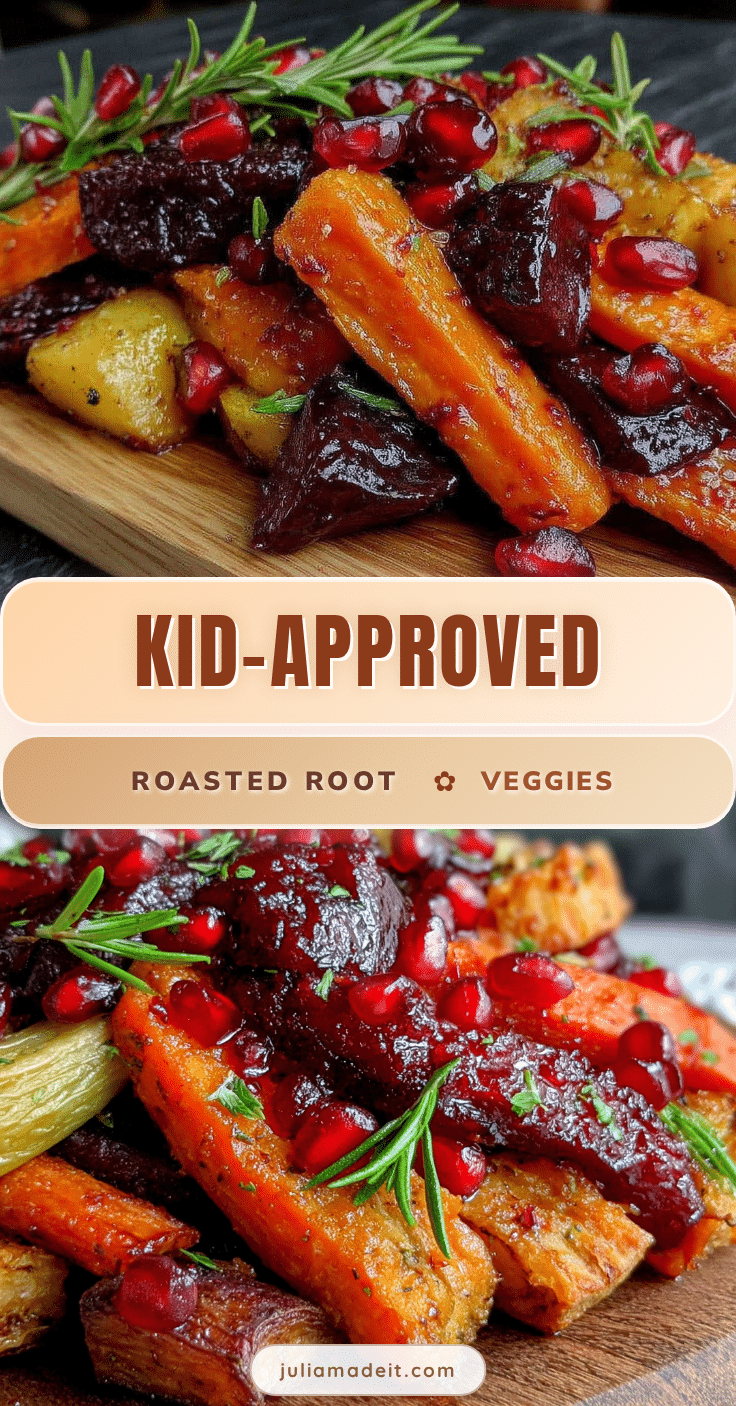
Kid-Approved Pomegranate Glazed Roasted Root Vegetables
Sweet and tangy roasted root vegetables with a sticky pomegranate glaze, topped with fresh pomegranate arils. A kid-friendly side dish that turns humble vegetables into a family favorite.
- Prep Time: 20 minutes
- Cook Time: 40 minutes
- Total Time: 1 hour
- Yield: 6 servings 1x
- Category: Side Dish
- Cuisine: American
Ingredients
- 2 medium sweet potatoes, peeled and cut into 1-inch cubes (about 3 cups)
- 3 large carrots, peeled and cut into 1-inch chunks (about 2 cups)
- 2 medium parsnips, peeled and cut into 1-inch chunks (about 1.5 cups)
- 1 medium red onion, cut into 1-inch wedges
- 2 tablespoons olive oil
- 1/2 teaspoon salt
- 1/4 teaspoon black pepper
- 1 cup pure pomegranate juice
- 2 tablespoons honey
- 1 tablespoon balsamic vinegar
- 1 tablespoon unsalted butter
- 1 clove garlic, minced
- 1/4 teaspoon cinnamon (optional)
- 1/2 cup fresh pomegranate arils (seeds)
- 2 tablespoons fresh parsley, chopped (optional)
Instructions
- Preheat your oven to 425°F (220°C).
- Make the pomegranate glaze: In a small saucepan, combine 1 cup pomegranate juice, 2 tablespoons honey, 1 tablespoon balsamic vinegar, and 1 minced garlic clove. Bring to a boil over medium-high heat, then reduce to a simmer. Let it bubble for about 15-20 minutes, stirring occasionally, until reduced by half and syrupy. Remove from heat and whisk in 1 tablespoon butter until melted and glossy. Set aside.
- Prep the vegetables: Peel sweet potatoes, carrots, and parsnips. Cut everything into roughly 1-inch pieces. Cut red onion into 1-inch wedges, keeping root end intact.
- Toss the vegetables in a large bowl with 2 tablespoons olive oil, 1/2 teaspoon salt, and 1/4 teaspoon pepper. Add cinnamon if using. Use your hands to coat evenly.
- Spread the vegetables in a single layer on a prepared sheet pan. Do not crowd.
- Roast for 20 minutes, then flip the vegetables with a spatula. Return to oven and roast another 10-15 minutes, until tender and caramelized.
- Brush the pomegranate glaze generously over the roasted vegetables. Return to oven for 5-7 minutes, until glaze is sticky and caramelized. Watch carefully to prevent burning.
- Transfer to a serving platter and sprinkle fresh pomegranate arils over the top. Garnish with parsley if desired.
Notes
Don’t skip the glaze reduction step—it concentrates the flavor. Watch the glaze carefully as it reduces to prevent burning. Cut vegetables uniformly for even cooking. Use two sheet pans if needed to avoid crowding. Let glazed vegetables rest 5 minutes before serving to set the glaze.
Nutrition
- Serving Size: 1 serving (about 1 c
- Calories: 220
- Sugar: 18
- Sodium: 280
- Fat: 7
- Saturated Fat: 2
- Carbohydrates: 38
- Fiber: 6
- Protein: 3
Keywords: roasted root vegetables, pomegranate glaze, kid-friendly, healthy side dish, holiday side dish, gluten-free, vegetarian