Let me tell you, the scent of fresh peas, tender asparagus, and garlic sizzling in butter, mingled with the rich aroma of melting Parmesan, is enough to make anyone’s mouth water. The first time I whipped up this creamy spring vegetable primavera with Parmesan sauce, I was instantly hooked. It was one of those rare kitchen moments where you pause, take a deep breath, and just smile because you know you’re onto something truly special.
Years ago, when I was knee-high to a grasshopper, my grandmother used to make a rustic vegetable pasta that somehow tasted like sunshine on a plate. I never thought I’d recreate something so comforting in my own kitchen until a rainy weekend inspired me to experiment with what I had on hand. This primavera is my homage to that memory—simple, fresh, and delightfully creamy. Honestly, my family couldn’t stop sneaking bites straight from the skillet (and I can’t really blame them).
You know what makes this recipe dangerously easy? It’s perfect for potlucks, a sweet treat for your kids after school, or just a bright spot on your dinner table when spring’s bounty is calling your name. The creamy Parmesan sauce feels like a warm hug, wrapping every vibrant vegetable in pure, nostalgic comfort. After testing this recipe more times than I can count (in the name of research, of course), it’s become a staple for family gatherings and gifting to friends who appreciate a little homemade love.
Why You’ll Love This Recipe
Honestly, this creamy spring vegetable primavera with Parmesan sauce ticks all the boxes for busy cooks and flavor lovers alike. Here’s why this recipe stands out:
- Quick & Easy: Comes together in under 30 minutes, perfect for busy weeknights or last-minute cravings.
- Simple Ingredients: No fancy grocery trips needed; you likely already have everything in your kitchen or local market.
- Perfect for Spring: Showcases the best seasonal veggies like asparagus, peas, and baby carrots.
- Crowd-Pleaser: Always gets rave reviews from kids and adults alike—trust me, it’s a hit every time.
- Unbelievably Delicious: The creamy Parmesan sauce hugs every bite with a silky, cheesy goodness that feels indulgent but isn’t complicated.
This isn’t just another primavera recipe. The secret lies in the homemade Parmesan sauce—rich, velvety, and perfectly balanced with a hint of garlic and lemon zest. The veggies stay crisp-tender, preserving their fresh spring flavors while soaking up the luscious sauce. It’s comfort food reimagined, healthier and faster, but with that same soul-soothing satisfaction you crave.
Whether you’re impressing guests without stress or turning a simple meal into something memorable, this recipe delivers every time.
What Ingredients You Will Need
This recipe uses simple, wholesome ingredients to deliver bold flavor and satisfying texture without the fuss. Most are pantry staples or fresh market finds easy to source in spring.
- For the Primavera:
- 1 pound (450g) pasta (penne, linguine, or farfalle work great)
- 1 cup (150g) fresh or frozen peas (adds sweetness and pop)
- 1 bunch (about 10 spears) asparagus, trimmed and cut into 2-inch pieces (seasonal star)
- 1 cup (120g) baby carrots, sliced diagonally (adds color and crunch)
- 1 small zucchini, sliced into half-moons (adds tender texture)
- 2 cloves garlic, minced (for that savory kick)
- 2 tablespoons unsalted butter (for richness)
- 2 tablespoons olive oil (balances the butter)
- Salt and freshly ground black pepper to taste
- For the Parmesan Sauce:
- 1 ½ cups (360ml) whole milk or half-and-half (for creaminess)
- 1 cup (100g) freshly grated Parmesan cheese (I recommend Parmigiano-Reggiano for best flavor)
- 2 tablespoons all-purpose flour (to thicken)
- 2 tablespoons unsalted butter
- 1 teaspoon lemon zest (brightens the sauce)
- Pinch of nutmeg (optional, adds warmth)
- Salt and pepper to taste
- Optional Garnishes:
- Fresh basil or parsley, chopped (adds freshness)
- Extra Parmesan for sprinkling
- Crushed red pepper flakes for a little heat
You can swap the milk for a dairy-free option, but the sauce’s texture may vary slightly. For a gluten-free version, replace the flour with cornstarch or arrowroot powder. In summer, swap peas and asparagus for fresh cherry tomatoes and sweet corn for a different vibe.
Equipment Needed
- Large pot for boiling pasta (don’t forget a colander!)
- Large skillet or sauté pan (preferably non-stick or stainless steel)
- Small saucepan for making the Parmesan sauce
- Whisk (essential for a smooth sauce)
- Measuring cups and spoons
- Wooden spoon or silicone spatula for stirring
- Grater for fresh Parmesan (freshly grated cheese melts much better than pre-grated)
If you don’t have a whisk, a fork will do in a pinch, though it might take a bit more elbow grease. I’ve found that using a heavy-bottomed saucepan helps prevent scorching the sauce. For budget-friendly options, thrift stores often have great cookware that lasts for years.
Preparation Method
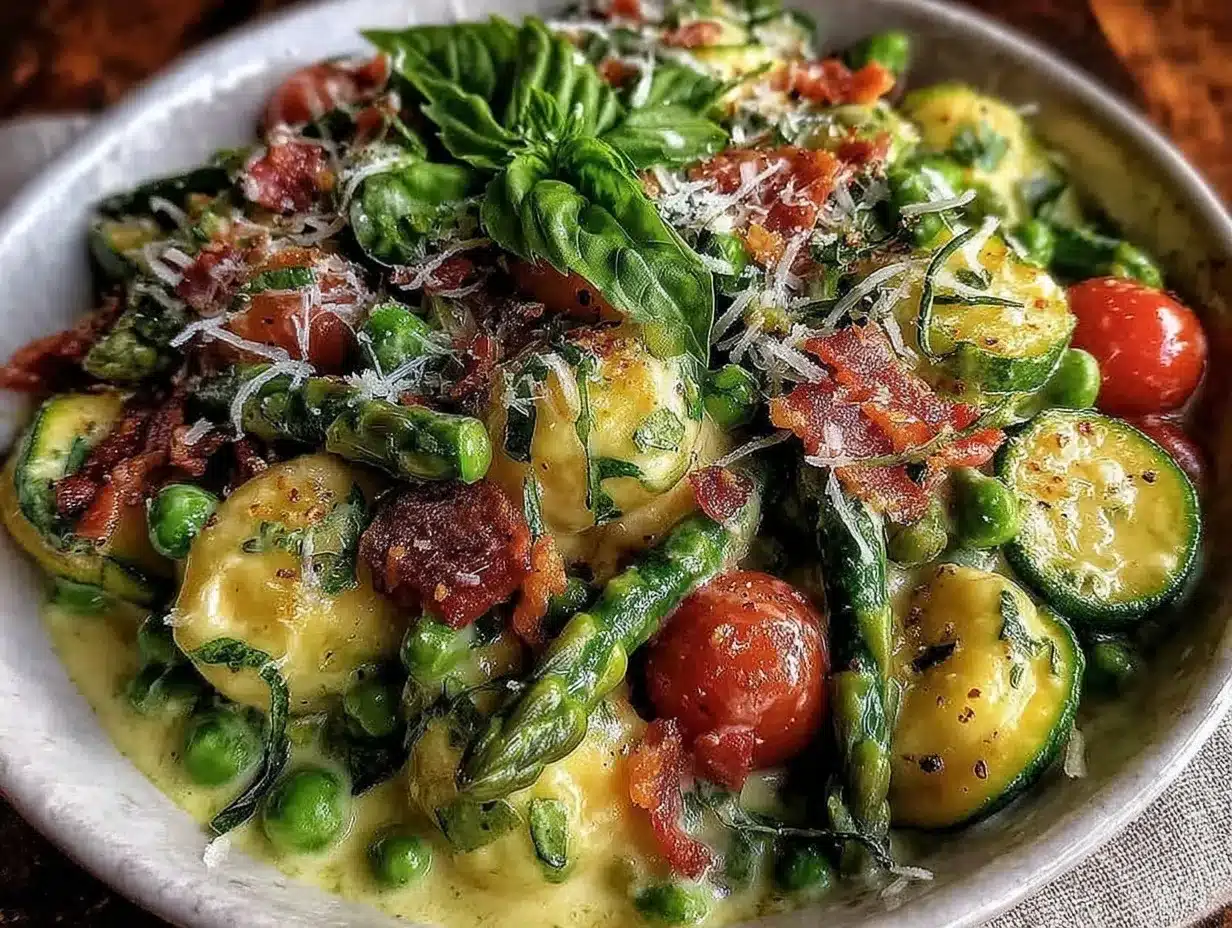
- Cook the pasta: Bring a large pot of salted water to a boil. Add 1 pound (450g) of your chosen pasta and cook according to package instructions until al dente (usually 8-10 minutes). Reserve 1 cup (240ml) of pasta water and then drain the pasta.
- Prepare the vegetables: While pasta cooks, heat 1 tablespoon olive oil and 1 tablespoon butter in a large skillet over medium heat. Add minced garlic and sauté for 30 seconds until fragrant but not browned.
- Add the spring vegetables: Toss in the asparagus, baby carrots, and zucchini. Sauté for 4-5 minutes until they start to soften but still hold some crunch. Add peas last (if using frozen, no need to thaw) and cook for another 2 minutes. Season with salt and pepper. Remove veggies from the pan and set aside.
- Make the Parmesan sauce: In a small saucepan, melt 2 tablespoons butter over medium heat. Whisk in 2 tablespoons flour and cook for about 1 minute to form a roux (this cooks out the raw flour taste). Gradually add 1 ½ cups (360ml) milk, whisking constantly, until the mixture thickens, about 3-4 minutes.
- Add cheese and season: Remove sauce from heat and stir in 1 cup (100g) freshly grated Parmesan cheese until melted and smooth. Add lemon zest, a pinch of nutmeg, and season with salt and pepper. If sauce is too thick, add a splash of reserved pasta water to loosen it.
- Combine everything: Return the vegetables to the skillet, pour in the Parmesan sauce, and toss in the cooked pasta. Gently mix everything together over low heat for 2-3 minutes to allow flavors to meld. Add more pasta water if needed to reach your desired creaminess.
- Final touches: Taste and adjust seasoning. Serve immediately, garnished with chopped fresh basil or parsley and extra Parmesan cheese. If you like a little heat, sprinkle on crushed red pepper flakes.
Pro tip: Don’t overcook the vegetables—they should remain vibrant and slightly crisp for the best texture. Also, freshly grated Parmesan really makes a difference in sauce smoothness and flavor.
Cooking Tips & Techniques
Honestly, getting the sauce just right is the key here. When making the roux, keep the heat moderate; too high and you risk burning the flour. If your sauce gets lumpy, whisk vigorously or blend with an immersion blender for silky smoothness.
One mistake I made early on was adding cheese while the sauce was too hot—it caused clumping. Always remove the pan from direct heat before stirring in Parmesan.
Timing is everything—cook pasta and veggies concurrently to save time. Also, reserve pasta water before draining; it’s liquid gold for adjusting sauce consistency and helps the sauce cling to the pasta better.
For consistency, always taste as you go—seasoning is a living thing, especially with fresh veggies and cheese. And if you want to multitask, prep veggies ahead and store them in the fridge for a quick sauté when dinner time rolls around.
Variations & Adaptations
This creamy spring vegetable primavera is quite flexible. Here are some ways to switch it up:
- Vegetarian or Vegan: Use dairy-free milk (such as oat or almond) and a vegan Parmesan substitute or nutritional yeast for a cheesy flavor. Swap butter for olive oil or vegan margarine.
- Protein Boost: Add grilled chicken strips, sautéed shrimp, or crispy tofu cubes for an extra protein punch.
- Seasonal Swaps: In late spring or summer, try swapping asparagus and peas for fresh green beans, cherry tomatoes, or baby spinach.
- Gluten-Free: Use gluten-free pasta and replace all-purpose flour with cornstarch or arrowroot powder for the sauce.
- Spicy Kick: Stir in a pinch of cayenne pepper or red pepper flakes to the sauce for a subtle heat that wakes up your taste buds.
I once tried adding roasted artichoke hearts and it gave the dish a lovely tangy depth—definitely something to try if you want to surprise your palate!
Serving & Storage Suggestions
Serve this primavera hot straight from the pan, ideally with a sprinkle of fresh herbs and extra Parmesan. It pairs beautifully with a crisp white wine like Sauvignon Blanc or a light sparkling water with lemon.
If you have leftovers, store them in an airtight container in the refrigerator for up to 3 days. Reheat gently on the stove over low heat, adding a splash of milk or pasta water to loosen the sauce as it warms up. Avoid microwave reheating if possible—it can make the sauce separate.
Flavors actually deepen after resting overnight, making it a perfect make-ahead meal for busy days. For longer storage, freeze in portions for up to 2 months, but note the texture of the veggies may soften slightly upon thawing.
Nutritional Information & Benefits
This dish is a wonderful way to enjoy spring’s fresh veggies while indulging in creamy comfort. A serving (about 1 ½ cups) offers roughly 400-450 calories, with a balanced mix of carbohydrates, protein, and healthy fats.
The Parmesan cheese provides calcium and protein, while the veggies contribute fiber, vitamins A and C, and antioxidants. Using whole milk or half-and-half gives a creamy mouthfeel but can be swapped for lower-fat options if desired.
It’s naturally gluten-free if you choose the right pasta and flour substitutes, and can be adapted for dairy-free diets. This primavera is as nourishing as it is delicious, making it a wholesome choice for any meal.
Conclusion
This creamy spring vegetable primavera with Parmesan sauce is one of those recipes you’re going to want to bookmark and return to again and again. It’s simple, fast, and packed with fresh flavors that celebrate the best of the season. Plus, the homemade Parmesan sauce feels indulgent without being complicated—honestly, it’s the kind of recipe that makes you close your eyes after the first bite.
Feel free to tweak the veggies or add your own spin. I love how adaptable it is—it makes every dinner feel a little special. If you give it a try, don’t forget to drop a comment and share your favorite twists. Happy cooking, and here’s to many cozy, creamy primavera meals ahead!
Frequently Asked Questions
Can I use frozen vegetables in this recipe?
Absolutely! Frozen peas work wonderfully, and you can also use frozen asparagus or mixed vegetables. Just adjust cooking time slightly to avoid overcooking.
What pasta shape works best for primavera?
Penne, farfalle, or linguine all hold the sauce well. Choose your favorite or whatever you have on hand—this recipe is forgiving.
How do I prevent the Parmesan sauce from clumping?
Make sure to whisk constantly when adding milk to the roux and remove from heat before adding cheese. Using freshly grated Parmesan also helps the sauce stay smooth.
Can I prepare this recipe ahead of time?
Yes! You can prep the veggies and sauce separately and combine just before serving. Leftovers keep well in the fridge for up to 3 days.
Is there a dairy-free version of this primavera?
Definitely. Use plant-based milk and vegan Parmesan substitutes. Swap butter for olive oil or vegan margarine to keep it creamy without dairy.
Pin This Recipe!
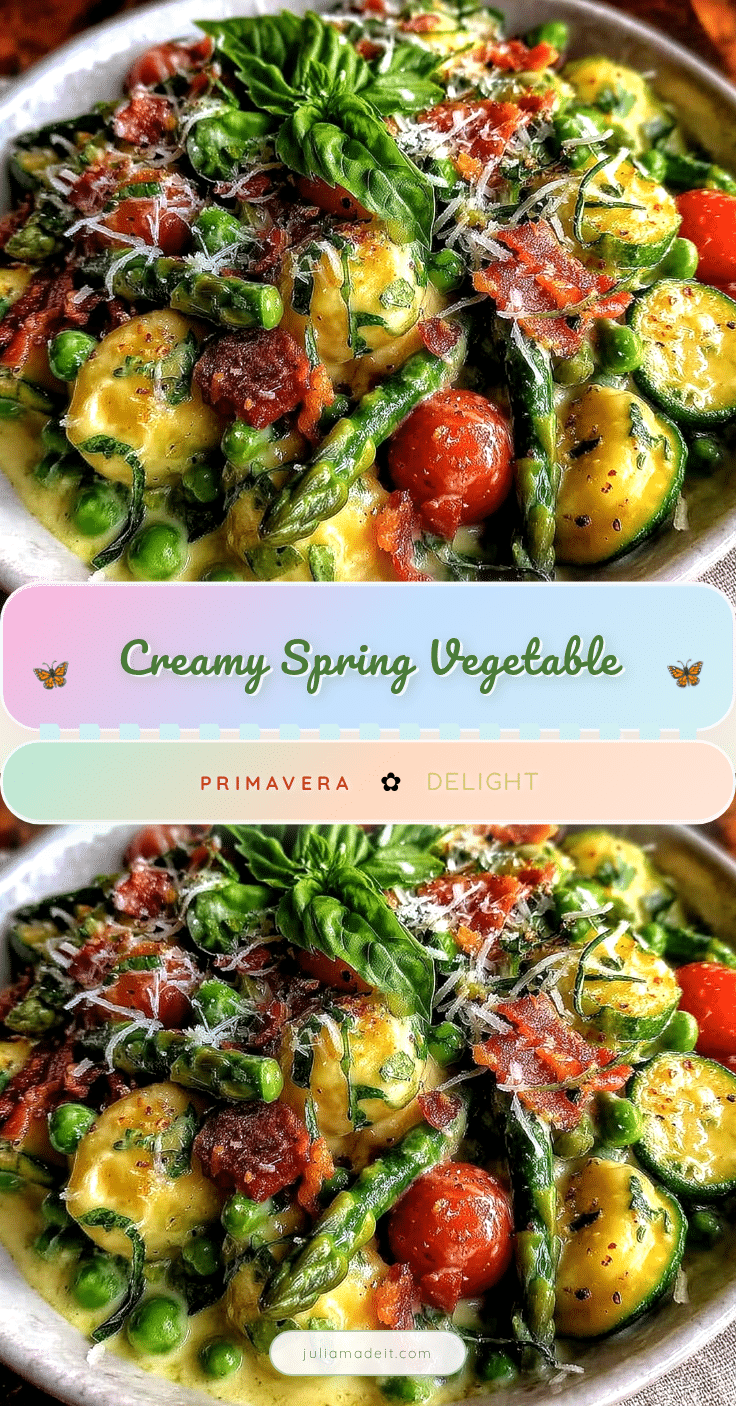
Creamy Spring Vegetable Primavera Recipe Easy Homemade Parmesan Sauce
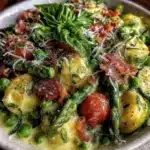
A quick and easy creamy primavera featuring fresh spring vegetables and a rich homemade Parmesan sauce, perfect for busy weeknights and family gatherings.
- Prep Time: 10 minutes
- Cook Time: 20 minutes
- Total Time: 30 minutes
- Yield: 4 servings 1x
- Category: Main Course
- Cuisine: Italian
Ingredients
- 1 pound (450g) pasta (penne, linguine, or farfalle)
- 1 cup (150g) fresh or frozen peas
- 1 bunch (about 10 spears) asparagus, trimmed and cut into 2-inch pieces
- 1 cup (120g) baby carrots, sliced diagonally
- 1 small zucchini, sliced into half-moons
- 2 cloves garlic, minced
- 2 tablespoons unsalted butter
- 2 tablespoons olive oil
- Salt and freshly ground black pepper to taste
- 1 ½ cups (360ml) whole milk or half-and-half
- 1 cup (100g) freshly grated Parmesan cheese
- 2 tablespoons all-purpose flour
- 1 teaspoon lemon zest
- Pinch of nutmeg (optional)
- Fresh basil or parsley, chopped (optional garnish)
- Extra Parmesan for sprinkling (optional)
- Crushed red pepper flakes (optional)
Instructions
- Bring a large pot of salted water to a boil. Add 1 pound (450g) of your chosen pasta and cook according to package instructions until al dente (usually 8-10 minutes). Reserve 1 cup (240ml) of pasta water and then drain the pasta.
- While pasta cooks, heat 1 tablespoon olive oil and 1 tablespoon butter in a large skillet over medium heat. Add minced garlic and sauté for 30 seconds until fragrant but not browned.
- Toss in the asparagus, baby carrots, and zucchini. Sauté for 4-5 minutes until they start to soften but still hold some crunch. Add peas last (if using frozen, no need to thaw) and cook for another 2 minutes. Season with salt and pepper. Remove veggies from the pan and set aside.
- In a small saucepan, melt 2 tablespoons butter over medium heat. Whisk in 2 tablespoons flour and cook for about 1 minute to form a roux.
- Gradually add 1 ½ cups (360ml) milk, whisking constantly, until the mixture thickens, about 3-4 minutes.
- Remove sauce from heat and stir in 1 cup (100g) freshly grated Parmesan cheese until melted and smooth. Add lemon zest, a pinch of nutmeg, and season with salt and pepper. If sauce is too thick, add a splash of reserved pasta water to loosen it.
- Return the vegetables to the skillet, pour in the Parmesan sauce, and toss in the cooked pasta. Gently mix everything together over low heat for 2-3 minutes to allow flavors to meld. Add more pasta water if needed to reach your desired creaminess.
- Taste and adjust seasoning. Serve immediately, garnished with chopped fresh basil or parsley and extra Parmesan cheese. Sprinkle crushed red pepper flakes if desired.
Notes
Do not overcook the vegetables; they should remain vibrant and slightly crisp. Use freshly grated Parmesan for a smoother sauce. If the sauce lumps, whisk vigorously or use an immersion blender. Remove pan from heat before adding cheese to prevent clumping. Reserve pasta water to adjust sauce consistency.
Nutrition
- Serving Size: About 1 ½ cups per s
- Calories: 425
- Sugar: 6
- Sodium: 450
- Fat: 18
- Saturated Fat: 10
- Carbohydrates: 50
- Fiber: 5
- Protein: 18
Keywords: spring vegetable primavera, creamy Parmesan sauce, easy pasta recipe, asparagus pasta, peas pasta, homemade Parmesan sauce, quick dinner, vegetarian pasta