“You know that moment when you open the fridge, and it’s looking a little bare, but you’re still determined to make something that doesn’t taste like a sad afterthought? That’s exactly how this easy balsamic glazed pork tenderloin with rosemary came to be in my kitchen one hectic Tuesday night. I honestly wasn’t planning a fancy dinner—more like a quick fix to satisfy both hunger and the lingering guilt of neglecting the grocery run.”
There was a small pork tenderloin hiding behind some veggies, a half-empty bottle of balsamic vinegar, and a sprig of rosemary I’d forgotten to use for days. Skeptical at first, I whisked together a glaze with what I had, tossed it over the pork, and popped it in the oven. The smell that wafted out after 25 minutes was nothing short of a revelation—earthy rosemary, tangy-sweet balsamic, and that juicy pork aroma that just wraps you in a warm hug. Honestly, it felt like a treat I’d actually made with intention, not just pulled together last minute.
This recipe stuck with me not because it’s complicated or fancy, but because it’s reliable and feels like a little celebration on a busy night. It’s the kind of dinner that makes you pause, take a breath, and maybe even close your eyes for a second bite. No fuss, just real flavor with a hint of rustic charm. Trust me, once you try this balsamic glazed pork tenderloin with rosemary, it might just become your go-to for those nights when you want dinner to feel a little special without the stress.
Why You’ll Love This Recipe
After testing this balsamic glazed pork tenderloin with rosemary multiple times—yes, sometimes twice in a week—I’m confident it’s one of those recipes that hits all the right notes. Here’s why it’s earned a permanent spot in my dinner rotation:
- Quick & Easy: From prep to plate in under 40 minutes, perfect for nights when time isn’t on your side.
- Simple Ingredients: Nothing fancy or hard to find—your pantry and fridge likely have everything ready to go.
- Perfect for Dinner or Entertaining: Whether it’s a casual weeknight or you have friends over, this pork tenderloin impresses without the stress.
- Crowd-Pleaser: Kids, adults, picky eaters—everyone tends to ask for seconds (and sometimes thirds!).
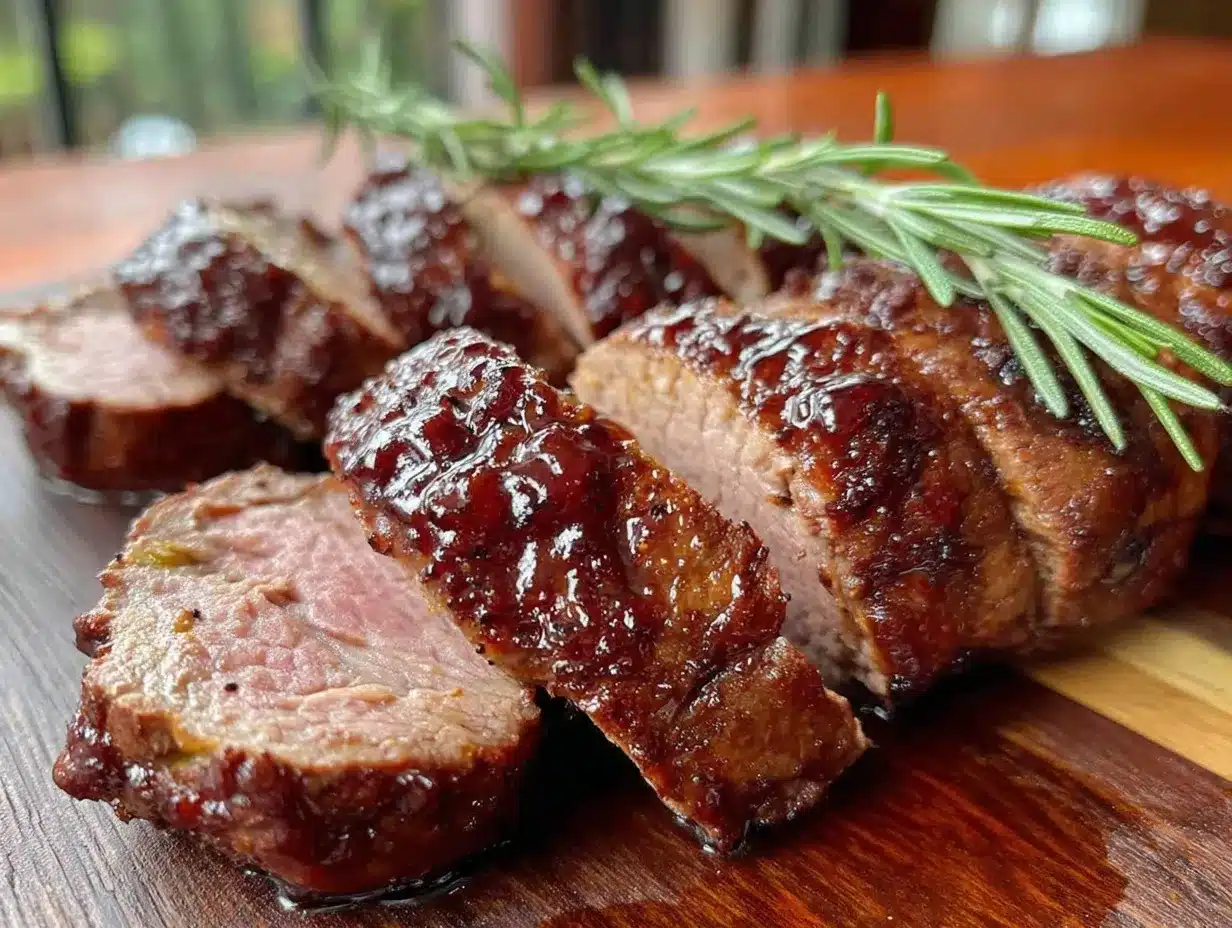
- Unbelievably Delicious: The balsamic glaze caramelizes beautifully, balancing savory and sweet with the woody hint of rosemary.
What makes this recipe stand out from other pork tenderloin dishes? It’s the glaze technique—slowly reducing balsamic vinegar with a touch of brown sugar and fresh rosemary until it’s thick enough to coat the pork like a glossy jacket. This method locks in moisture and infuses the meat with bright, aromatic flavors. Plus, using fresh rosemary—not dried—gives it that punch of herbaceousness that truly makes the dish sing.
This isn’t just a meal; it’s the kind that makes you pause and savor the moment, perfect for those evenings when you want dinner to feel a little more thoughtful without a lot of effort. For a complementary side, I often pair it with crispy smashed potatoes, which you might enjoy as well—it’s a great combo of textures and flavors!
What Ingredients You Will Need
This recipe uses simple, wholesome ingredients to deliver bold flavor and satisfying texture without the fuss. Most are pantry staples or easy to find fresh items, making it a breeze for spontaneous cooking sessions.
- Pork tenderloin: About 1 to 1.5 pounds (450-680 grams), trimmed of excess fat (choose a fresh, firm cut for best results).
- Balsamic vinegar: ½ cup (120 ml), preferably aged or good quality for a richer glaze.
- Brown sugar: 2 tablespoons (adds a subtle sweetness that helps caramelize the glaze).
- Fresh rosemary: 2-3 sprigs, finely chopped (fresh is key for vibrant flavor).
- Garlic: 3 cloves, minced (for that savory depth).
- Olive oil: 2 tablespoons (helps sear the pork and adds richness).
- Salt: 1 teaspoon, or to taste.
- Black pepper: Freshly ground, about ½ teaspoon.
- Optional: A splash of chicken broth or water (about 2 tablespoons) to loosen the glaze if it gets too thick.
For substitutions, if you’re avoiding sugar, a teaspoon of honey or maple syrup can replace brown sugar but expect a slightly different glaze texture. If fresh rosemary isn’t available, dried rosemary can work—just use about 1 teaspoon and crush it lightly to release oils. I prefer using olive oil from Colavita for its mild flavor, but any good-quality extra virgin olive oil will do. When shopping for balsamic vinegar, avoid the cheap stuff—it really pays off to spend a little more here.
Equipment Needed
- Oven-safe skillet or roasting pan: A cast iron skillet works beautifully for searing and then finishing in the oven. If you don’t have cast iron, a heavy stainless steel skillet or a baking dish lined with foil will do.
- Tongs: For turning the pork without piercing it, so the juices stay locked in.
- Meat thermometer: Essential for cooking pork tenderloin perfectly to medium doneness (145°F/63°C). If you don’t have one, a reliable instant-read thermometer is a worthwhile investment.
- Small saucepan: To reduce the balsamic glaze separately, ensuring it thickens just right.
- Sharp knife and cutting board: For prepping garlic and rosemary, and slicing the pork after cooking.
Personally, I love how my cast iron skillet heats evenly and gives that nice crust on the pork, but I know not everyone has one. If you’re working with a budget, a simple roasting pan combined with a stovetop pan for searing works just fine. Keeping your knives sharp really makes prep smoother; dull knives can be dangerous and frustrating, trust me on this one.
Preparation Method
- Preheat your oven to 400°F (200°C). This temperature gives the pork a nice roast without drying it out.
- Prepare the balsamic glaze: In a small saucepan, combine ½ cup (120 ml) balsamic vinegar, 2 tablespoons brown sugar, and the finely chopped rosemary. Bring to a gentle simmer over medium heat. Let it reduce, stirring occasionally, until it thickens and coats the back of a spoon—about 10-12 minutes. Watch it carefully so it doesn’t burn. If it gets too thick, add a splash of water or chicken broth to loosen.
- Season the pork: Pat the pork tenderloin dry with paper towels—this helps get a good sear. Rub with olive oil (2 tablespoons), minced garlic (3 cloves), salt (1 teaspoon), and freshly ground black pepper (½ teaspoon). Make sure it’s evenly coated.
- Sear the pork: Heat an oven-safe skillet over medium-high heat. Once hot, add the pork and sear on all sides until golden brown—about 2-3 minutes per side. This locks in juices and builds flavor.
- Glaze and roast: Brush the balsamic glaze all over the seared pork. Transfer the skillet to the oven and roast for 20-25 minutes, or until the internal temperature reaches 145°F (63°C). Halfway through roasting, brush on another layer of glaze to build that glossy finish.
- Rest the meat: Remove the pork from the oven and let it rest on a cutting board for 5-10 minutes before slicing. This step is crucial—it allows the juices to redistribute, keeping the pork tender and juicy.
- Slice and serve: Cut the pork into ½-inch (1.25 cm) thick medallions. Drizzle any leftover glaze from the pan over the top for extra flavor.
Pro tip: Keep an eye on the glaze during reduction—it should be syrupy but not grainy. If it crystallizes, it’s gone too far. Another heads-up: don’t skip resting the pork; rushing this step often leads to dry meat. I learned that the hard way after a few too many impatient dinners!
Cooking Tips & Techniques
Getting pork tenderloin just right can feel a little tricky, but a few simple techniques can make all the difference. Here’s what I’ve picked up along the way:
- Use a meat thermometer: This is your best friend for avoiding overcooked pork. The USDA recommends 145°F (63°C), and I always pull my pork out right at that point, then let it rest.
- Don’t skip the sear: Searing locks in moisture and creates those irresistible browned bits that add flavor and texture.
- Fresh herbs matter: Fresh rosemary infuses the glaze with vibrant aroma. Dried herbs can work but won’t give quite the same punch.
- Keep the glaze warm: If your glaze cools and thickens too much while roasting, gently reheat it before brushing on the pork.
- Multitasking tip: While the glaze reduces, season and prep your pork to save time. It’s a smooth workflow when you’re juggling dinner prep.
One mistake I made early on was rushing the glaze reduction, ending up with a bitter, burnt taste. Slow and steady wins the glaze race! Also, resting the pork can be tempting to skip, especially when you’re hungry, but patience pays off big time here.
Variations & Adaptations
This balsamic glazed pork tenderloin recipe is quite flexible, so feel free to tweak it based on what you have or your dietary needs:
- Herb swap: If rosemary isn’t your favorite, thyme or sage work beautifully in the glaze.
- Sweetener alternatives: Use honey or maple syrup instead of brown sugar for a slightly different sweetness profile.
- Gluten-free: This recipe is naturally gluten-free, but double-check your balsamic vinegar label to be sure.
- Cooking method: For a hands-off approach, sear the tenderloin on the stove, then finish in a slow cooker with the glaze added towards the end for a more tender, fall-apart texture.
- Spicy kick: Add a pinch of red pepper flakes to the glaze for a subtle heat that balances the sweetness.
Personally, I once tried adding a splash of orange juice to the glaze for a citrus twist, and it turned out surprisingly fresh and delicious. It’s a fun variation when you want to mix things up without changing the core flavors too much.
Serving & Storage Suggestions
This pork tenderloin shines best served warm, sliced into medallions and drizzled with any leftover glaze. It pairs wonderfully with simple sides like roasted vegetables or creamy mashed potatoes. For a lighter option, a crisp green salad or even a classic Caesar salad complements the rich flavors beautifully.
Leftovers store well in an airtight container in the refrigerator for up to 3 days. To reheat, gently warm slices in a skillet over low heat with a splash of broth to keep them moist, or microwave covered with a damp paper towel for 1-2 minutes. The flavors actually deepen after a day, so sometimes I prefer it cold, sliced thin on sandwiches or salads.
If you want to prep ahead, you can make the glaze in advance and keep it refrigerated for up to a week. Just warm it before brushing on the pork.
For a cozy dinner night, pairing this tenderloin with a side like crispy smashed potatoes is a no-fail combo. And if you’re thinking breakfast next day, leftovers make a surprisingly tasty addition to a breakfast burrito like the one I shared in my freezer-friendly breakfast burritos post.
Nutritional Information & Benefits
Per serving (based on 4 servings): approximately 260 calories, 30g protein, 8g fat, and 5g carbohydrates.
Pork tenderloin is a lean cut, making this recipe a great choice for those looking for high-protein, moderate-fat meals. The balsamic vinegar adds flavor without extra calories, and rosemary brings antioxidants and anti-inflammatory properties. Garlic supports immune health, and olive oil contributes heart-healthy fats.
This dish fits well into gluten-free and low-carb diets as long as the glaze ingredients are selected carefully. It’s a satisfying, nutrient-dense option that feels indulgent but stays balanced—a perfect example of comfort food done right.
Conclusion
This easy balsamic glazed pork tenderloin with rosemary is a recipe that delivers reliably delicious results with minimal effort. It’s got that perfect balance of sweet, savory, and herbaceous notes that make dinner feel special, even on the busiest nights. I love how adaptable it is—you can tweak the herbs or sweetness to fit your mood or pantry.
Give this recipe a try and make it your own. I’d love to hear how you customize the glaze or which sides you serve it with—sharing those little twists always adds to the fun of cooking. Cooking should be enjoyable, and this pork tenderloin is proof that simple ingredients can lead to big flavors. Here’s to many cozy dinners and happy taste buds ahead!
FAQs
- Can I use pork loin instead of pork tenderloin?
Pork loin is thicker and takes longer to cook, so adjust cooking time accordingly. Tenderloin is preferred for its tenderness and quick cooking. - How do I know when the pork is done?
Use a meat thermometer and remove pork at 145°F (63°C), then let it rest for juicy results. - Can I make the balsamic glaze ahead of time?
Yes, the glaze can be made up to a week in advance and stored in the fridge. Warm it gently before using. - What sides go well with balsamic glazed pork?
Try roasted or smashed potatoes, steamed vegetables, or a fresh salad like the classic Caesar salad for balance. - Is this recipe suitable for a gluten-free diet?
Yes, as long as your balsamic vinegar is gluten-free, this recipe fits gluten-free diets perfectly.
Pin This Recipe!
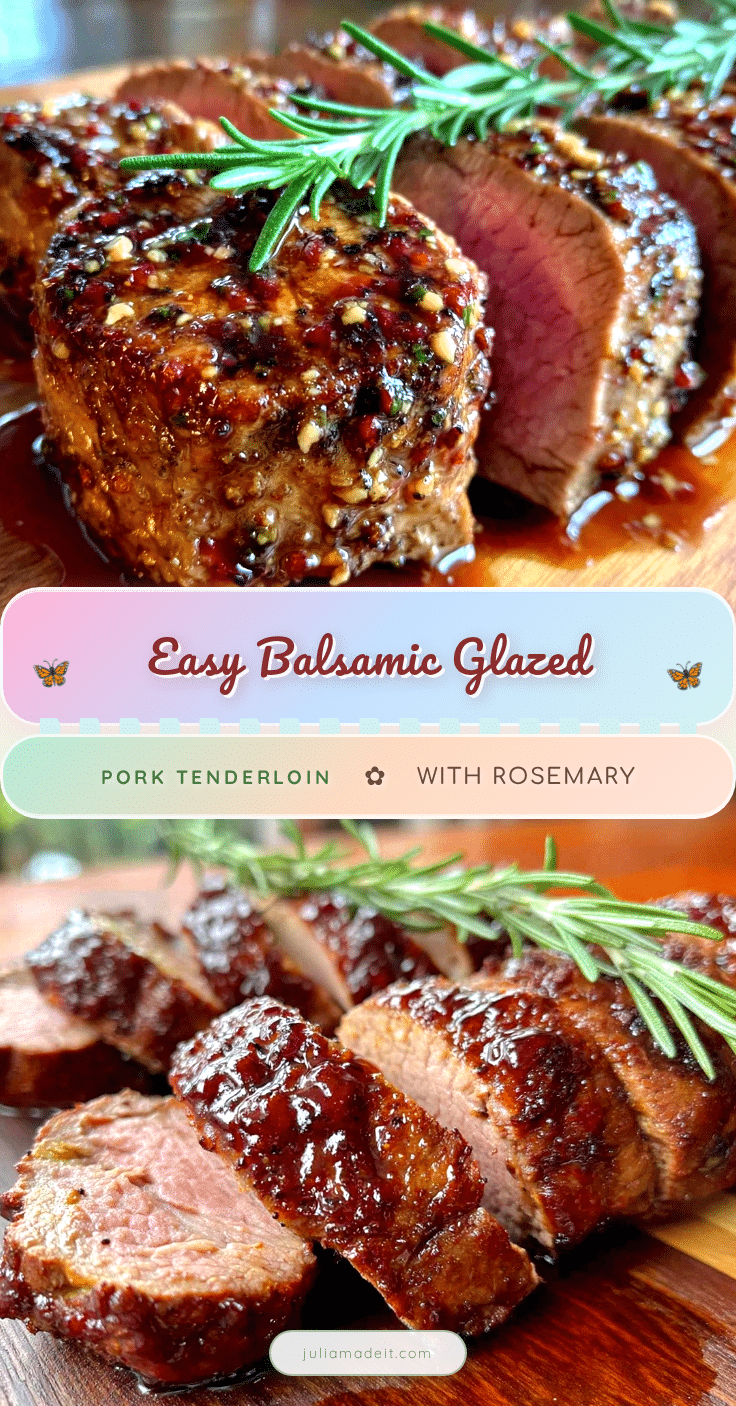
Easy Balsamic Glazed Pork Tenderloin Recipe with Rosemary for Perfect Dinner
A quick and easy balsamic glazed pork tenderloin with fresh rosemary, delivering a perfect balance of sweet, savory, and herbaceous flavors for a special yet simple dinner.
- Prep Time: 10 minutes
- Cook Time: 30 minutes
- Total Time: 40 minutes
- Yield: 4 servings 1x
- Category: Main Course
- Cuisine: American
Ingredients
- 1 to 1.5 pounds pork tenderloin, trimmed of excess fat
- ½ cup balsamic vinegar (120 ml), preferably aged or good quality
- 2 tablespoons brown sugar
- 2–3 sprigs fresh rosemary, finely chopped
- 3 cloves garlic, minced
- 2 tablespoons olive oil
- 1 teaspoon salt, or to taste
- ½ teaspoon freshly ground black pepper
- Optional: 2 tablespoons chicken broth or water to loosen glaze if needed
Instructions
- Preheat your oven to 400°F (200°C).
- In a small saucepan, combine ½ cup balsamic vinegar, 2 tablespoons brown sugar, and finely chopped rosemary. Bring to a gentle simmer over medium heat and reduce, stirring occasionally, until thickened and coats the back of a spoon, about 10-12 minutes. Add a splash of water or chicken broth if glaze becomes too thick.
- Pat the pork tenderloin dry with paper towels. Rub with 2 tablespoons olive oil, minced garlic, 1 teaspoon salt, and ½ teaspoon freshly ground black pepper, coating evenly.
- Heat an oven-safe skillet over medium-high heat. Sear the pork on all sides until golden brown, about 2-3 minutes per side.
- Brush the balsamic glaze all over the seared pork. Transfer the skillet to the oven and roast for 20-25 minutes, or until the internal temperature reaches 145°F (63°C). Halfway through roasting, brush on another layer of glaze.
- Remove the pork from the oven and let it rest on a cutting board for 5-10 minutes to allow juices to redistribute.
- Slice the pork into ½-inch (1.25 cm) thick medallions and drizzle with any leftover glaze from the pan before serving.
Notes
Use a meat thermometer to ensure pork reaches 145°F (63°C) for perfect doneness. Rest the pork after roasting to keep it juicy. If glaze thickens too much, add a splash of water or broth to loosen. Fresh rosemary is preferred for best flavor. The glaze can be made ahead and refrigerated for up to a week.
Nutrition
- Serving Size: 1/4 of the pork tend
- Calories: 260
- Fat: 8
- Carbohydrates: 5
- Protein: 30
Keywords: balsamic glazed pork tenderloin, rosemary pork, easy pork recipe, quick dinner, balsamic vinegar glaze, pork tenderloin recipe, weeknight dinner