Fig and prosciutto crostini is calling my name right now, and I have everything except patience for the balsamic glaze to thicken just right. Honestly, I could eat figs straight off the tree, but when paired with salty prosciutto and that sticky-sweet balsamic drizzle, something clicks in my brain. The crunch of toasted bread, the creaminess of a mild cheese (yes, I sneak that in), and the sharp tang of balsamic? It’s like a tiny flavor explosion that somehow feels fancy without any fuss. I first stumbled on this combo during a weeknight when I had figs that were just a tad too ripe for snacking but too perfect to toss. I figured, why not slap them on some bread with prosciutto and call it dinner? That night stuck with me, mostly because it was ridiculously simple but felt special enough to serve to friends without breaking a sweat.
The fresh fig and prosciutto crostini with balsamic glaze has since become my go-to appetizer when I want something quick, elegant, and downright addictive. The sweet and savory balance never fails to surprise guests — and me — every single time. Plus, it’s one of those recipes where the ingredients do the heavy lifting, so you don’t have to. I like that. At the end of the day, this recipe is a quiet reminder that simple doesn’t mean boring. It’s a reason to keep fresh figs around and a little excuse to bring out the prosciutto whenever the mood strikes. And that balsamic glaze? It’s the subtle magic that pulls everything together, glossy and rich, but not overpowering. This crostini isn’t just a snack; it’s a moment of “hey, this tastes really good” that I want to share without any fuss.
Why You’ll Love This Recipe
This easy fresh fig and prosciutto crostini with balsamic glaze is one of those recipes that feels like a treat but is honestly so straightforward you can whip it up on a whim. Here’s why it’s worth keeping in your culinary arsenal:
- Quick & Easy: All the flavors meld perfectly in under 20 minutes — perfect for last-minute guests or a simple weekday nibble.
- Simple Ingredients: No need for specialty stores; fresh figs, prosciutto, and balsamic vinegar might already be in your kitchen or local market.
- Perfect for Entertaining: Whether it’s a casual get-together or a holiday spread, these crostini feel elegant but require zero stress.
- Crowd-Pleaser: The sweet-salty combo always gets nods of approval from kids, adults, and picky eaters alike.
- Unbelievably Delicious: The texture contrast between creamy cheese, tender figs, and crisp bread with that syrupy glaze is just right.
What sets this recipe apart is the balance of flavors and textures without overcomplicating things. Instead of just layering ingredients, I like to toast the bread until it’s golden but still tender enough to bite through without crumbling. The balsamic glaze I make myself — it’s lightly reduced to keep it syrupy and not too sharp, which makes all the difference. Plus, adding a smear of ricotta or cream cheese underneath (a trick I picked up from my fresh no-cook tomato bruschetta bar) gives it that extra creamy layer that feels lush but doesn’t overpower the figs or prosciutto.
Honestly, this recipe isn’t just a dish; it’s a little celebration of simple ingredients coming together just right. It’s perfect for impressing guests without breaking a sweat or for a quiet night when you want something that feels special but requires minimal effort. That’s why it’s stuck with me — a little luxury you can count on anytime.
What Ingredients You Will Need
This recipe uses simple, wholesome ingredients to deliver bold flavor and satisfying texture without the fuss. Most of these are pantry staples or easy to find at your local market during fig season. Here’s what you’ll need:
- Fresh Figs — ripe but firm, preferably black mission or kadota varieties (seasonal freshness makes a big difference here)
- Prosciutto — thinly sliced, about 4 ounces (I like San Daniele prosciutto for its delicate flavor and silky texture)
- Baguette — sliced into ¼-inch thick rounds (a day-old baguette works well for toasting)
- Balsamic Vinegar — about ½ cup for reduction (I recommend a good-quality aged balsamic for depth)
- Honey — 1 to 2 tablespoons to sweeten the glaze naturally
- Ricotta or Cream Cheese — about ½ cup, softened (optional but highly recommended for creaminess)
- Olive Oil — for brushing the baguette slices before toasting (extra virgin preferable)
- Fresh Thyme or Basil — a few sprigs for garnish (optional, adds fresh herbal notes)
- Black Pepper — freshly cracked, to finish
Ingredient tips: If fresh figs aren’t available, dried figs rehydrated briefly in warm water work in a pinch, though the texture differs. For a dairy-free version, swap ricotta with a nut-based spread. And if you’re gluten-free, use your favorite gluten-free baguette or cracker. The simplicity of these ingredients is what makes this recipe approachable and flexible.
Equipment Needed
To make this fresh fig and prosciutto crostini, you don’t need fancy equipment, which is part of its charm. Here’s what I use:
- Baking Sheet or Oven Tray: for toasting the baguette slices evenly. If you don’t have one, a cast-iron skillet works great on the stovetop.
- Small Saucepan: to reduce the balsamic vinegar into a glaze. A heavy-bottomed pan helps control heat better.
- Sharp Knife: for slicing the baguette and figs cleanly without squashing them.
- Cutting Board: sturdy and stable—one of those kitchen essentials that’s always handy.
- Spoon: for drizzling the balsamic glaze precisely.
If you want to get fancy, a silicone brush can help spread olive oil on the bread, but a spoon works fine too. For small kitchens or budget-conscious cooks, the stovetop skillet method for toasting bread is a great alternative to the oven and produces a lovely crust.
Preparation Method
- Prepare the balsamic glaze: In a small saucepan, combine ½ cup (120 ml) of balsamic vinegar with 1 to 2 tablespoons of honey. Bring to a gentle simmer over medium heat, stirring occasionally. Let it reduce until thick and syrupy, about 10-15 minutes. Keep an eye on it so it doesn’t burn. The glaze should coat the back of a spoon. Remove from heat and set aside to cool.
- Toast the baguette slices: Preheat your oven to 375°F (190°C). Arrange 12-15 baguette slices on a baking sheet. Brush each slice lightly with olive oil. Toast in the oven for about 8-10 minutes or until golden brown and crisp. If you prefer, toast the slices in a hot cast-iron skillet for about 2 minutes per side, until nicely browned. The bread should be crunchy but not too hard to bite.
- Prepare the figs and prosciutto: Rinse fresh figs gently and pat dry. Cut into quarters or thin slices, depending on size. Tear the prosciutto into bite-sized pieces to make it easier to layer on the crostini.
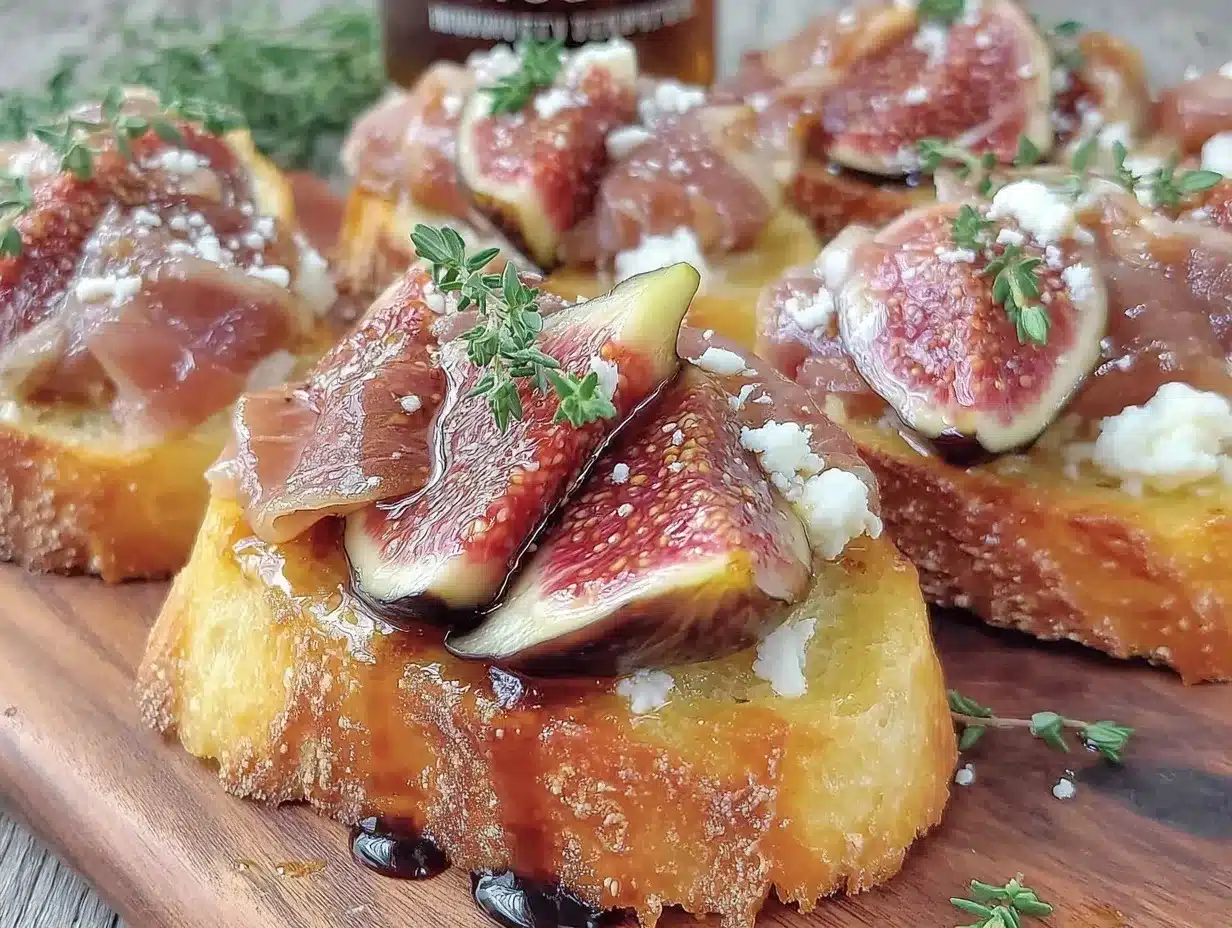
- Assemble the crostini: Spread about 1 teaspoon of ricotta or cream cheese on each toasted baguette slice. Layer with a few pieces of prosciutto, then top with fresh fig slices. Drizzle each crostini generously with the balsamic glaze. Finish with a crack of fresh black pepper and a small sprig of thyme or basil for color and flavor.
- Serve immediately: These crostini are best enjoyed right away while the bread is still crisp and the flavors fresh. If you need to prep ahead, toast the bread and make the glaze in advance, then assemble just before serving.
Pro tip: When reducing balsamic, don’t rush the process by turning the heat too high; patience here pays off with a smooth, luscious glaze. Also, cutting figs evenly helps with presentation and ensures every bite has that perfect sweet burst. I learned the hard way that uneven slices make for messy crostini.
Cooking Tips & Techniques
Making the perfect fresh fig and prosciutto crostini is all about balancing flavors and textures — here’s what I’ve learned over countless attempts:
- Choose ripe but firm figs: Too soft and they’ll turn mushy when sliced; too hard and they lack sweetness. The right ripeness means juicy, tender bites without falling apart.
- Toast bread just right: Under-toasted bread can get soggy quickly, especially with the cheese and figs. Over-toasting can make it hard to bite. Aim for golden and crisp but still easy to chew.
- Make balsamic glaze slowly: Rushing the reduction with high heat risks a burnt, bitter glaze. Keep it at a gentle simmer and stir occasionally. If it gets too thick, whisk in a splash of water.
- Layer ingredients thoughtfully: Spread cheese first to create a moisture barrier, then prosciutto and figs. This keeps the bread from getting soggy too fast and balances the flavors.
- Season last: A sprinkle of fresh black pepper or flaky sea salt at the end brightens the whole crostini and complements the sweet-salty interplay.
One mistake I’ve made is adding balsamic too early, causing the bread to soak and lose crunch. Also, prosciutto is delicate, so I handle it gently to keep those silky ribbons intact. Multitasking here means starting the glaze first, prepping figs while it simmers, then toasting bread just before assembly to keep everything fresh and texturally perfect.
Variations & Adaptations
You can easily mix things up with this fresh fig and prosciutto crostini recipe. Here are some ideas I’ve tried or want to try:
- Cheese swaps: Try goat cheese, mascarpone, or burrata for a creamier or tangier base. Burrata especially adds a luscious, creamy center that pairs beautifully with figs.
- Fruit alternatives: When figs aren’t in season, substitute with sliced fresh peaches or grilled peaches like in my grilled peaches with honey ricotta recipe for a similar sweet and juicy effect.
- Glaze variations: Mix pomegranate molasses into your balsamic reduction for a fruitier, tangier note or add a pinch of chili flakes for subtle heat.
- Herb twists: Swap thyme for rosemary or fresh mint for a refreshing twist that brightens the rich flavors.
- Dietary adaptations: Use gluten-free crackers or thinly sliced cucumber rounds instead of baguette for a low-carb option. For a vegetarian version, omit prosciutto and add toasted nuts or seeds for crunch.
One personal favorite is adding a drizzle of local honey over the crostini just before serving for added floral sweetness. This recipe’s versatility means you can tailor it to seasons, occasions, or dietary needs easily.
Serving & Storage Suggestions
Serve these crostini fresh and slightly warm or at room temperature for best flavor. They’re perfect finger foods for parties, paired wonderfully with a crisp white wine or sparkling water with lemon. A fresh salad, like the watermelon cucumber feta salad, complements the crostini nicely for a light summer spread.
If you have leftovers (which is rare, but hey, it happens), store components separately: keep toasted bread in an airtight container at room temperature for up to 2 days, and refrigerate figs, prosciutto, and glaze in sealed containers. Reassemble just before serving to maintain texture. Toasted bread can be refreshed briefly in a hot oven or skillet to regain crispness.
The balsamic glaze keeps well refrigerated for up to two weeks and can be warmed gently before use. Over time, flavors in the glaze deepen, so it’s a handy make-ahead for other recipes too.
Nutritional Information & Benefits
Each crostini offers a balance of carbohydrates from the baguette, healthy fats from olive oil and prosciutto, and fiber and antioxidants from fresh figs. Figs provide a good source of dietary fiber, potassium, and vitamin B6, while prosciutto adds protein and iron. Using ricotta or cream cheese contributes calcium and protein as well.
This appetizer is naturally gluten-free if you swap the bread for crackers or cucumber slices. It’s not low in sodium due to prosciutto, so those watching salt intake should enjoy in moderation. Overall, it’s a treat that brings fresh fruit benefits alongside indulgent flavors, making it a smart choice for gatherings when balanced with other dishes.
Conclusion
The easy fresh fig and prosciutto crostini with balsamic glaze is a recipe that keeps me coming back because it’s simple yet sophisticated, quick but impressive. It’s perfect for anyone who wants a no-fuss appetizer that tastes like you spent hours in the kitchen. I love how the fresh figs add a juicy sweetness that pairs effortlessly with the salty prosciutto and tangy balsamic glaze. The toast’s crunch and creamy cheese underneath make every bite a little celebration of texture and flavor.
Whether you’re hosting a party or just craving a snack that feels a bit special, this crostini fits the bill. Feel free to customize it with your favorite cheeses or herbs — that’s what makes it fun and truly yours. And if you’re into easy entertaining, this recipe plays nicely alongside dishes like bourbon baked beans or garlic herb butter shrimp skewers for a full spread that feels balanced and delicious.
Give it a try, tweak it your way, and let me know how it turns out — I’m always curious about your twists!
FAQs
- Can I use dried figs instead of fresh? Yes, but rehydrate dried figs in warm water for 10 minutes first. The texture will be softer and less juicy than fresh.
- How do I store leftovers? Store bread and toppings separately. Toasted bread stays crisp at room temperature for up to 2 days, and toppings keep in the fridge for 1-2 days.
- Can I make the balsamic glaze ahead of time? Absolutely. It keeps in the refrigerator for up to two weeks. Warm gently before drizzling.
- What cheese works best if I don’t have ricotta? Cream cheese, goat cheese, or burrata are excellent substitutes depending on your taste preference.
- Is there a vegetarian option? Yes, simply omit the prosciutto and add toasted nuts or seeds for texture and protein.
Pin This Recipe!
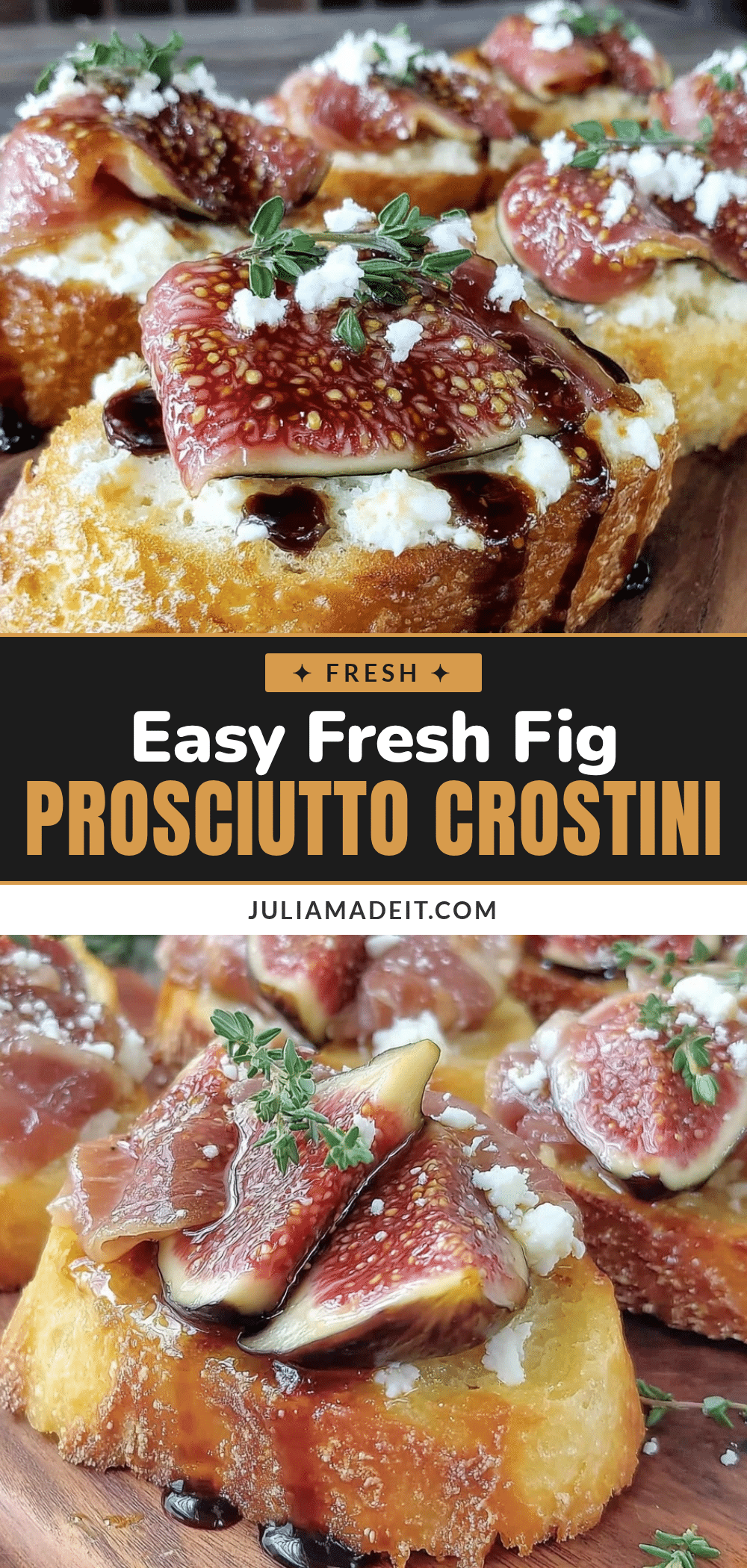
Easy Fresh Fig and Prosciutto Crostini Recipe with Balsamic Glaze for Perfect Appetizers

A quick and elegant appetizer featuring toasted baguette slices topped with creamy cheese, fresh figs, salty prosciutto, and a sweet balsamic glaze. Perfect for entertaining or a simple treat.
- Prep Time: 10 minutes
- Cook Time: 15 minutes
- Total Time: 25 minutes
- Yield: 12-15 crostini (about 6 servings)
- Category: Appetizer
- Cuisine: Italian
Ingredients
- Fresh figs – ripe but firm, preferably black mission or kadota varieties
- Prosciutto – thinly sliced, about 4 ounces
- Baguette – sliced into 1/4-inch thick rounds
- Balsamic vinegar – about 1/2 cup for reduction
- Honey – 1 to 2 tablespoons
- Ricotta or cream cheese – about 1/2 cup, softened (optional)
- Olive oil – for brushing the baguette slices
- Fresh thyme or basil – a few sprigs for garnish (optional)
- Black pepper – freshly cracked, to finish
Instructions
- Prepare the balsamic glaze: In a small saucepan, combine 1/2 cup (120 ml) balsamic vinegar with 1 to 2 tablespoons honey. Bring to a gentle simmer over medium heat, stirring occasionally. Reduce until thick and syrupy, about 10-15 minutes. Remove from heat and let cool.
- Toast the baguette slices: Preheat oven to 375°F (190°C). Arrange 12-15 baguette slices on a baking sheet. Brush each slice lightly with olive oil. Toast for 8-10 minutes until golden and crisp. Alternatively, toast in a hot cast-iron skillet for about 2 minutes per side.
- Prepare figs and prosciutto: Rinse figs gently and pat dry. Cut into quarters or thin slices. Tear prosciutto into bite-sized pieces.
- Assemble crostini: Spread about 1 teaspoon of ricotta or cream cheese on each toasted baguette slice. Layer with prosciutto pieces, then top with fig slices. Drizzle generously with balsamic glaze. Finish with cracked black pepper and a sprig of thyme or basil.
- Serve immediately while bread is crisp and flavors are fresh. If prepping ahead, toast bread and make glaze in advance, then assemble just before serving.
Notes
Reduce balsamic glaze slowly over medium heat to avoid burning. Toast bread until golden but still tender to avoid sogginess. Spread cheese first to create a moisture barrier. Store toasted bread and toppings separately to maintain texture. Balsamic glaze keeps refrigerated for up to two weeks.
Nutrition
- Serving Size: 2-3 crostini per ser
- Calories: 150
- Sugar: 5
- Sodium: 300
- Fat: 7
- Saturated Fat: 2
- Carbohydrates: 15
- Fiber: 1.5
- Protein: 5
Keywords: fig crostini, prosciutto appetizer, balsamic glaze, easy appetizer, party food, quick snack, fresh figs, crostini recipe