The neighborhood Oktoberfest potluck was in six hours and I’d completely forgotten. Everyone else would be bringing those elaborate German dishes that take all day—homemade spaetzle, slow-braised red cabbage, maybe a whole roasted pork knuckle if someone was feeling ambitious. I had a package of bratwurst in the fridge, a jar of sauerkraut that was probably a month past its prime, and two apples that were starting to look a little sad. Honestly, I almost just texted my neighbor Karen to say I’d come down with something. But then I remembered that one time my Oma threw together a skillet dinner in twenty minutes flat, and how everyone at the table went quiet after the first bite.
So I grabbed that old cast iron pan, the one with the seasoning that’s seen better days, and just started tossing things in. The bratwurst went in first, sizzling and popping like it was mad at me for waiting so long. Then the apples, cut a little unevenly because I was rushing, and the sauerkraut that I’d rinsed just enough to tame the bite. I didn’t even brown the sausages properly—I mean, who has time when the clock is ticking? But something magical happened in that pan. The apples softened and caramelized in the sausage fat, the sauerkraut drank up all those savory juices, and the whole kitchen started smelling like a German Christmas market in October.
I showed up to that potluck fifteen minutes late, skillet still warm under a kitchen towel, feeling like I’d brought a half-baked afterthought. But you know that feeling when something simple just works? The bratwurst skillet disappeared in under twenty minutes. People kept coming back for second helpings, asking for the recipe, and Karen—the one with the legendary three-day sauerbraten—asked me to bring it to every gathering from then on. That’s the thing about this Cozy German Bratwurst Skillet with Apples and Sauerkraut. It’s not fancy, it’s not fussy, and it definitely wasn’t planned. But it’s the kind of meal that makes you remember why cooking doesn’t have to be complicated to be unforgettable.
Why You’ll Love This Recipe
Let me tell you why this bratwurst skillet has become my go-to for those nights when I need dinner on the table fast but still want it to feel special. I’ve tested this recipe at least a dozen times—sometimes with different sausages, once when I only had Granny Smith apples instead of Honeycrisp, and even that one time I accidentally used smoked paprika instead of regular. It worked every single time, and that’s the kind of reliability I want in my kitchen.
- Quick & Easy: This comes together in under 30 minutes, start to finish. No marinating, no complicated techniques, just one pan and a little patience.
- Simple Ingredients: You probably have most of these in your kitchen right now. Apples, onions, a little mustard, and bratwurst from the store. No fancy grocery trips needed.
- Perfect for Fall Gatherings: Whether it’s Oktoberfest, a cozy Sunday dinner, or just a Tuesday when you need something warm and comforting, this skillet fits right in.
- Crowd-Pleaser: I’ve served this to picky eaters, traditional German food lovers, and even my friend who swears she doesn’t like sauerkraut. She went back for thirds.
- Unbelievably Delicious: The way the apples caramelize in the sausage fat, the tangy sauerkraut balancing all that richness, and that little pop of mustard at the end—it’s next-level comfort food without the work.
What makes this different from every other bratwurst recipe out there? It’s the technique of browning the sausages just enough to get that crust, then letting them finish cooking in the apple and sauerkraut mixture so they soak up all that sweet and tangy flavor. The apples don’t just sit on top—they melt into the dish, creating a sauce that coats every bite. This isn’t just another weeknight dinner. It’s the kind of meal that makes you close your eyes after the first bite and forget about the long day you just had.
What Ingredients You Will Need
This recipe uses simple, honest ingredients to deliver big flavor without any fuss. Most of these are pantry staples or easy to find at any grocery store, which is exactly what you want when you’re craving something hearty on a busy night.
For the Skillet
- 4-5 bratwurst sausages (about 1.5 lbs, or 680g) — I prefer Johnsonville or a local butcher’s fresh bratwurst. Look for ones that aren’t pre-cooked for the best texture and flavor.
- 2 tablespoons olive oil (30ml) — or any neutral oil with a high smoke point. Avocado oil works great here too.
- 1 large yellow onion, sliced into thin half-moons (about 1 cup, or 150g)
- 2 medium apples, cored and sliced into ¼-inch wedges (about 2 cups, or 250g) — Honeycrisp or Fuji hold their shape well, but Granny Smith adds a nice tartness if you prefer less sweetness.
- 1½ cups sauerkraut, drained and rinsed (about 350g) — I like Bubbies or Wildbrine for their live cultures and crisp texture. Rinsing removes some of the brine’s sharpness, but leave a little on if you want more tang.
- ½ cup apple cider (120ml) — or unsweetened apple juice. This deglazes the pan and adds sweetness without being cloying.
- 1 tablespoon whole-grain mustard (15g) — stone-ground or Dijon works too, but whole-grain gives those lovely little pops of flavor.
- 1 teaspoon caraway seeds (optional, but highly recommended) — they add that classic German flavor that ties everything together.
- ½ teaspoon salt (3g) — go easy here since the bratwurst and sauerkraut already have salt.
- ¼ teaspoon black pepper (1g)
- 2 tablespoons fresh parsley, chopped (for garnish) — optional, but it makes the dish look prettier than it has any right to.
Ingredient Tips from My Kitchen

If you can’t find fresh bratwurst, you can use pre-cooked ones—just reduce the cooking time and add them later so they don’t dry out. For the apples, I’ve used everything from Pink Lady to Gala, and they all work. Just avoid really soft apples like McIntosh that turn to mush. And here’s a little secret I learned the hard way: don’t skip rinsing the sauerkraut if you’re sensitive to salt. The first time I made this, I didn’t rinse it, and the dish was almost too salty to eat. A quick rinse under cold water makes all the difference.
Equipment Needed
- Large cast-iron skillet or heavy-bottomed pan (12-inch, or 30cm) — cast iron gives the best browning, but a stainless steel or non-stick pan works fine too.
- Sharp chef’s knife — for slicing apples and onions evenly. A dull knife is a recipe for frustration.
- Cutting board — preferably one with a groove to catch juices.
- Tongs — for turning the sausages without piercing them. Piercing releases the juices and dries them out.
- Wooden spoon or spatula — for stirring the onions and apples without scratching your pan.
- Measuring cups and spoons — because eyeballing apple cider can lead to a soupy skillet.
If you don’t have a cast-iron skillet, don’t worry. I’ve made this in a regular non-stick pan and it turned out great. Just make sure the pan is wide enough to hold everything in a single layer. And if you’re using a non-stick pan, avoid high heat to protect the coating. Budget-friendly tip: a $20 enameled cast-iron skillet from a discount store works just as well as the expensive brands. I used one for years before upgrading.
Preparation Method
- Prep your ingredients first. Slice the onion into thin half-moons, core and slice the apples into ¼-inch wedges, and drain the sauerkraut. This takes about 5 minutes and saves you from scrambling later. Trust me, once that pan gets hot, you won’t have time to chop.
- Brown the bratwurst. Heat 1 tablespoon of olive oil in your skillet over medium-high heat. Add the bratwurst and cook for 4-5 minutes, turning occasionally, until nicely browned on all sides. Don’t crowd the pan—if your skillet is small, do this in batches. The sausages should sizzle when they hit the pan. If they don’t, the pan isn’t hot enough.
- Remove and rest. Transfer the browned bratwurst to a plate and set aside. They won’t be cooked through yet, and that’s fine. They’ll finish cooking later. Don’t clean the pan—those browned bits are pure flavor.
- Sauté the onions. Reduce the heat to medium and add the remaining 1 tablespoon of olive oil. Add the sliced onions and cook for 3-4 minutes, stirring occasionally, until they start to soften and turn translucent. Scrape up any browned bits from the bottom of the pan as you stir—that’s liquid gold.
- Add the apples. Toss in the apple wedges and cook for 2-3 minutes, stirring gently. You want them to start softening but still hold their shape. The edges should look slightly caramelized. If they’re browning too fast, lower the heat.
- Deglaze with apple cider. Pour in the apple cider and use your wooden spoon to scrape up any remaining browned bits from the pan. This is where the magic happens—all that flavor goes back into the dish. Let it bubble for about 1 minute until slightly reduced.
- Add the sauerkraut and seasonings. Stir in the drained sauerkraut, whole-grain mustard, caraway seeds (if using), salt, and pepper. Mix everything together until well combined. The mixture should look moist but not soupy.
- Return the bratwurst. Nestle the browned bratwurst back into the skillet, pushing them down into the apple-sauerkraut mixture. Cover the skillet with a lid or foil and reduce the heat to medium-low. Let it simmer for 10-12 minutes, or until the sausages are cooked through (internal temperature of 160°F or 71°C).
- Finish and serve. Remove the lid and let it cook uncovered for 2-3 minutes to thicken the juices slightly. Garnish with fresh parsley and serve hot. The bratwurst should be juicy, the apples tender but not mushy, and the sauerkraut should have absorbed all those wonderful flavors.
Pro tip from my first attempt: I once skipped the step of browning the sausages and just threw everything in the pan at once. The result was pale, sad sausages with no crust and a watery sauce. Don’t be like me—take the extra 5 minutes to brown them. It makes all the difference.
Cooking Tips & Techniques
Let me share some things I’ve learned the hard way so you don’t have to. The first time I made this bratwurst skillet, I used pre-cooked sausages and wondered why they came out dry and rubbery. Pre-cooked bratwurst just doesn’t have the same juicy texture, and they don’t absorb the apple-sauerkraut flavors as well. Fresh bratwurst is worth the extra minute of cooking time.
Another mistake I made? I didn’t pat the bratwurst dry before browning them. Wet sausages steam instead of sear, and you lose that beautiful golden crust. Take a paper towel and dry them off before they hit the pan. It takes two seconds and changes everything.
Here’s a timing strategy that works for me: while the bratwurst is browning, I slice the apples and onions. Then while the onions and apples are cooking, I measure out the sauerkraut and mustard. By the time I need to add everything, it’s all ready to go. No frantic chopping, no burnt garlic disasters.
If you’re using a non-stick pan, be careful with high heat. Non-stick coatings can degrade above 500°F (260°C), and you need decent heat for browning. Medium-high should be fine, but don’t crank it to max. And whatever you do, don’t use metal tongs on non-stick—learned that one the hard way too.
One more thing: let the skillet rest for 2-3 minutes after cooking before serving. The flavors meld together during that short rest, and the juices thicken slightly. I know it’s tempting to dig in right away, but patience pays off here.
Variations & Adaptations
This recipe is wonderfully flexible. Here are some ways I’ve adapted it over the years:
Dietary Variations
- Gluten-Free: Most bratwurst is already gluten-free, but check the label. Serve with mashed potatoes or roasted sweet potatoes instead of bread or pretzels.
- Low-Carb/Keto: Skip the apples and add more sauerkraut and some sliced mushrooms instead. The mushrooms will soak up all those savory juices beautifully.
- Dairy-Free: This recipe is naturally dairy-free, so no changes needed. Just double-check your mustard if you’re strictly dairy-free.
Flavor Twists
- Spicy Version: Use hot Italian sausage instead of bratwurst, and add a pinch of red pepper flakes with the onions. The heat pairs surprisingly well with the sweet apples.
- Herbaceous Twist: Add fresh thyme or rosemary with the apples. I tried this one autumn when I had leftover herbs from a roast chicken, and it was amazing.
- Smoky Variation: Use smoked bratwurst and add a teaspoon of smoked paprika. It gives the dish a deeper, almost barbecue-like flavor.
Cooking Method Adaptations
- Slow Cooker: Brown the sausages first, then transfer everything to a slow cooker and cook on low for 4-6 hours. The apples will be very soft, so slice them thicker.
- Sheet Pan: Toss everything on a sheet pan and roast at 400°F (200°C) for 20-25 minutes. The edges get crispy and caramelized in a way that’s different from the stovetop version but equally delicious.
One of my favorite variations came from a happy accident. I didn’t have apple cider, so I used hard apple cider instead. The alcohol cooked off, but it left a lovely complexity that I’ve been chasing ever since. Just don’t use sweetened cider—it makes the dish cloying.
Serving & Storage Suggestions
This bratwurst skillet is best served hot, straight from the pan. The contrast between the warm sausages and the slightly tangy sauerkraut is what makes it so satisfying. I like to serve it with a side of crusty bread or soft pretzels to soak up the juices, but it’s also wonderful over mashed potatoes or egg noodles.
For a complete meal, pair it with a simple green salad dressed with a sharp vinaigrette—the acidity cuts through the richness of the sausages. And if you’re feeling extra German, a cold beer or a glass of dry Riesling is the perfect companion. The slight sweetness of the wine echoes the apples without overwhelming them.
Storage Instructions
- Refrigerator: Store leftovers in an airtight container for up to 4 days. The flavors actually get better as they meld together overnight.
- Freezer: This freezes well for up to 3 months. Let it cool completely, then transfer to a freezer-safe container. Thaw overnight in the refrigerator before reheating.
Reheating Tips
- Stovetop: Reheat in a skillet over medium-low heat, adding a splash of apple cider or water to loosen the sauce. This takes about 5-7 minutes and gives you the best texture.
- Microwave: In a pinch, microwave in 30-second bursts, stirring between each. The sausages might get a little rubbery, but it’s still good.
- Oven: Spread in a baking dish, cover with foil, and reheat at 350°F (175°C) for 10-15 minutes. This is the gentlest method and preserves the most flavor.
One thing I’ve noticed: the apples soften more over time, so leftovers have a more homogenous texture. It’s different from fresh, but still delicious. I actually prefer the leftovers the next day for lunch—the flavors are deeper and more integrated.
Nutritional Information & Benefits
Here’s an estimated breakdown per serving (based on 4 servings):
- Calories: 485
- Protein: 22g
- Fat: 32g
- Carbohydrates: 28g
- Fiber: 5g
- Sugar: 16g
- Sodium: 980mg
This dish offers some surprising health benefits. Sauerkraut is a fermented food packed with probiotics that support gut health. The apples provide fiber and vitamin C, while the onions add quercetin, a powerful antioxidant. And bratwurst, while higher in fat, is a good source of protein and B vitamins, especially B12 which is important for energy metabolism.
If you’re watching your sodium intake, use low-sodium bratwurst and rinse the sauerkraut thoroughly. You can also reduce the added salt in the recipe. For a lower-fat version, you can use turkey bratwurst, though the texture will be slightly different.
From a wellness perspective, I love that this meal feels indulgent but actually has some redeeming qualities. It’s the kind of comfort food that doesn’t leave you feeling heavy and sluggish afterward. The probiotics from the sauerkraut might even help with digestion, which is nice after a hearty meal.
Conclusion
This Cozy German Bratwurst Skillet with Apples and Sauerkraut has become my secret weapon for those nights when I need dinner to be both fast and memorable. It’s the recipe I turn to when I’m short on time but still want to feel like I put some love into the meal. The way the sweet apples balance the tangy sauerkraut, the juicy sausages soaking up all those flavors—it’s simple food that tastes anything but.
I hope you’ll give this a try and make it your own. Maybe you’ll add a little more mustard, or swap in pears when apples aren’t in season. That’s the beauty of a good skillet dinner—it welcomes your personal touch. I’d love to hear how it turns out for you. Did you try a variation? Did your family love it as much as mine does? Drop a comment below and share your experience. And if you’re looking for more cozy one-pan meals, check out some of my other recipes on the blog.
Until next time, happy cooking—and don’t forget to save some for leftovers. Trust me, you’ll want them.
Frequently Asked Questions
Can I use pre-cooked bratwurst for this recipe?
Yes, you can, but the texture won’t be as juicy. Pre-cooked bratwurst has already been fully cooked, so you’re really just reheating and browning them. Add them later in the cooking process to prevent them from drying out, and reduce the covered simmering time to about 5 minutes.
What kind of apples work best?
Firm, slightly tart apples like Honeycrisp, Fuji, or Granny Smith hold their shape best during cooking. Softer apples like McIntosh or Red Delicious will break down into applesauce, which isn’t ideal for this dish but could work if you prefer a saucier texture.
Can I make this ahead of time?
Absolutely. This recipe actually tastes better the next day as the flavors meld together. Cook it completely, let it cool, and store it in the refrigerator for up to 4 days. Reheat gently on the stovetop with a splash of apple cider to refresh the sauce.
Is this recipe gluten-free?
Most bratwurst is gluten-free, but always check the label as some brands use fillers containing wheat. The other ingredients—apples, sauerkraut, onions, mustard—are naturally gluten-free. Serve with gluten-free bread or roasted potatoes to keep the meal completely gluten-free.
Can I freeze the leftovers?
Yes, this freezes well for up to 3 months. Let the skillet cool completely, then transfer to a freezer-safe container. Thaw overnight in the refrigerator and reheat on the stovetop. The texture of the apples will be softer after freezing, but the flavor remains excellent.
Pin This Recipe!
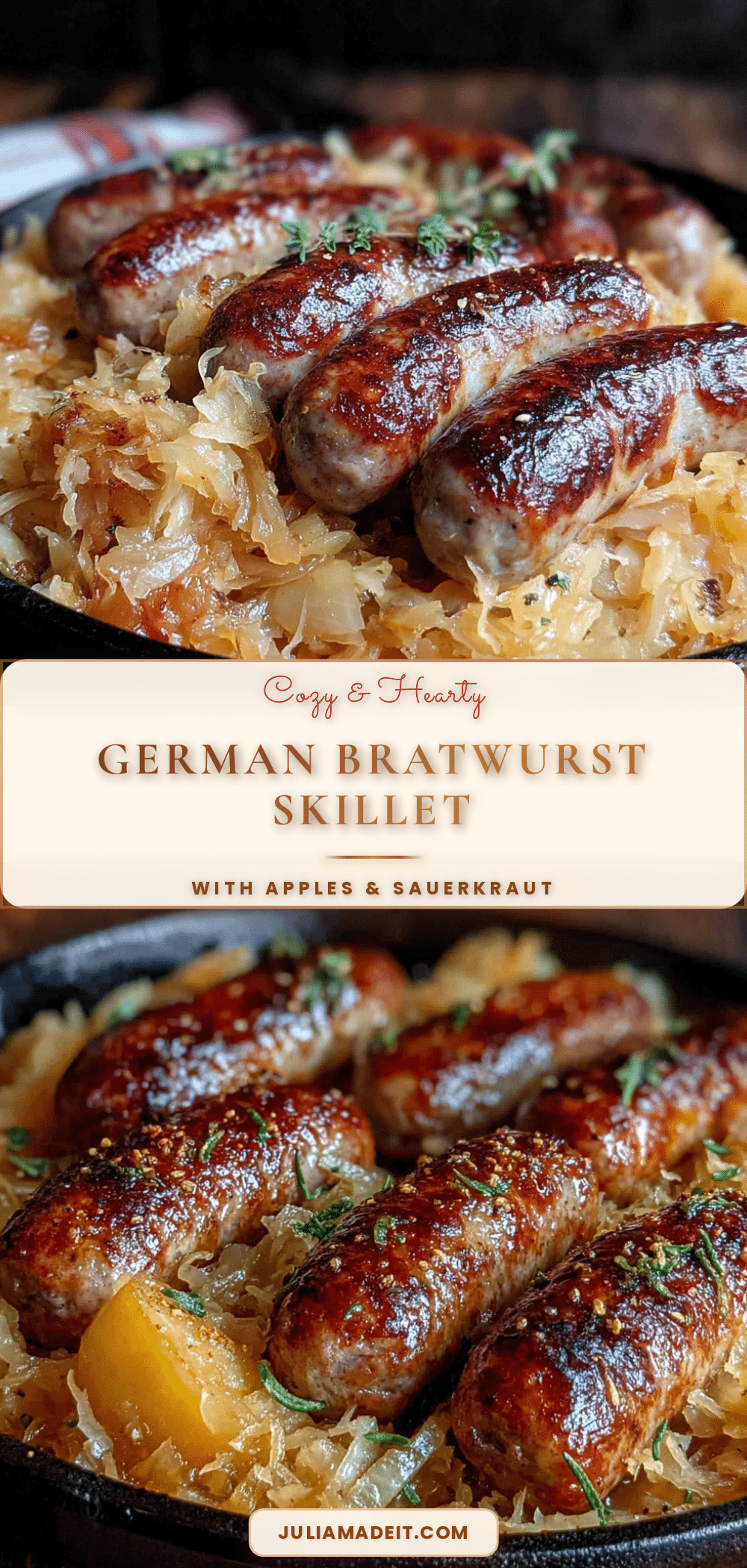
Bratwurst Skillet with Apples and Sauerkraut: Easy 30 Min Dinner

A quick and easy one-pan German-inspired dinner featuring juicy bratwurst, caramelized apples, and tangy sauerkraut. Ready in under 30 minutes, it’s perfect for busy weeknights or fall gatherings.
- Prep Time: 10 minutes
- Cook Time: 20 minutes
- Total Time: 30 minutes
- Yield: 4 servings 1x
- Category: Main Course
- Cuisine: German
Ingredients
- 4–5 bratwurst sausages (about 1.5 lbs or 680g)
- 2 tablespoons olive oil (30ml)
- 1 large yellow onion, sliced into thin half-moons (about 1 cup or 150g)
- 2 medium apples, cored and sliced into ¼-inch wedges (about 2 cups or 250g)
- 1½ cups sauerkraut, drained and rinsed (about 350g)
- ½ cup apple cider (120ml)
- 1 tablespoon whole-grain mustard (15g)
- 1 teaspoon caraway seeds (optional)
- ½ teaspoon salt (3g)
- ¼ teaspoon black pepper (1g)
- 2 tablespoons fresh parsley, chopped (for garnish)
Instructions
- Prep your ingredients first. Slice the onion into thin half-moons, core and slice the apples into ¼-inch wedges, and drain the sauerkraut.
- Brown the bratwurst. Heat 1 tablespoon of olive oil in your skillet over medium-high heat. Add the bratwurst and cook for 4-5 minutes, turning occasionally, until nicely browned on all sides.
- Remove and rest. Transfer the browned bratwurst to a plate and set aside. Don’t clean the pan.
- Sauté the onions. Reduce the heat to medium and add the remaining 1 tablespoon of olive oil. Add the sliced onions and cook for 3-4 minutes, stirring occasionally, until they start to soften and turn translucent.
- Add the apples. Toss in the apple wedges and cook for 2-3 minutes, stirring gently, until they start to soften but still hold their shape.
- Deglaze with apple cider. Pour in the apple cider and use your wooden spoon to scrape up any remaining browned bits from the pan. Let it bubble for about 1 minute until slightly reduced.
- Add the sauerkraut and seasonings. Stir in the drained sauerkraut, whole-grain mustard, caraway seeds (if using), salt, and pepper. Mix everything together until well combined.
- Return the bratwurst. Nestle the browned bratwurst back into the skillet, pushing them down into the apple-sauerkraut mixture. Cover the skillet with a lid or foil and reduce the heat to medium-low. Let it simmer for 10-12 minutes, or until the sausages are cooked through (internal temperature of 160°F or 71°C).
- Finish and serve. Remove the lid and let it cook uncovered for 2-3 minutes to thicken the juices slightly. Garnish with fresh parsley and serve hot.
Notes
For best results, use fresh bratwurst (not pre-cooked) and pat them dry before browning. Rinse the sauerkraut to reduce saltiness. Let the skillet rest for 2-3 minutes after cooking before serving. Leftovers can be stored in the refrigerator for up to 4 days or frozen for up to 3 months.
Nutrition
- Serving Size: 1 serving
- Calories: 485
- Sugar: 16
- Sodium: 980
- Fat: 32
- Saturated Fat: 10
- Carbohydrates: 28
- Fiber: 5
- Protein: 22
Keywords: bratwurst, apples, sauerkraut, skillet, one-pan, German, Oktoberfest, quick dinner, 30-minute meal