I did not trust the idea of mixing maple syrup with Dijon mustard on salmon at first. It sounded like a mismatch of sweet and sharp that wouldn’t quite hit the mark, especially on fish. Honestly, I thought maple and Dijon together was a mistake until one chilly evening when I was craving something easy but tasty for dinner. I had a stubborn block of salmon in the fridge and a butternut squash sitting nearby, and I figured why not give that odd combo a shot?
So, I mixed up a glaze with maple syrup, Dijon mustard, and a few simple seasonings, brushed it over the salmon, and popped it in the oven alongside roasted butternut squash cubes. The kitchen filled with this warm, inviting aroma that was both sweet and tangy. When I finally took a bite, the flavors danced in a way I hadn’t expected — the glaze caramelized just right, locking in moisture, while the squash offered a mellow, velvety contrast. It wasn’t fancy, but it felt like a quiet little victory in the weeknight dinner game.
That night, I realized this recipe wasn’t just about food; it was about finding comfort in unexpected flavor combos that actually work. It stuck with me because it’s simple, honest, and satisfying without fuss. Plus, it’s one of those meals you can trust to impress without stress — something I always appreciate after a long day. And that, right there, was enough to turn me from skeptic to believer.
Why You’ll Love This Recipe
This flavorful maple Dijon glazed salmon with roasted butternut squash quickly became one of my go-to meals. It’s honest cooking that tastes like you put in way more effort than you actually did.
- Quick & Easy: Ready in under 40 minutes, making it perfect for busy weeknights or when you want a no-fuss, wholesome meal.
- Simple Ingredients: You probably have most of these in your pantry already—maple syrup, Dijon mustard, salmon, and squash. No fancy trips needed.
- Perfect for Cozy Dinners: The warm, sweet-savory glaze paired with earthy roasted butternut squash hits all the right comfort notes on a chilly evening.
- Crowd-Pleaser: Even the pickiest eaters tend to love this combo — the glaze isn’t overwhelmingly sweet or tangy, just balanced and inviting.
- Unbelievably Delicious: The salmon stays juicy and tender with a lightly caramelized coating, while the squash roasts to a perfect soft but slightly crisp texture.
What sets this recipe apart is the harmony in the glaze — the sharpness of Dijon mustard cuts through the maple’s sweetness without overpowering the salmon’s natural flavor. It’s a subtle magic trick that works every time. Plus, the roasted butternut squash adds a natural sweetness and texture contrast that keeps things interesting without complicating the preparation.
Honestly, this dish feels like a small celebration on a plate — simple, wholesome, and just a little special. It’s the kind of meal that makes you pause, maybe close your eyes after the first bite, and appreciate how good simple food can be.
What Ingredients You Will Need
This recipe relies on straightforward, wholesome ingredients that deliver bold flavor and satisfying texture without any fuss. Most are pantry staples or easy to find fresh.
- For the Salmon Glaze:
- Pure maple syrup (I prefer Grade A for that balanced sweetness)
- Dijon mustard (look for smooth, classic Dijon for best results)
- Garlic powder (adds depth without overwhelming)
- Smoked paprika (optional, but it adds a subtle smoky warmth)
- Salt and freshly ground black pepper
- Fresh lemon juice (brightens the glaze)
- For the Salmon:
- Salmon fillets, skin-on or skinless (about 6 ounces / 170 grams each)
- Olive oil or avocado oil (for the roasting pan and optional drizzle)
- For the Roasted Butternut Squash:
- Butternut squash, peeled, seeded, and cut into 1-inch cubes
- Olive oil
- Salt and pepper
- Dried thyme or rosemary (optional, for an herby touch)
If you want a gluten-free version, rest assured all these ingredients are naturally gluten-free. For a dairy-free meal, this recipe already fits the bill.
When choosing your salmon, I usually go for wild-caught if possible — the flavor is richer and the texture feels more satisfying. But farmed salmon works fine too, especially if you’re feeding a crowd. For the maple syrup, I steer clear of imitation syrups because the real thing makes a noticeable difference in flavor.
In summer, swapping roasted butternut squash for grilled peaches (like in my grilled peaches recipe with creamy honey ricotta) can add a fresh twist, but honestly, the cozy warmth of squash is what keeps me coming back to this dish when the weather cools down.
Equipment Needed
- Baking sheet or roasting pan — a rimmed sheet works best to hold the squash and salmon juices
- Mixing bowl for the glaze
- Measuring spoons and cups for accuracy
- Sharp knife and cutting board for prepping the squash and salmon
- Pastry brush (optional) for applying the glaze evenly
- Aluminum foil or parchment paper (for easy cleanup, though not mandatory)
If you don’t have a pastry brush, a spoon or even using your fingertips to spread the glaze works fine — I’ve done it all ways. For a budget-friendly option, parchment paper can save you scrubbing the pan later, and it also helps prevent sticking.
I’ve tried roasting the salmon and squash separately and together on the same pan; roasting them together saves time and cleanup. Just make sure to space them out so everything crisps nicely.
Preparation Method
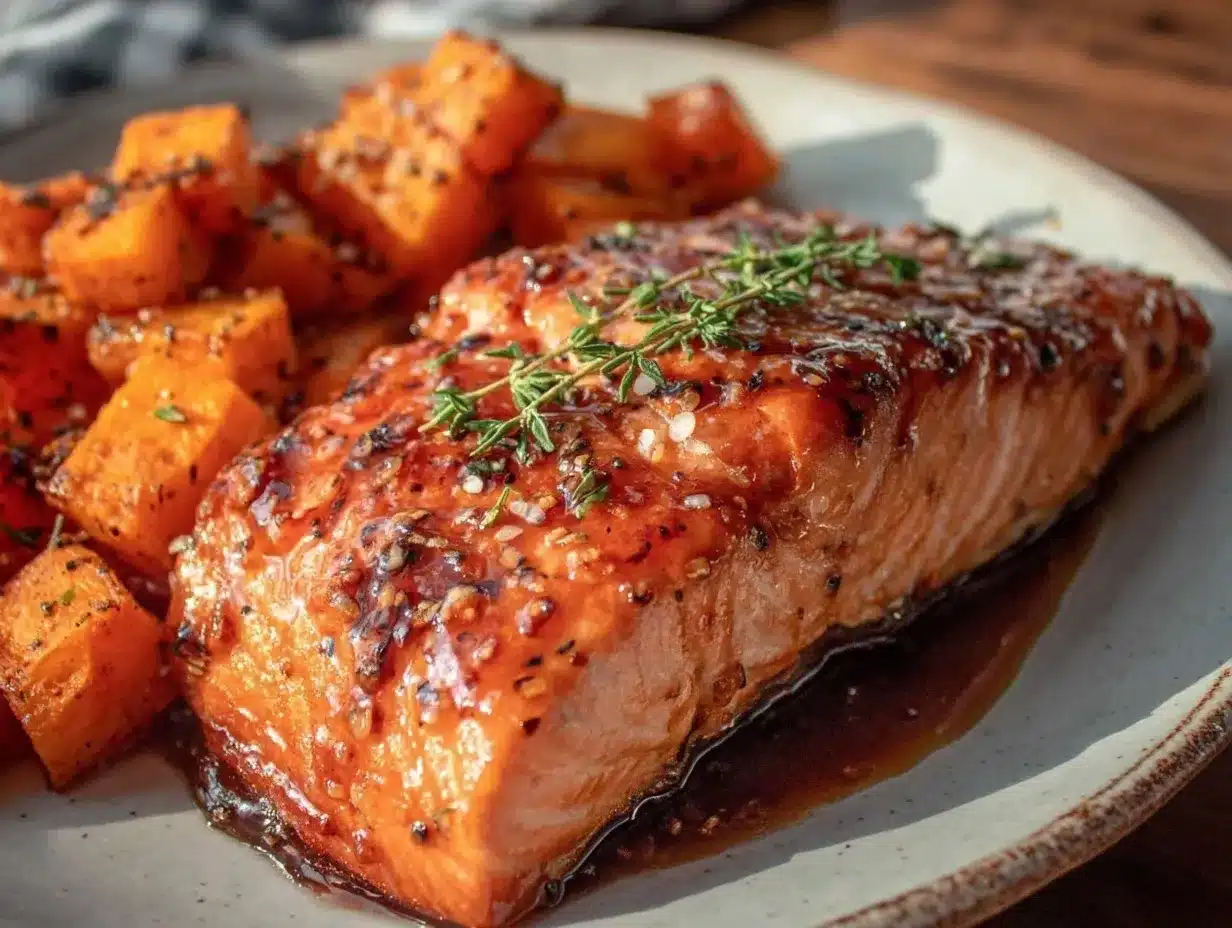
- Preheat your oven to 425°F (220°C). This high heat helps caramelize the glaze and roast the squash to tender perfection. Line your baking sheet with parchment paper for easier cleanup.
- Prepare the butternut squash: Peel the squash carefully, cut in half, scoop out seeds, and chop into roughly 1-inch cubes (about 3 cups / 450 grams). Toss the cubes with 1 tablespoon olive oil, ½ teaspoon salt, ¼ teaspoon black pepper, and a pinch of dried thyme or rosemary if you like. Spread in a single layer on one side of the baking sheet.
- Mix the glaze: In a small bowl, whisk together 3 tablespoons pure maple syrup, 2 tablespoons Dijon mustard, ½ teaspoon garlic powder, ¼ teaspoon smoked paprika (optional), 1 tablespoon fresh lemon juice, and a pinch of salt and pepper. Taste it — the balance of sweet, tangy, and smoky is what makes this glaze special.
- Prepare the salmon: Pat 4 salmon fillets dry with paper towels (about 6 ounces / 170 grams each). Lightly oil them with olive oil and season with salt and pepper. Place them skin-side down on the other side of the baking sheet, leaving room between the fillets and the squash.
- Glaze the salmon: Using a pastry brush or spoon, spread the maple Dijon glaze generously over the top of each salmon fillet. Don’t be shy here — the coating will caramelize beautifully in the oven.
- Roast everything: Place the baking sheet in the oven and roast for about 18-20 minutes. The butternut squash should be fork-tender with slightly crisp edges, and the salmon should flake easily when tested with a fork. (If you prefer your salmon a bit less cooked, check around 15 minutes.)
- Optional finishing touch: For a touch of caramelization, switch your oven to broil for the last 2 minutes, watching closely to avoid burning the glaze.
- Serve immediately: Plate the salmon alongside the roasted butternut squash. A squeeze of fresh lemon juice over the top adds brightness right before serving.
One tip I learned? Don’t skip patting the salmon dry — it helps the glaze stick better and gives you that nice caramelized finish. Also, arranging the squash and salmon with space between helps the heat circulate for even roasting.
Cooking Tips & Techniques
Getting that perfect balance on the maple Dijon glazed salmon takes a little finesse, but it’s totally doable.
- Room temperature salmon: Let the fillets sit out for 10-15 minutes before cooking. This helps them cook more evenly without drying out.
- Don’t over-glaze: Applying too thick a layer of glaze can cause it to burn quickly under the broiler. Keep it to a thin, even coat for best results.
- Watch your oven time: Oven temperatures vary, so start checking your salmon at 15 minutes. You want it flaky but still moist inside.
- Roast squash evenly: Cut your butternut squash pieces roughly the same size (about 1 inch) so they cook at the same rate. Tossing them halfway through roasting helps with even browning.
- Multitask smartly: While the salmon and squash roast, you can whip up a simple green salad or prepare a refreshing watermelon cucumber feta salad to balance the savory sweetness on your plate.
Personally, I’ve tried cooking the glaze separately on the stove and then adding it after baking, but brushing it on before roasting delivers that irresistible caramelized crust that’s worth the extra attention.
Variations & Adaptations
This recipe is pretty versatile — you can adjust it based on what’s in your kitchen or your dietary needs.
- Spicy Maple Dijon Glaze: Add a pinch of cayenne pepper or a dash of hot sauce to the glaze for a kick that contrasts nicely with the sweetness.
- Gluten-Free and Paleo: Stick with pure maple syrup and mustard without additives. Serve with roasted sweet potatoes instead of butternut squash for a slightly different texture.
- Grilled Version: Brush the glaze on salmon fillets and grill over medium heat for 8-10 minutes, turning once. Roast or grill the butternut squash separately in foil packets.
- Herb Variations: Swap thyme for sage or rosemary on the squash for a seasonal twist that pairs beautifully with salmon.
- Personal Twist: I once tried adding a little orange zest to the glaze — it brought a subtle citrus brightness that was unexpectedly lovely, especially in winter months.
Serving & Storage Suggestions
This glazed salmon with roasted butternut squash is best enjoyed fresh from the oven while the glaze is still glossy and the squash warm and tender.
Serve it with a simple side like steamed green beans or my favorite garlic herb butter shrimp skewers for a seafood feast. A crisp white wine or a sparkling water with lemon would pair nicely, too.
Leftovers keep well in an airtight container in the refrigerator for up to 2 days. Reheat gently in the oven or microwave, but be mindful that the glaze might lose some of its caramelized texture. The flavors tend to deepen after a day, making for a nice lunch option.
If you want to prep ahead, you can roast the butternut squash a day in advance and then glaze and cook the salmon just before serving to keep everything fresh.
Nutritional Information & Benefits
This recipe offers a good balance of protein, healthy fats, and complex carbohydrates. Salmon is a fantastic source of omega-3 fatty acids, which support heart and brain health. Butternut squash brings fiber, vitamins A and C, and antioxidants that bolster your immune system.
On average, one serving (one 6-ounce salmon fillet with about 3/4 cup of roasted squash) contains roughly 350-400 calories, 25 grams of protein, and moderate fats mostly from the salmon and olive oil. It’s naturally gluten-free and low in carbs, making it suitable for many dietary preferences.
Aside from being healthy, the recipe feels indulgent thanks to the sweet-savory glaze, so it’s a satisfying choice whether you’re watching your intake or just want a well-rounded meal.
Conclusion
This flavorful maple Dijon glazed salmon with roasted butternut squash is one of those recipes that quietly proves itself over time. It’s approachable, reliable, and just interesting enough to keep you coming back. What started as a strange pairing in my mind became a trusted weeknight dinner staple.
Feel free to tweak the glaze or swap the squash for other roasted veggies that suit your mood — this recipe is a solid base for your culinary creativity. Personally, I love how it combines simple ingredients into a dish that feels thoughtfully prepared without the hassle.
If you try this recipe, I’d love to hear how you made it your own or what sides you paired it with. Sharing those little kitchen stories makes all the difference. Here’s to meals that surprise us and stick around in the best way.
Frequently Asked Questions
- Can I use frozen salmon for this recipe? Yes, just thaw it completely and pat dry before glazing to avoid excess moisture.
- What if I don’t have butternut squash? Sweet potatoes or acorn squash work well as substitutes for roasting alongside the salmon.
- Is it okay to make the glaze ahead of time? Absolutely! Store it in the fridge for up to 3 days and give it a quick stir before brushing onto the salmon.
- Can I bake the salmon and squash separately? Yes, if you want more control over cooking times, bake the squash first, then add the salmon for the last 15-20 minutes.
- How do I know when the salmon is done? It should flake easily with a fork and have an internal temperature of 145°F (63°C).
Pin This Recipe!
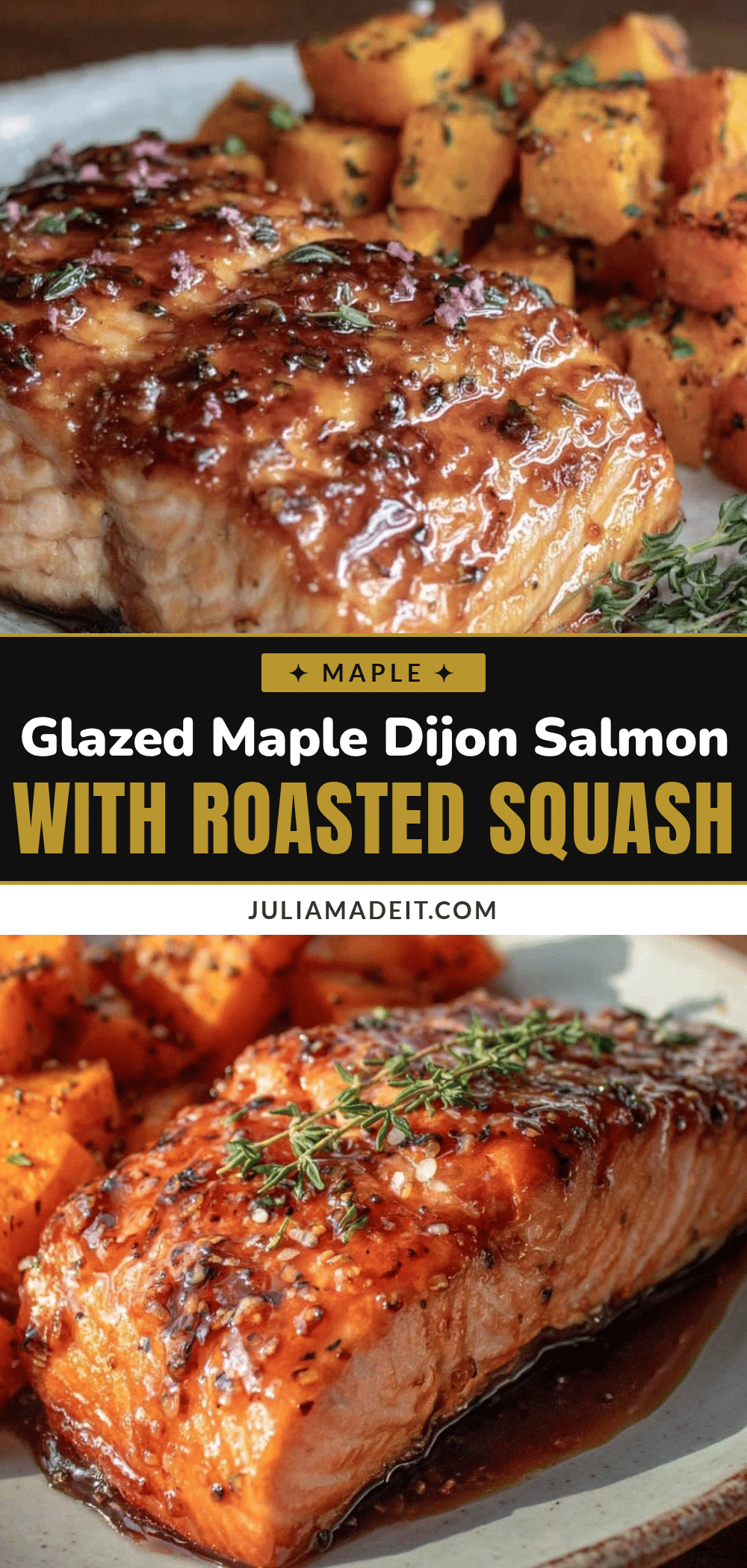
Flavorful Maple Dijon Glazed Salmon Recipe with Easy Roasted Butternut Squash
A simple and satisfying weeknight meal featuring salmon glazed with a sweet and tangy maple Dijon sauce, roasted alongside tender butternut squash cubes.
- Prep Time: 15 minutes
- Cook Time: 20 minutes
- Total Time: 35 minutes
- Yield: 4 servings 1x
- Category: Main Course
- Cuisine: American
Ingredients
- 3 tablespoons pure maple syrup (Grade A preferred)
- 2 tablespoons Dijon mustard
- 1/2 teaspoon garlic powder
- 1/4 teaspoon smoked paprika (optional)
- 1 tablespoon fresh lemon juice
- Pinch of salt and freshly ground black pepper
- 4 salmon fillets, about 6 ounces (170 grams) each, skin-on or skinless
- Olive oil or avocado oil (for roasting and optional drizzle)
- 3 cups butternut squash, peeled, seeded, and cut into 1-inch cubes (about 450 grams)
- 1 tablespoon olive oil
- 1/2 teaspoon salt
- 1/4 teaspoon black pepper
- Pinch of dried thyme or rosemary (optional)
Instructions
- Preheat your oven to 425°F (220°C). Line a baking sheet with parchment paper for easier cleanup.
- Prepare the butternut squash by peeling, seeding, and cutting into 1-inch cubes (about 3 cups). Toss with 1 tablespoon olive oil, 1/2 teaspoon salt, 1/4 teaspoon black pepper, and a pinch of dried thyme or rosemary if desired. Spread in a single layer on one side of the baking sheet.
- In a small bowl, whisk together 3 tablespoons pure maple syrup, 2 tablespoons Dijon mustard, 1/2 teaspoon garlic powder, 1/4 teaspoon smoked paprika (optional), 1 tablespoon fresh lemon juice, and a pinch of salt and pepper. Taste and adjust seasoning as needed.
- Pat the salmon fillets dry with paper towels. Lightly oil them with olive oil and season with salt and pepper. Place them skin-side down on the other side of the baking sheet, leaving space between fillets and squash.
- Using a pastry brush or spoon, spread the maple Dijon glaze generously over the top of each salmon fillet.
- Roast in the oven for 18-20 minutes until the butternut squash is fork-tender with slightly crisp edges and the salmon flakes easily with a fork. For less cooked salmon, check at 15 minutes.
- Optional: For extra caramelization, broil for the last 2 minutes, watching closely to avoid burning.
- Serve immediately with a squeeze of fresh lemon juice over the salmon and squash.
Notes
Pat salmon dry before glazing to help the glaze stick and caramelize better. Space salmon and squash apart on the baking sheet for even roasting. Start checking salmon at 15 minutes to avoid overcooking. The glaze can be made ahead and stored in the fridge for up to 3 days. For a spicy twist, add cayenne pepper or hot sauce to the glaze.
Nutrition
- Serving Size: One 6-ounce salmon f
- Calories: 375
- Sugar: 10
- Sodium: 350
- Fat: 22
- Saturated Fat: 3
- Carbohydrates: 15
- Fiber: 3
- Protein: 25
Keywords: maple Dijon salmon, glazed salmon, roasted butternut squash, easy salmon recipe, weeknight dinner, healthy salmon, gluten-free salmon