The apple cider had been sitting in my fridge for almost two weeks. I bought it during a trip to the orchard, convinced I’d drink it all, but somehow life got in the way. And there it was, taking up space, staring at me every time I reached for the milk. I couldn’t let it go to waste—not when I’d paid eight dollars for that half-gallon. So I did what any reasonable person does when faced with leftover seasonal liquid: I turned it into cookies.
These soft apple cider cookies with cinnamon glaze were born from that moment of stubbornness. I wasn’t planning on baking that afternoon. Honestly, I had a sink full of dishes and a to-do list that would make anyone cry. But the cider kept calling my name, and I figured, why not? I’d seen recipes floating around for years, but I wanted something different. Not a cakey muffin masquerading as a cookie, and definitely not something that tasted like weak apple juice in flour form. I wanted a real cookie—soft, chewy, and packed with that concentrated apple cider flavor you only get when you actually reduce the cider first.
So I boiled that cider down until my kitchen smelled like autumn in a pot. I stirred in some butter, added a little cinnamon, and crossed my fingers. What came out of the oven was better than I expected. The cookies had that perfect pillowy texture, with edges just barely golden and centers so soft they practically melt. And the glaze? That cinnamon drizzle on top? It’s the kind of thing that makes you close your eyes after the first bite. These soft apple cider cookies with cinnamon glaze have become my go-to fall treat, and I think they’re about to become yours too.
Why You’ll Love This Recipe
I’ve tested this recipe more times than I care to admit. The first batch was too flat. The second was too cakey. The third? That was the one where I finally nailed the balance between soft and sturdy. These cookies don’t crumble apart when you bite into them, but they’re not tough either. They hit that sweet spot between a bakery-style cookie and a homemade one.
- Quick & Easy: From start to finish, you’re looking at about 30 minutes of active time. The dough comes together in one bowl, and there’s no chilling required. I know, right? No waiting around.
- Simple Ingredients: You probably have most of this stuff in your pantry already. Butter, sugar, flour, eggs, cinnamon. The only special ingredient is apple cider, and you can find that at any grocery store this time of year.
- Perfect for Fall Baking: These cookies scream autumn. They’re great for bake sales, Thanksgiving dessert tables, or just a cozy afternoon snack with a cup of coffee.
- Crowd-Pleaser: I brought a batch to a Friendsgiving gathering last year, and they disappeared before the turkey even hit the table. Kids love them, adults love them, even my picky neighbor who “doesn’t do fruit desserts” asked for the recipe.
- Unbelievably Delicious: The secret is reducing the apple cider before adding it to the dough. This concentrates the flavor and removes excess liquid, so you get that intense apple taste without making the cookies soggy. It’s a simple trick that makes all the difference.
What sets these soft apple cider cookies with cinnamon glaze apart from other recipes is the texture. They’re not crispy, not crunchy, not dry. They’re soft, almost like a little cloud with a cinnamon sugar hug. The glaze adds just enough sweetness without overwhelming the apple flavor. Trust me, this isn’t just another cookie recipe—it’s the one you’ll come back to season after season.
What Ingredients You Will Need
This recipe uses simple, wholesome ingredients to create something truly special. Most of these are pantry staples, so you might not even need a trip to the store. Here’s what you’ll need and why each ingredient matters.
For the Cookies
- 1 cup apple cider (reduced to about ¼ cup) — This is the star of the show. You’ll simmer it down until it thickens and concentrates, giving you that deep, tangy apple flavor. Don’t skip this step. I’ve tried using regular cider without reducing it, and the cookies turn out flat and watery.
- ½ cup unsalted butter, softened — Butter gives these cookies richness and that tender crumb. Make sure it’s at room temperature so it creams properly with the sugar. If you forget to take it out early, cut it into small cubes and let it sit for 10 minutes.
- ¾ cup granulated sugar — Just regular white sugar here. It helps the cookies spread just enough while keeping them soft.
- ¼ cup light brown sugar, packed — Brown sugar adds moisture and a hint of molasses flavor that pairs beautifully with the apple cider. I use light brown sugar because dark brown can overwhelm the apple taste.
- 1 large egg, room temperature — The egg binds everything together and adds structure. Cold eggs can seize the butter, so let yours sit out for about 20 minutes before starting.
- 1 teaspoon vanilla extract — Vanilla rounds out the flavors and makes everything taste more, well, baked. Use pure vanilla extract if you have it, but imitation works fine too.
- 2 cups all-purpose flour — Spoon and level your flour for the best results. Scooping directly from the bag can pack in too much flour, making the cookies dry.
- 1 teaspoon baking powder — This gives the cookies their lift. Make sure your baking powder isn’t expired, or your cookies won’t rise properly.
- ½ teaspoon baking soda — Baking soda helps with browning and spreading. It also reacts with the acidity in the apple cider for a better texture.
- ½ teaspoon salt — Salt balances the sweetness and enhances the apple flavor. Don’t skip it.
- 1 teaspoon ground cinnamon — Cinnamon and apple are a classic pair. This adds warmth and that cozy fall feeling.
- ¼ teaspoon ground nutmeg — Just a pinch. Nutmeg adds a subtle earthiness that makes the cookies taste more complex.
For the Cinnamon Glaze
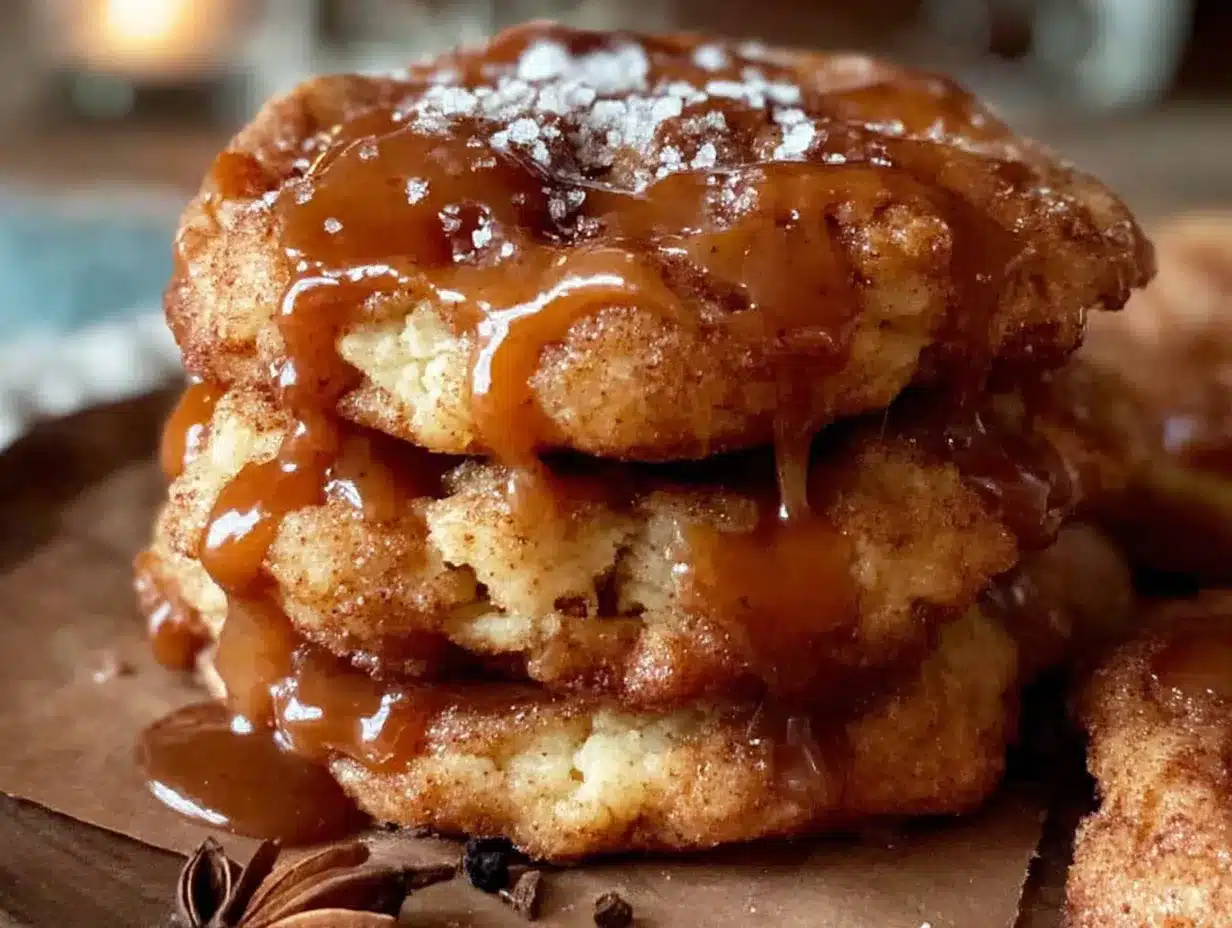
- 1 cup powdered sugar — Sifted if you want a super smooth glaze. I usually skip sifting and just whisk really well.
- 2 to 3 tablespoons milk — Whole milk gives the creamiest glaze, but any milk works. Start with 2 tablespoons and add more if needed.
- ½ teaspoon ground cinnamon — This gives the glaze that signature cinnamon flavor. I’ve tried using cinnamon extract before, but it’s too strong. Stick with ground cinnamon.
- ¼ teaspoon vanilla extract — Optional, but I like the extra depth it adds.
I recommend using a good quality apple cider for this recipe. I usually grab Martinelli’s or whatever local brand my grocery store has. The cheaper ciders tend to be more watery and take longer to reduce, so keep that in mind. Also, if you’re feeling adventurous, try using fresh-pressed cider from a local orchard—it makes a noticeable difference in flavor.
Equipment Needed
You don’t need anything fancy to make these soft apple cider cookies with cinnamon glaze. Here’s what I use every time:
- Medium saucepan — For reducing the apple cider. A 2-quart saucepan works perfectly. Don’t use a skillet because the liquid will evaporate too quickly and you might burn it.
- Large mixing bowl — For the cookie dough. I use a glass bowl, but any large bowl works.
- Hand mixer or stand mixer — You can cream the butter and sugar by hand, but a mixer makes it much easier and faster. I use my trusty hand mixer for this recipe.
- Measuring cups and spoons — Accurate measurements matter in baking. Use dry measuring cups for flour and sugar, and liquid measuring cups for the cider.
- Baking sheets — I recommend using light-colored baking sheets. Dark sheets can cause the bottoms of the cookies to brown too quickly.
- Parchment paper or silicone baking mat — This prevents sticking and makes cleanup a breeze. Plus, it helps the cookies bake evenly.
- Cooling rack — For cooling the cookies before glazing. If you glaze them while they’re still warm, the glaze will just melt off.
- Small bowl and whisk — For making the glaze. A fork works too if you don’t have a small whisk.
- Cookie scoop (optional) — I use a 1.5-tablespoon scoop for uniform cookies. It’s not necessary, but it makes the process faster and gives you consistent results.
If you don’t have a hand mixer, you can cream the butter and sugar with a wooden spoon. It takes a few extra minutes and a bit of elbow grease, but it works. I’ve done it plenty of times when my mixer was in the dishwasher.
Preparation Method
Let’s get baking. These soft apple cider cookies with cinnamon glaze come together quickly, so preheat your oven first and get everything ready.
- Reduce the apple cider: Pour 1 cup of apple cider into a medium saucepan. Bring it to a boil over medium-high heat, then reduce the heat to medium-low and let it simmer. Stir occasionally. You want it to reduce down to about ¼ cup. This takes about 12 to 15 minutes. The cider will thicken and become syrupy. Watch it closely toward the end so it doesn’t burn. Once it’s reduced, remove it from the heat and let it cool slightly. It should look darker and smell intensely of apples.
- Preheat the oven: Set your oven to 350°F (175°C). Line two baking sheets with parchment paper or silicone mats.
- Cream the butter and sugars: In a large mixing bowl, beat the softened butter, granulated sugar, and brown sugar together until light and fluffy. This takes about 2 to 3 minutes with a hand mixer on medium speed. Scrape down the sides of the bowl halfway through. The mixture should look pale and slightly increased in volume.
- Add the wet ingredients: Beat in the egg, vanilla extract, and the reduced apple cider. Mix until just combined. The batter might look a little curdled at this point, but that’s totally normal. Don’t panic.
- Combine the dry ingredients: In a separate bowl, whisk together the flour, baking powder, baking soda, salt, cinnamon, and nutmeg. This ensures everything is evenly distributed so you don’t end up with a pocket of baking powder in one cookie.
- Mix the dough: Gradually add the dry ingredients to the wet mixture, mixing on low speed or stirring by hand. Mix until just combined. Overmixing will make the cookies tough. The dough will be soft and slightly sticky, but it should hold together.
- Scoop and shape: Use a cookie scoop or a tablespoon to drop rounded balls of dough onto the prepared baking sheets. Space them about 2 inches apart. They will spread a little, but not too much. If you want perfectly round cookies, you can roll the dough balls between your palms before placing them on the sheet.
- Bake: Bake for 10 to 12 minutes, or until the edges are set and lightly golden. The centers will still look soft and slightly underdone—that’s exactly what you want. They’ll continue to set as they cool. If you overbake them, they’ll be dry.
- Cool: Let the cookies cool on the baking sheet for 5 minutes. Then transfer them to a wire cooling rack to cool completely. Don’t skip this step. If you try to move them too soon, they’ll fall apart.
- Make the glaze: While the cookies are cooling, whisk together the powdered sugar, 2 tablespoons of milk, cinnamon, and vanilla extract in a small bowl. The glaze should be thick but pourable. If it’s too thick, add another tablespoon of milk. If it’s too thin, add a little more powdered sugar.
- Glaze the cookies: Once the cookies are completely cool, drizzle the glaze over the tops using a spoon or a piping bag. I like to use a small spoon and just let it drizzle naturally. You can also dip the tops of the cookies directly into the glaze for a more even coating.
- Let the glaze set: Allow the glaze to set for about 10 to 15 minutes before serving. If you’re impatient like me, you can pop them in the fridge for 5 minutes to speed things up.
A few things I’ve learned the hard way: Don’t skip the cooling time before glazing. I once glazed warm cookies and ended up with a puddle of sugary goo on my counter. Also, if your dough feels too sticky to scoop, pop it in the fridge for 10 minutes. It makes a world of difference.
Cooking Tips & Techniques
Over the years, I’ve made plenty of mistakes with cookie recipes. Here’s what I’ve learned so you don’t have to repeat my failures.
Reduce the cider properly: This is the most important step. If you don’t reduce the cider enough, your cookies will be flat and soggy. If you reduce it too much, it can turn into a sticky, caramel-like mess that’s hard to incorporate. Aim for that syrupy consistency where it coats the back of a spoon. I usually start checking at the 10-minute mark and go from there.
Room temperature ingredients matter: I know, I know, everyone says this. But it’s true. Cold butter doesn’t cream properly, and cold eggs can cause the batter to seize. Take your butter and egg out of the fridge about 30 minutes before you start. If you forget, place the egg in a bowl of warm water for 5 minutes and microwave the butter in 5-second intervals until it’s soft but not melted.
Don’t overmix the dough: Once you add the flour, mix just until you can’t see any more white streaks. Overmixing develops the gluten in the flour, which leads to tough, dense cookies. We want soft, tender cookies here. I usually switch to a rubber spatula for the final few stirs to avoid overworking the dough.
Use a cookie scoop for uniform size: This isn’t just about aesthetics. When cookies are the same size, they bake evenly. Some won’t be done while others are burnt. A scoop also makes the process faster and less messy. I love my OXO scoop—it has a little wiper that cleans the inside as you go.
Watch the baking time carefully: Ovens vary wildly. My old oven would bake these in exactly 11 minutes. My new one takes 10. Start checking at the 9-minute mark. The edges should be set and lightly golden, but the centers should still look soft and slightly underdone. They will continue to bake on the hot baking sheet after you pull them out.
Let them cool completely before glazing: I cannot stress this enough. Warm cookies + glaze = a sticky disaster. The glaze will melt and run right off, leaving you with a mess and sad, naked cookies. Patience is key here. If you’re in a hurry, spread them out on the cooling rack so air circulates around them, speeding up the process.
Variations & Adaptations
One of the best things about these soft apple cider cookies with cinnamon glaze is how easy they are to customize. Here are some variations I’ve tried and loved.
Apple Cider Cookies with Maple Glaze: Swap the cinnamon in the glaze for maple extract. Use ½ teaspoon of maple extract instead of the vanilla, and add an extra tablespoon of powdered sugar to keep the consistency right. The maple flavor pairs beautifully with the apple cider, giving the cookies a cozy, almost breakfast-like vibe.
Gluten-Free Version: Substitute the all-purpose flour with a 1:1 gluten-free baking flour blend. I’ve tested this with Bob’s Red Mill and King Arthur’s gluten-free flour, and both worked well. The cookies might be slightly more delicate, so handle them gently when transferring to the cooling rack. No other adjustments needed.
Vegan Option: Use vegan butter (I like Miyoko’s) and a flax egg (1 tablespoon ground flaxseed mixed with 3 tablespoons water, let sit for 5 minutes). For the glaze, use plant-based milk like oat or almond milk. The cookies will be a bit less tender, but they’re still delicious. I made these for a vegan friend last fall, and she asked for the recipe immediately.
Add-Ins: Fold in ½ cup of chopped walnuts or pecans for some crunch. Or add ½ cup of dried cranberries for a tart contrast. I once added white chocolate chips, and while it was a bit sweet, it was still really good. Just be careful not to overload the dough, or the cookies won’t hold their shape.
Spiced Up Version: Increase the cinnamon to 1½ teaspoons and add ¼ teaspoon of ground cloves and ⅛ teaspoon of ground cardamom. This gives the cookies a chai-like flavor that’s perfect for winter baking. I made these for a holiday cookie exchange, and they were the first tin to empty.
Browned Butter Version: Brown the butter before creaming it with the sugars. Melt the butter in a saucepan over medium heat, swirling occasionally, until it turns golden brown and smells nutty. Let it cool slightly before using. This adds a deep, toasty flavor that takes the cookies to another level. Just note that browning butter reduces its moisture content, so the cookies might be slightly less soft.
Serving & Storage Suggestions
These cookies are best served at room temperature, right after the glaze has set. The contrast between the soft cookie and the slightly crackly glaze is pure perfection. I like to serve them on a rustic wooden platter with a few cinnamon sticks scattered around for visual appeal. They pair beautifully with a hot cup of coffee, spiced chai, or a tall glass of cold milk.
For a fun presentation, stack them in a mason jar tied with a ribbon. They make great homemade gifts for neighbors, teachers, or holiday hostesses. I’ve also packed them in lunchboxes, and they hold up surprisingly well—no crumbling or smushing.
Storage: Store the cookies in an airtight container at room temperature for up to 5 days. Place a piece of bread in the container to help keep them soft. The bread will absorb excess moisture and prevent the cookies from drying out. Just replace the bread every couple of days. I’ve also stored them in a cookie tin with a tight-fitting lid, and they stayed fresh for almost a week.
Freezing: These cookies freeze beautifully. You can freeze the baked, unglazed cookies for up to 3 months. Wrap them individually in plastic wrap, then place them in a freezer-safe bag. When you’re ready to serve, thaw them at room temperature, then glaze them fresh. I’ve also frozen the unbaked dough. Scoop the dough into balls, place them on a baking sheet, and freeze until solid. Transfer the frozen dough balls to a freezer bag. Bake directly from frozen, adding 1 to 2 minutes to the baking time.
Reheating: If you want that just-baked warmth, pop a cookie in the microwave for about 10 seconds. Be careful not to overheat it, or the glaze will melt. For a larger batch, place them on a baking sheet in a 300°F oven for 3 to 5 minutes.
One thing I’ve noticed: these cookies actually get better after a day or two. The flavors meld together, and the texture becomes even softer. So don’t worry if you can’t eat them all on day one—they’ll still be amazing.
Nutritional Information & Benefits
Let’s be real: these are cookies, not health food. But they’re made with real ingredients, and that counts for something. Here’s the estimated nutritional breakdown per cookie (based on 24 cookies):
- Calories: 145
- Total Fat: 6g
- Saturated Fat: 3.5g
- Cholesterol: 25mg
- Sodium: 105mg
- Total Carbohydrates: 22g
- Dietary Fiber: 0.5g
- Sugars: 13g
- Protein: 2g
These numbers are estimates and will vary based on the specific brands and ingredients you use. If you’re watching your sugar intake, you can reduce the glaze or skip it entirely. The cookies are still delicious without it.
On the bright side, apple cider contains antioxidants called polyphenols, which may help reduce inflammation. Cinnamon has been linked to blood sugar regulation and has anti-inflammatory properties. So while these aren’t a superfood, they’re not empty calories either. They’re a treat made with real ingredients, and sometimes that’s exactly what you need.
If you have dietary concerns, these cookies contain gluten, dairy, and eggs. For a gluten-free or vegan option, check out the variations section above. I’ve tested both, and they work well.
Conclusion
These soft apple cider cookies with cinnamon glaze have become a staple in my fall baking rotation. They’re the kind of cookie that makes you slow down and actually enjoy the moment—the kind you bake when you want the house to smell like autumn, when you need a little comfort, or when you just want something sweet without a lot of fuss.
I love how forgiving this recipe is. You can tweak the spices, add mix-ins, or change up the glaze, and it still works. It’s become my go-to for fall gatherings, lazy Sunday afternoons, and even holiday cookie exchanges. There’s something about that concentrated apple flavor combined with the soft, pillowy texture that just feels right.
I’d love to hear how these turn out for you. Did you try any variations? Did you add nuts or change the glaze? Drop a comment below and let me know. And if you’re looking for more cozy fall recipes, you might enjoy my brown butter pumpkin pie bars or my pumpkin cream cheese muffins. Happy baking, friends!
Frequently Asked Questions
Can I use apple juice instead of apple cider?
Technically yes, but the flavor won’t be as rich. Apple juice is thinner and less concentrated, so you’ll need to reduce it even more. The cookies will also be slightly less flavorful. Stick with apple cider if you can find it.
Why did my cookies turn out flat?
This usually happens when the apple cider isn’t reduced enough. Too much liquid in the dough causes the cookies to spread too much. Make sure you reduce the cider to about ¼ cup. Also, check that your baking powder and baking soda are fresh. Expired leavening agents won’t give the cookies enough lift.
Can I make the dough ahead of time?
Absolutely. You can refrigerate the dough for up to 3 days. Just wrap it tightly in plastic wrap or store it in an airtight container. When you’re ready to bake, let the dough sit at room temperature for about 10 minutes so it’s easier to scoop. You may need to add a minute or two to the baking time.
How do I get the glaze to look pretty?
Use a small spoon and drizzle the glaze in a back-and-forth motion. If you want a more polished look, transfer the glaze to a piping bag and snip off a tiny corner. You can also dip the tops of the cookies directly into the glaze for an even coating. Let the excess drip off before placing them on the cooling rack.
Can I double this recipe?
Yes, this recipe doubles beautifully. Just make sure you use a larger saucepan for reducing the cider, and don’t overcrowd your baking sheets. Bake in batches if needed. The dough can sit at room temperature while the first batch bakes, but if it gets too warm, pop it in the fridge for 10 minutes between batches.
Pin This Recipe!
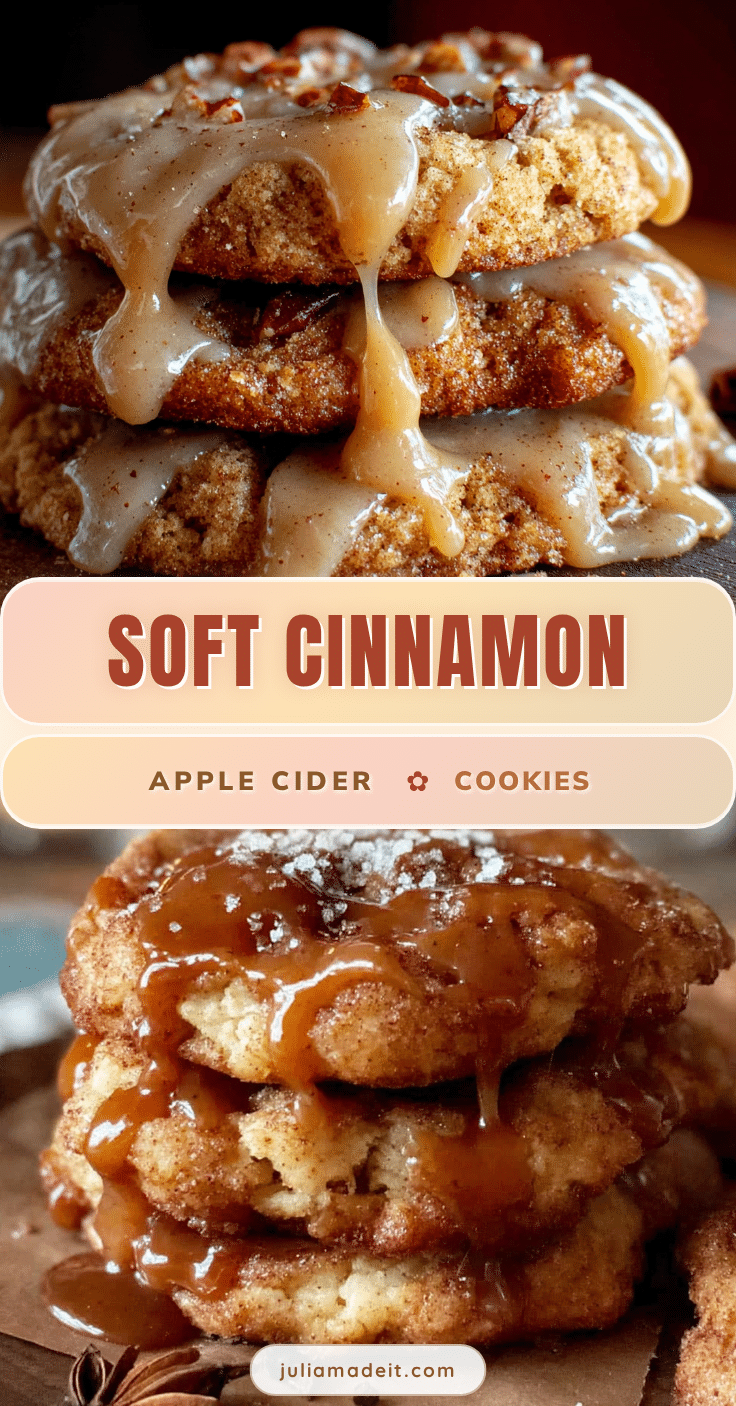
Soft Apple Cider Cookies with Easy Cinnamon Glaze
Soft, chewy apple cider cookies with a concentrated apple flavor from reduced cider, topped with a simple cinnamon glaze. Perfect for fall baking, these cookies are quick to make and require no chilling.
- Prep Time: 15 minutes
- Cook Time: 12 minutes
- Total Time: 27 minutes
- Yield: 24 servings 1x
- Category: Dessert
- Cuisine: American
Ingredients
- 1 cup apple cider (reduced to about ¼ cup)
- ½ cup unsalted butter, softened
- ¾ cup granulated sugar
- ¼ cup light brown sugar, packed
- 1 large egg, room temperature
- 1 teaspoon vanilla extract
- 2 cups all-purpose flour
- 1 teaspoon baking powder
- ½ teaspoon baking soda
- ½ teaspoon salt
- 1 teaspoon ground cinnamon
- ¼ teaspoon ground nutmeg
- 1 cup powdered sugar
- 2 to 3 tablespoons milk
- ½ teaspoon ground cinnamon (for glaze)
- ¼ teaspoon vanilla extract (for glaze)
Instructions
- Reduce the apple cider: Pour 1 cup of apple cider into a medium saucepan. Bring to a boil over medium-high heat, then reduce heat to medium-low and simmer, stirring occasionally, until reduced to about ¼ cup (12-15 minutes). Remove from heat and let cool slightly.
- Preheat the oven to 350°F (175°C). Line two baking sheets with parchment paper or silicone mats.
- Cream the butter and sugars: In a large mixing bowl, beat the softened butter, granulated sugar, and brown sugar together until light and fluffy (2-3 minutes with a hand mixer on medium speed). Scrape down the sides as needed.
- Add the wet ingredients: Beat in the egg, vanilla extract, and reduced apple cider until just combined. The batter may look slightly curdled.
- Combine the dry ingredients: In a separate bowl, whisk together the flour, baking powder, baking soda, salt, cinnamon, and nutmeg.
- Mix the dough: Gradually add the dry ingredients to the wet mixture, mixing on low speed or stirring by hand until just combined. Do not overmix. The dough will be soft and slightly sticky.
- Scoop and shape: Use a cookie scoop or tablespoon to drop rounded balls of dough onto the prepared baking sheets, spacing them about 2 inches apart. Optionally, roll dough balls between palms for perfectly round cookies.
- Bake for 10 to 12 minutes, or until edges are set and lightly golden. Centers will still look soft. Cool on the baking sheet for 5 minutes, then transfer to a wire cooling rack to cool completely.
- Make the glaze: In a small bowl, whisk together the powdered sugar, 2 tablespoons of milk, cinnamon, and vanilla extract. Add more milk if needed for a pourable consistency.
- Glaze the cookies: Once cookies are completely cool, drizzle the glaze over the tops using a spoon or piping bag. Let the glaze set for 10-15 minutes before serving.
Notes
Reduce the apple cider properly to avoid flat cookies. Use room temperature ingredients for best results. Do not overmix the dough. Let cookies cool completely before glazing. Store in an airtight container at room temperature for up to 5 days. Freeze baked, unglazed cookies for up to 3 months.
Nutrition
- Serving Size: 1 cookie
- Calories: 145
- Sugar: 13
- Sodium: 105
- Fat: 6
- Saturated Fat: 3.5
- Carbohydrates: 22
- Fiber: 0.5
- Protein: 2
Keywords: apple cider cookies, cinnamon glaze, fall cookies, soft cookies, easy cookie recipe