I figured black-eyed peas were one of those ingredients you had to be born liking — a Southern thing that just wouldn’t translate to my kitchen. It took about one January 1st for that assumption to fall apart completely.
The thing is, I’d never actually tasted them. I just had this vague memory of a sad-looking bowl of beans at a potluck years ago, and I wrote off the whole category. But then a friend from Georgia dropped off a container of her New Year’s soup, and I had to eat my words — warm, smoky, tender words, apparently. That first spoonful was a surprise. It wasn’t heavy or mushy. It was savory and a little bit brothy, with this incredible richness that came from a ham hock and a long, slow simmer.
I spent the next year trying to recreate that bowl from memory. I burned the aromatics once, oversalted another batch badly, and learned that canned peas are fine but dried ones are where the magic lives. This black-eyed pea soup recipe is the result of all that trial and error. It’s the one I make every New Year’s now, not just for luck, but because it actually tastes like something worth waiting for. And honestly? It makes the whole house smell like a hug.
So if you’ve been skeptical about black-eyed peas, I get it. But this soup might just change your mind — one cozy, lucky bowl at a time.
Why You’ll Love This Recipe
This black-eyed pea soup isn’t just about tradition. It’s about having a dinner that feels special without requiring a ton of effort. Here’s why it keeps showing up on my stove year after year:
- Simple Ingredients: Nothing fancy here. You can find everything at a regular grocery store, including the dried black-eyed peas. No need for specialty trips.
- Make-Ahead Friendly: This soup actually gets better the next day. Make it a day ahead for New Year’s, and the flavors will be even deeper. It’s a stress-free way to start the year.
- Budget-Friendly: A bag of dried peas costs next to nothing, and a ham hock is one of the cheapest cuts of meat. This is a meal that stretches your dollar without skimping on flavor.
- Perfect for a Crowd: It makes a big pot. Whether you’re feeding family or having friends over, this soup scales beautifully and everyone always asks for seconds.
- Unbelievably Comforting: There’s a reason this is a New Year’s classic. It’s hearty, warming, and that smoky broth with tender peas is pure soul food. It’s the kind of meal that makes you slow down.
This isn’t just another bean soup. The key is slowly rendering the ham hock to create a rich, smoky base, then letting the peas simmer until they’re creamy but still hold their shape. It’s a technique that turns humble ingredients into something genuinely crave-worthy. This is the version that made a skeptic into a believer.
What Ingredients You Will Need
This recipe uses simple, wholesome ingredients that work together to build deep, savory flavor. Most are pantry staples, and the ones that aren’t are easy to find. Here’s what you’ll need:
- 1 tablespoon olive oil (for sautéing the aromatics; avocado oil works too)
- 1 large yellow onion, diced (about 2 cups; the base of the flavor)
- 3 celery stalks, diced (adds that classic savory backbone)
- 3 carrots, peeled and diced (for sweetness and color)
- 4 cloves garlic, minced (fresh is best here; don’t use the jarred stuff)
- 1 teaspoon smoked paprika (this is non-negotiable for that deep, smoky flavor)
- 1/2 teaspoon dried thyme (or 1 teaspoon fresh, if you have it)
- 1/4 teaspoon cayenne pepper (optional, but I love the tiny warmth it brings)
- 1 pound dried black-eyed peas, rinsed and picked over (no need to soak overnight — just a quick rinse)
- 1 meaty smoked ham hock (about 12-16 ounces; this is the flavor powerhouse. If you can’t find one, use a smoked turkey leg)
- 8 cups low-sodium chicken broth (or vegetable broth; control the salt yourself)
- 2 bay leaves (for subtle herbal notes)
- Salt and freshly ground black pepper, to taste (add salt near the end — the ham hock is salty)
- Optional for serving: hot sauce, chopped fresh parsley, crusty bread
I always recommend Hurst’s brand for dried black-eyed peas — they’re consistently fresh and cook up tender. And for the ham hock, ask your butcher for a meaty one. The more meat on it, the richer your broth will be. If you’re vegetarian, you can skip the ham hock and use a smoked paprika and liquid smoke combo, but the texture won’t be quite the same. For a truly authentic version, stick with the ham hock.
Equipment Needed
You don’t need a fancy kitchen to make this soup. Here’s what I use:
- Large Dutch oven or heavy-bottomed pot (at least 6 quarts; a Lodge or Le Creuset works great. A stockpot is fine too)
- Sharp chef’s knife (for dicing all those veggies cleanly)
- Cutting board (wood or plastic, your call)
- Wooden spoon or silicone spatula (for stirring without scratching your pot)
- Measuring cups and spoons (for accuracy, though I eyeball the broth now)
- Colander (for rinsing the peas)
- Tongs (for handling the hot ham hock)
If you don’t have a Dutch oven, any heavy-bottomed pot will do. The key is even heat distribution so nothing scorches on the bottom. I’ve made this in a cheap stockpot before, and it worked — just had to stir a bit more often. A slow cooker also works for the simmering stage, but I prefer the stovetop for better control over the broth’s thickness.
Preparation Method
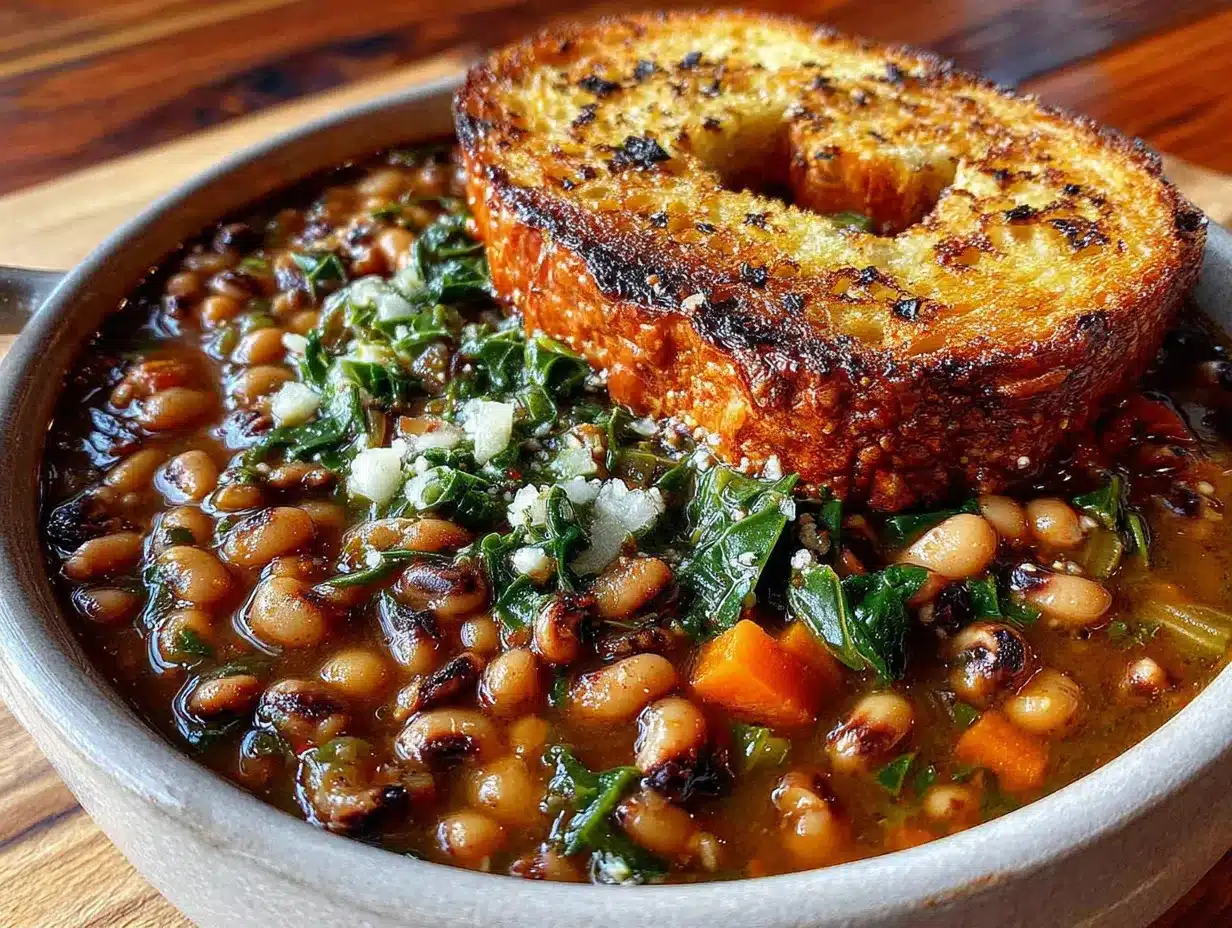
This soup comes together in one pot, which means less cleanup. Here’s how to make it:
- Sauté the aromatics: Heat the olive oil in your Dutch oven over medium heat. Add the diced onion, celery, and carrots. Cook, stirring occasionally, for about 8-10 minutes, until the vegetables are soft and the onion is translucent. You want them to sweat, not brown. If they start to color, turn the heat down a notch.
- Add the garlic and spices: Stir in the minced garlic, smoked paprika, dried thyme, and cayenne (if using). Cook for another minute until fragrant. Your kitchen should start smelling amazing right about now.
- Add the peas and ham hock: Pour in the rinsed black-eyed peas and place the ham hock right in the center of the pot. Give everything a good stir to coat the peas in the seasoned vegetables.
- Pour in the broth: Add the chicken broth and bay leaves. The liquid should cover the peas and ham hock by about an inch. If it doesn’t, add a splash more broth or water.
- Bring to a boil, then simmer: Turn the heat to high and bring the soup to a boil. Once it’s boiling, reduce the heat to low, cover the pot, and let it simmer gently. This is the most important part — a gentle simmer, not a rolling boil. Boiling can make the peas burst and turn mushy.
- Simmer until tender: Let the soup simmer for about 1 hour to 1 hour 15 minutes. Start checking the peas at the 45-minute mark. You want them tender but still holding their shape — they should be creamy on the inside but not falling apart. The ham hock should be very tender and the meat should be pulling away from the bone.
- Remove the ham hock: Using tongs, carefully lift the ham hock out of the pot and place it on a cutting board. Let it cool for a few minutes until it’s safe to handle.
- Shred the meat: Once the ham hock is cool enough, pull the meat off the bone. Discard the skin, fat, and bone. Shred the meat into bite-sized pieces. Don’t skip this step — that meat is pure gold.
- Return the meat to the pot: Stir the shredded ham hock meat back into the soup. Taste the broth and season with salt and pepper. Remember, the ham hock adds salt, so go easy at first. I usually start with 1/2 teaspoon of salt and go from there.
- Serve: Ladle the soup into bowls. I love it with a dash of hot sauce, a sprinkle of fresh parsley, and a thick slice of crusty bread for dipping. The bread soaks up that smoky broth perfectly.
Pro tip: If you want a thicker soup, mash about a cup of the peas against the side of the pot with a wooden spoon before adding the meat back in. It gives the broth a creamy texture without adding cream.
Cooking Tips & Techniques
I’ve made this soup a lot of times, and I’ve learned a few things the hard way. Here are my best tips:
- Don’t soak the peas: Unlike dried beans, black-eyed peas don’t need an overnight soak. A quick rinse is all they need. Soaking them can actually make them too soft and they’ll fall apart during the long simmer.
- Salt at the end: This is a big one. The ham hock releases a lot of salt into the broth as it cooks. If you salt the soup at the beginning, you might end up with something inedible. Always taste and adjust at the end.
- Skim the foam: In the first 20 minutes of simmering, you might see some foam rise to the surface. That’s just starch and impurities from the peas. Skim it off with a spoon for a clearer, cleaner broth.
- Low and slow is your friend: I once tried to speed this up by simmering it on medium heat. The peas burst, the broth got cloudy, and some of it stuck to the bottom of the pot. Patience pays off here. A gentle simmer is all you need.
- Make it ahead: This soup is one of those rare dishes that’s better the next day. The flavors meld and deepen overnight. If you can, make it a day before you plan to serve it. Just reheat gently on the stove.
I once forgot to add the smoked paprika until the very end, and it just wasn’t the same. That smoky flavor needs time to infuse into the broth and the peas. Don’t skip it, and don’t add it late. Trust me on this one.
Variations & Adaptations
This soup is pretty forgiving. Here’s how to tweak it for different diets and tastes:
- Vegetarian Version: Skip the ham hock entirely. Instead, use vegetable broth and add a teaspoon of liquid smoke along with the spices. For extra umami, stir in a tablespoon of miso paste at the end. It won’t be exactly the same, but it’ll still be delicious.
- Spicy Kick: If you like heat, add a diced jalapeño (seeds and all) with the onions and celery. Or stir in a teaspoon of chipotle powder along with the smoked paprika. I’ve done both, and the smoky-spicy combo is fantastic.
- Greens Addition: Stir in a few handfuls of chopped kale or collard greens during the last 10 minutes of cooking. They’ll wilt right into the soup and add a nice textural contrast. Plus, it’s extra greens for good luck — a Southern tradition.
- Slow Cooker Method: Sauté the aromatics first on the stove, then transfer everything (including the ham hock and broth) to a slow cooker. Cook on low for 6-8 hours or high for 3-4 hours. Shred the meat and stir it back in before serving.
- No Ham Hock?: If you can’t find a ham hock, use a smoked turkey leg or even a few slices of thick-cut bacon. Cook the bacon first, then use the rendered fat to sauté the vegetables. Crumble the cooked bacon and stir it in at the end.
My personal favorite variation is adding a can of diced fire-roasted tomatoes along with the broth. It gives the soup a slightly tangy, smoky depth that’s just incredible. I stumbled on this by accident when I was out of broth and used tomatoes to make up the volume. Best mistake I ever made.
Serving & Storage Suggestions
This soup is a meal in itself, but it loves company. Here’s how to serve and save it:
- Serving Temperature: Serve it piping hot. Ladle it into deep bowls so the broth doesn’t spill. A sprinkle of fresh parsley or green onion on top adds color and freshness.
- Perfect Pairings: Crusty bread is non-negotiable in my house. A slice of flavorful pumpkin sourdough bread or a simple baguette for dipping is perfect. A side salad with a bright vinaigrette cuts through the richness nicely. And if you want to keep the New Year’s theme going, serve it alongside a fresh cowboy caviar for a lucky, colorful spread.
- Storage: Let the soup cool completely before storing. Transfer it to an airtight container and refrigerate for up to 5 days. The flavors will actually get better after a day or two.
- Freezing: This soup freezes beautifully. Portion it into freezer-safe containers or bags, leaving an inch of headroom for expansion. Freeze for up to 3 months. Thaw overnight in the fridge before reheating.
- Reheating: Reheat gently on the stove over medium-low heat, stirring occasionally. If the soup has thickened too much (the peas absorb liquid as they sit), add a splash of broth or water to loosen it up. Microwave works in a pinch, but the stovetop is better for even heating.
One thing I love about this soup is that it gets better with time. The peas absorb the broth and the flavors meld into something even more comforting. Don’t be afraid to make it a day ahead — it’s almost better that way.
Nutritional Information & Benefits
This soup is as wholesome as it is comforting. Here’s a rough estimate per serving (based on 8 servings):
- Calories: ~320
- Protein: 22g
- Fat: 8g
- Carbohydrates: 40g
- Fiber: 12g
- Sodium: varies based on broth and ham hock saltiness
Black-eyed peas are a fantastic source of plant-based protein and fiber, which helps keep you full and supports digestive health. They’re also rich in folate, iron, and potassium. The carrots and celery add vitamins A and K, and the garlic and onions provide immune-supporting compounds. This is a soup that works hard for your body while tasting like a hug. For a lighter version, use a smoked turkey leg instead of the ham hock to reduce the fat content.
Conclusion
This black-eyed pea soup is more than just a New Year’s tradition — it’s a bowl of comfort that’s earned a permanent spot in my winter rotation. It’s proof that simple ingredients, cooked with a little patience and care, can turn into something truly special. Whether you’re making it for good luck, a cozy dinner, or just because you’re craving something warm and smoky, this recipe delivers every time.
I’d love to hear how it turns out for you. Did you add your own twist? Serve it with something unexpected? Drop a comment below and let me know — your ideas might just inspire someone else’s dinner. And if you loved it, share it with a friend who needs a little luck (and a really good meal) this year. Happy New Year, and happy cooking!
Frequently Asked Questions
Do I need to soak black-eyed peas before making soup?
No, you don’t. Unlike dried beans, black-eyed peas are small and cook relatively quickly. A simple rinse under cold water is all they need. Soaking them can actually make them too soft and cause them to fall apart during the long simmer.
Can I use canned black-eyed peas instead of dried?
You can, but the texture and flavor won’t be the same. Canned peas are already cooked, so they’ll turn mushy if simmered for an hour. If you’re in a hurry, drain and rinse two cans of black-eyed peas, add them during the last 15 minutes of cooking, and reduce the broth to 4 cups since there’s no need for the peas to absorb liquid.
How can I make this soup vegetarian?
Skip the ham hock and use vegetable broth instead of chicken broth. To get that smoky flavor, add 1-2 teaspoons of liquid smoke along with the spices. For extra richness, stir in a tablespoon of miso paste at the end. It won’t be exactly the same, but it’s still delicious and satisfying.
Why is my black-eyed pea soup bitter?
Bitterness usually comes from overcooked garlic or burnt spices. Make sure you’re sautéing the garlic for only about a minute before adding the liquid. Also, if you’re using smoked paprika, check the expiration date — old paprika can turn bitter. Finally, make sure your broth isn’t overly salty, as that can throw off the flavor balance.
Can I freeze this soup?
Absolutely. Let the soup cool completely, then portion it into freezer-safe containers or bags. Leave an inch of headroom for expansion. It will keep for up to 3 months. Thaw overnight in the fridge and reheat gently on the stove, adding a splash of broth or water if it’s too thick.
Pin This Recipe!

Easy Black-Eyed Pea Soup for New Year’s Good Luck

This hearty, smoky black-eyed pea soup is a New Year’s tradition that brings good luck and incredible flavor. Made with simple ingredients like dried peas, a ham hock, and aromatic vegetables, it’s a comforting one-pot meal that’s perfect for a crowd and even better the next day.
- Prep Time: 15 minutes
- Cook Time: 1 hour 15 minutes
- Total Time: 1 hour 30 minutes
- Yield: 8 servings 1x
- Category: Soup
- Cuisine: Southern
Ingredients
- 1 tablespoon olive oil
- 1 large yellow onion, diced (about 2 cups)
- 3 celery stalks, diced
- 3 carrots, peeled and diced
- 4 cloves garlic, minced
- 1 teaspoon smoked paprika
- 1/2 teaspoon dried thyme
- 1/4 teaspoon cayenne pepper (optional)
- 1 pound dried black-eyed peas, rinsed and picked over
- 1 meaty smoked ham hock (about 12–16 ounces)
- 8 cups low-sodium chicken broth
- 2 bay leaves
- Salt and freshly ground black pepper, to taste
- Optional for serving: hot sauce, chopped fresh parsley, crusty bread
Instructions
- Sauté the aromatics: Heat the olive oil in a large Dutch oven over medium heat. Add the diced onion, celery, and carrots. Cook, stirring occasionally, for about 8-10 minutes, until the vegetables are soft and the onion is translucent.
- Add the garlic and spices: Stir in the minced garlic, smoked paprika, dried thyme, and cayenne (if using). Cook for another minute until fragrant.
- Add the peas and ham hock: Pour in the rinsed black-eyed peas and place the ham hock in the center of the pot. Stir to coat the peas in the seasoned vegetables.
- Pour in the broth: Add the chicken broth and bay leaves. The liquid should cover the peas and ham hock by about an inch. If not, add a splash more broth or water.
- Bring to a boil, then simmer: Turn the heat to high and bring the soup to a boil. Once boiling, reduce the heat to low, cover, and let it simmer gently for about 1 hour to 1 hour 15 minutes, until the peas are tender but still hold their shape and the ham hock is very tender.
- Remove the ham hock: Using tongs, carefully lift the ham hock out of the pot and place it on a cutting board. Let it cool for a few minutes until safe to handle.
- Shred the meat: Once cool enough, pull the meat off the bone, discarding the skin, fat, and bone. Shred the meat into bite-sized pieces.
- Return the meat to the pot: Stir the shredded ham hock meat back into the soup. Taste and season with salt and pepper, starting with 1/2 teaspoon of salt.
- Serve: Ladle the soup into bowls. Serve with hot sauce, fresh parsley, and crusty bread if desired.
Notes
Don’t soak the peas; just rinse them. Salt at the end to avoid over-salting from the ham hock. Skim any foam that rises during the first 20 minutes of simmering. For a thicker soup, mash about a cup of the peas against the side of the pot before adding the meat back in. This soup is even better the next day.
Nutrition
- Serving Size: 1 bowl (about 1.5 cu
- Calories: 320
- Sugar: 6
- Fat: 8
- Saturated Fat: 2.5
- Carbohydrates: 40
- Fiber: 12
- Protein: 22
Keywords: black-eyed pea soup, New Year's soup, ham hock soup, Southern soup, lucky soup, easy soup recipe