For a while, I just accepted that pumpkin bread made with sourdough wouldn’t taste quite right—the flavors never seemed to marry, and the texture was either too dense or oddly dry. I remember one autumn evening, stirring a bowl of lukewarm pumpkin puree, wishing for a bread that had the tangy depth of sourdough but also carried that cozy pumpkin warmth, something that felt homemade without trying too hard. The kitchen smelled faintly of cinnamon and nutmeg, but the loaf I pulled from the oven still fell short of what I imagined. It wasn’t until I tossed in a handful of smoky pepitas that a subtle transformation happened. The pepitas added a toasty crunch and a gentle smoky note that balanced the bread’s mild sweetness and sour tang in a way I hadn’t expected.
That quiet moment of realization—that pumpkin sourdough bread could be more than just a seasonal afterthought—was the start of this recipe sticking around in my baking rotation. It’s not flashy or complicated, but it’s the kind of bread that feels right when you slice it for an afternoon snack or toast it up for breakfast. I like to think of it as pumpkin bread with a little soul, carrying that slight tang of sourdough alongside the comforting, familiar flavors of fall. This recipe found its way into my kitchen quietly, but it’s one that’s still going strong, loaf after loaf.
Why You’ll Love This Recipe
Having baked this pumpkin sourdough bread many times over, I can say it’s a recipe that fits into busy lives without fuss and rewards you with consistent, delicious results. Here’s why it stands out:
- Quick & Easy: While sourdough bread can seem intimidating, this recipe comes together with straightforward steps and manageable proofing times, making it approachable for patient home bakers.
- Simple Ingredients: No need for specialty pumpkin spice blends or hard-to-find flours—just real pumpkin, basic sourdough starter, and pantry staples.
- Perfect for Fall & Beyond: Whether you’re baking for cozy autumn mornings or a comforting snack during winter, this bread fits right in with the season’s flavors.
- Crowd-Pleaser: The balance of smoky pepitas with the subtle pumpkin sweetness is something that surprises guests and family alike—kids especially love the crunch.
- Unbelievably Delicious: The moist, tender crumb pairs beautifully with a smear of butter or a drizzle of honey, and the sourdough tang adds a depth that plain pumpkin bread just doesn’t have.
This isn’t just another pumpkin bread recipe. The trick lies in gently folding in the pepitas after the first rise and letting the sourdough do its magic overnight. It’s a slow but rewarding process that brings out the best texture and flavor. Honestly, this bread is one of those rare finds that makes you pause and appreciate how simple ingredients can feel so special.
What Ingredients You Will Need
This pumpkin sourdough bread recipe uses simple, wholesome ingredients to deliver a comforting loaf with bold flavor and a satisfying texture. The ingredients are mostly pantry staples, with pumpkin puree and pepitas adding seasonal flair. Here’s what you’ll want to gather:
- Active sourdough starter (about 100g, bubbly and fed within the last 6-8 hours) – I trust my longtime starter, but if you’re new, check out tips on maintaining it properly.
- All-purpose flour (500g / 4 cups) – you can swap half with whole wheat for a nuttier taste.
- Pumpkin puree (200g / ¾ cup) – canned or fresh, just make sure it’s unsweetened and smooth.
- Water (300ml / 1¼ cups), lukewarm – helps activate the starter and create the perfect dough consistency.
- Salt (10g / 2 tsp) – essential for flavor balance.
- Brown sugar (50g / ¼ cup, packed) – adds subtle sweetness and depth without overpowering.
- Smoked pepitas (60g / ½ cup) – these toasted pumpkin seeds with a hint of smoke add crunch and character. If you can’t find smoked, lightly toast raw pepitas with a pinch of smoked paprika.
- Ground cinnamon (1 tsp) and ground nutmeg (¼ tsp) – just enough warm spice to complement the pumpkin.
- Olive oil or melted butter (30ml / 2 tbsp) – adds moisture and richness.
For the best texture, I recommend choosing a flour brand with good protein content, like King Arthur or Bob’s Red Mill. The smoked pepitas are a small but crucial detail; I’ve found that without them, the bread feels like it’s missing a little spark. If you prefer gluten-free, almond or oat flour substitutions can work, but the texture will differ. For a seasonal twist, try swapping the pepitas with toasted walnuts or pecans, especially if you enjoy a crunchier bite.
Equipment Needed
To make this flavorful pumpkin sourdough bread, you’ll need a few essential kitchen tools. Nothing too fancy, but some equipment will definitely help the process:
- Mixing bowl: A large bowl for combining ingredients. Glass or stainless steel works best to watch dough development.
- Dutch oven or covered baking pot: Perfect for baking the bread with steam, which helps create that crisp crust. If you don’t have one, a baking sheet plus a shallow pan of water in the oven can mimic the effect.
- Bread proofing basket (banneton): Optional but helpful for shaping and proofing. A bowl lined with a well-floured kitchen towel works fine too.
- Dough scraper or bench knife: Makes mixing and folding easier, especially with sticky sourdough dough.
- Kitchen scale: For precise measurements of flour and liquids, improving your bread’s consistency.
- Oven thermometer: Helpful if your oven runs hot or cold, so you can adjust baking times accordingly.
I’ve baked this bread both with and without a banneton, and honestly, the banneton just helps the loaf hold its shape better during the final rise. For those on a budget, a simple mixing bowl and cookie sheet will do just fine. Taking care of your Dutch oven by seasoning it occasionally keeps it from rusting, which I learned the hard way after a forgotten cleaning.
Preparation Method
- Feed your starter: Approximately 6-8 hours before you want to mix your dough, feed your sourdough starter with equal parts flour and water (50g each). It should be bubbly and active at mix time.
- Mix the dough: In a large mixing bowl, combine 500g (4 cups) all-purpose flour, 200g (¾ cup) pumpkin puree, 300ml (1¼ cups) lukewarm water, 100g (½ cup) active sourdough starter, 50g (¼ cup) brown sugar, 1 tsp cinnamon, ¼ tsp nutmeg, and 10g (2 tsp) salt. Stir with a wooden spoon or dough scraper until a shaggy dough forms.
- First autolyse and rest: Cover the bowl with a damp towel or plastic wrap and let the dough rest for 45 minutes. This rest helps the flour hydrate and gluten start forming.
- Stretch and fold: Every 30 minutes for the next 2 hours, perform gentle stretch and folds in the bowl—grab one edge, lift it, and fold it over the dough. This builds structure without heavy kneading.
- Add pepitas and fat: After the last stretch and fold, gently fold in the smoked pepitas and 30ml (2 tbsp) olive oil or melted butter. Try not to deflate the dough—do this carefully.
- Bulk fermentation: Cover and let the dough rise at room temperature for 4-6 hours, until it has expanded noticeably but not doubled. You’ll see bubbles forming under the surface.
- Shape the loaf: Turn the dough onto a lightly floured surface. Shape into a round boule by folding edges toward the center and then tucking underneath for tension. Place seam-side up in a well-floured banneton or bowl.
- Final proof: Cover and refrigerate overnight, 8-12 hours. This slow proof develops flavor and makes the dough easier to score.
- Preheat oven: About 45 minutes before baking, preheat your oven to 230°C (450°F) with your Dutch oven inside.
- Bake the bread: Carefully transfer the dough to parchment paper, score the top with a sharp knife or lame, and place it into the hot Dutch oven. Cover with the lid and bake for 20 minutes. Remove the lid and bake another 20-25 minutes until crust is deeply golden and crisp.
- Cool and enjoy: Let the bread cool on a wire rack for at least 2 hours before slicing. This resting time lets the crumb set properly.
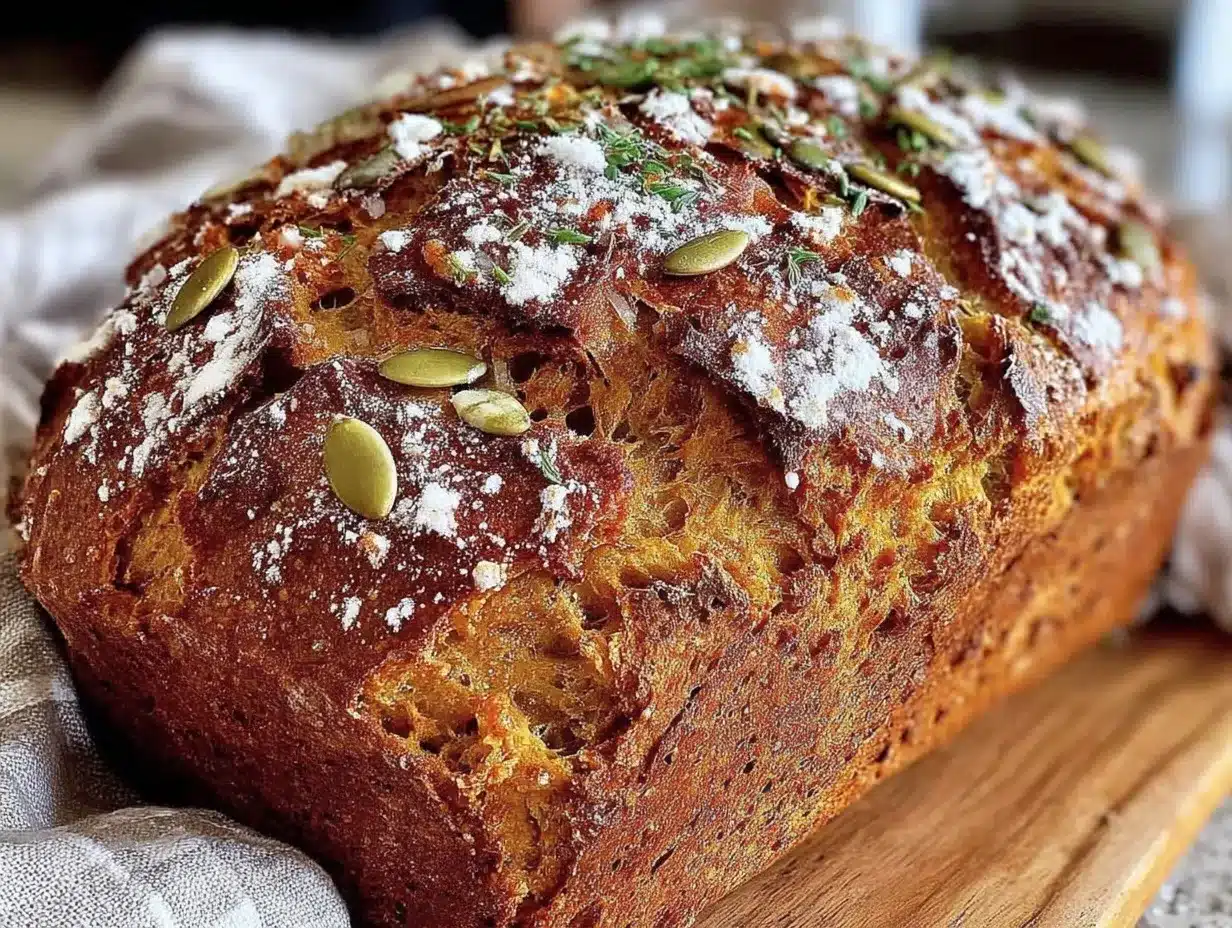
If your loaf seems dense, it might be that your starter wasn’t fully active or the dough didn’t get enough time to ferment. Patience is key here. The pepitas should be visible throughout the crumb and give a nice crunch. If you prefer a sweeter bread, a light honey glaze after baking works wonders.
Cooking Tips & Techniques
One thing I learned the hard way with this pumpkin sourdough bread is how important it is not to rush the fermentation stages. You know, sourdough isn’t like instant yeast—it needs time to work its magic. I once baked a loaf too soon, and it came out dense and gummy. Waiting for the dough to feel puffy and slightly jiggly before shaping makes all the difference.
Another tip: don’t skip the stretch and folds. They might sound fancy, but they’re really just gentle ways to build strength in the dough without kneading. Sticky dough can feel intimidating, but using a wet hand or a dough scraper helps keep things manageable.
When folding in the pepitas, be gentle. I remember the first time I dumped them in roughly—the dough lost a lot of its air and the loaf was flat. Adding fat like olive oil or melted butter after the first rise adds moisture and keeps the crumb tender, which pairs nicely with the nutty pepitas.
For baking, the covered Dutch oven creates steam that leads to a crispy crust. If you don’t have one, placing a metal tray with hot water in the oven simulates steam. Scoring the dough right before baking is crucial—it helps the bread expand without tearing unpredictably.
Lastly, cooling the bread completely before slicing is something you might forget in the excitement. But trust me, cutting into hot bread can turn the crumb gummy. Waiting is hard but worth it.
Variations & Adaptations
This recipe is flexible enough to suit different tastes and dietary needs. Here are a few ways to make it your own:
- Nut-Free Version: Simply omit the pepitas or swap them for toasted sunflower seeds if you want crunch without nuts.
- Spiced Up: Add a pinch of ground cloves or ginger to the dough for a more pronounced fall spice profile.
- Whole Grain Twist: Replace half the all-purpose flour with whole wheat or spelt flour for a heartier loaf with extra fiber.
- Sweetened Glaze: Brush the cooled bread with a mixture of maple syrup and melted butter for a shiny, sweet finish.
A personal favorite variation is adding a handful of dried cranberries along with the pepitas right before the final proof—those little bursts of tartness contrast nicely with the smoky seeds. Also, I’ve tried baking this bread in a cast-iron skillet instead of a Dutch oven, which gives a slightly different crust texture but still delicious results.
Serving & Storage Suggestions
This pumpkin sourdough bread is wonderful served slightly warm or at room temperature. I like to slice it thick, slather it with butter or cream cheese, and enjoy it alongside a hot cup of tea or coffee. It also pairs nicely with savory spreads like herbed goat cheese or honey butter.
For a simple snack, toasting the slices brings out the nutty aroma of the pepitas and enhances the crust’s crunch. It’s also great for sandwiches—think roasted turkey and cranberry sauce for a seasonal twist.
To store, wrap the cooled loaf tightly in plastic wrap or keep it in a bread box for up to 3 days at room temperature. For longer storage, slice and freeze the bread in airtight bags for up to 3 months. Toast slices straight from the freezer for a fresh-baked feel.
Flavors develop subtly over a day or two, with the pumpkin and spices becoming more pronounced. This bread also makes a delightful base for a hearty breakfast French toast when you have a few slices left over.
Nutritional Information & Benefits
This pumpkin sourdough bread offers a balance of carbohydrates, fiber, and healthy fats from the pepitas. It’s naturally lower in sugar compared to traditional quick breads, relying on brown sugar for just gentle sweetness. Pumpkin puree adds vitamins A and C along with antioxidants, making it a wholesome choice for seasonal baking.
The sourdough fermentation process improves digestibility and can help with nutrient absorption, which is a nice benefit if you’re sensitive to regular bread. The pepitas provide a boost of protein, magnesium, and zinc—nutrients that support energy and immune health.
Gluten content depends on your flour choice, so swapping to gluten-free flours makes this recipe accessible to those with sensitivities, though texture will change. Overall, it’s a comforting, nutrient-friendly bread that feels indulgent without being heavy.
Conclusion
This flavorful pumpkin sourdough bread with smoky pepitas is one of those recipes that quietly became a staple in my kitchen. It’s not flashy, but it’s honest and satisfying—a bread you can slice confidently for breakfast, snacks, or even a simple dinner accompaniment. I love how the pepitas add a smoky crunch that pairs perfectly with the tang of sourdough and the warmth of pumpkin spices.
Feel free to tweak the spices or seeds to suit your mood or pantry. Baking bread is as much about making it your own as it is about following the recipe. If you’re curious about other comforting baking projects, you might enjoy my moist double chocolate chip zucchini bread or the cozy blueberry lemon zucchini muffins—both share that homemade warmth with a twist.
Give this pumpkin sourdough bread a try and let your kitchen fill with its quiet, smoky-spiced aroma—you might just find a new favorite for the season.
FAQs
Can I use canned pumpkin puree for this sourdough bread?
Yes, canned pumpkin puree works perfectly as long as it’s unsweetened and smooth. It saves prep time and provides consistent moisture.
How do I know if my sourdough starter is active enough?
Your starter should be bubbly and doubled in size 6-8 hours after feeding. A simple float test—dropping a spoonful in water to see if it floats—can also indicate readiness.
What if I don’t have smoked pepitas? Can I use regular pumpkin seeds?
Absolutely. Toast regular pepitas with a pinch of smoked paprika or chili powder to mimic that smoky flavor, or use them plain for a milder crunch.
How long does this pumpkin sourdough bread keep fresh?
At room temperature, wrapped tightly, it stays fresh for up to 3 days. For longer storage, slice and freeze for up to 3 months.
Can I make this recipe gluten-free?
You can substitute with gluten-free flours like almond or oat flour, but the texture will be different. It’s best to experiment with your favorite gluten-free blends and adjust liquids accordingly.
Pin This Recipe!
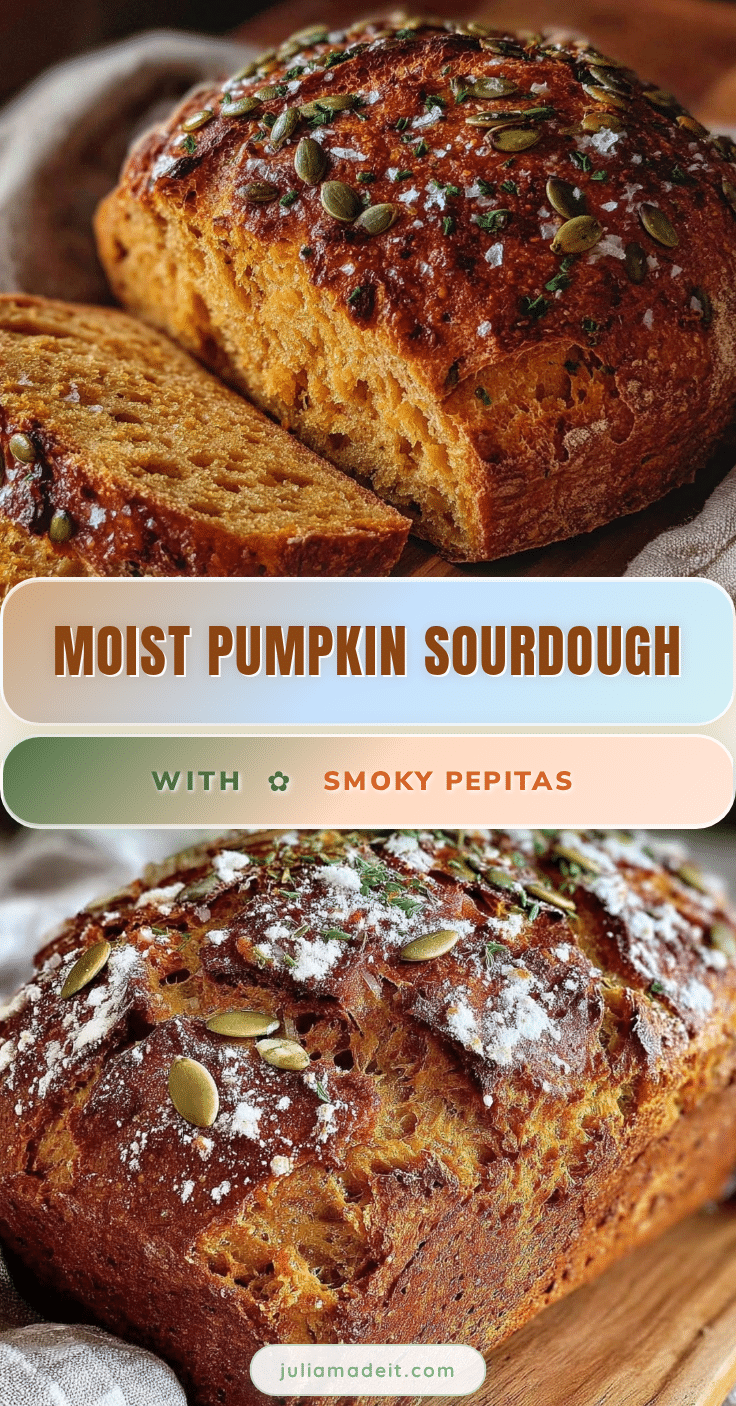
Flavorful Pumpkin Sourdough Bread Recipe with Smoky Pepitas
A cozy pumpkin sourdough bread featuring a moist, tender crumb with a subtle smoky crunch from pepitas. Perfect for fall and beyond, this bread balances the tang of sourdough with warm pumpkin spices.
- Prep Time: 15 minutes (plus 6-8 hours starter feeding and overnight proofing)
- Cook Time: 45 minutes
- Total Time: Overnight (about 14-16 hours including starter feeding, fermentation, and proofing)
- Yield: 1 loaf (about 10-12 slices) 1x
- Category: Bread
- Cuisine: American
Ingredients
- 100g active sourdough starter (about 1/2 cup), bubbly and fed within the last 6-8 hours
- 500g all-purpose flour (about 4 cups) – can swap half with whole wheat flour
- 200g pumpkin puree (about 3/4 cup), unsweetened and smooth
- 300ml lukewarm water (about 1 1/4 cups)
- 10g salt (2 teaspoons)
- 50g brown sugar (1/4 cup, packed)
- 60g smoked pepitas (1/2 cup) – toasted pumpkin seeds with a hint of smoke
- 1 teaspoon ground cinnamon
- 1/4 teaspoon ground nutmeg
- 30ml olive oil or melted butter (2 tablespoons)
Instructions
- Feed your starter approximately 6-8 hours before mixing the dough with equal parts flour and water (50g each). It should be bubbly and active at mix time.
- In a large mixing bowl, combine flour, pumpkin puree, lukewarm water, active sourdough starter, brown sugar, cinnamon, nutmeg, and salt. Stir until a shaggy dough forms.
- Cover the bowl and let the dough rest for 45 minutes to hydrate the flour and start gluten formation.
- Perform gentle stretch and folds every 30 minutes for 2 hours to build dough structure.
- After the last stretch and fold, gently fold in the smoked pepitas and olive oil or melted butter, taking care not to deflate the dough.
- Cover and let the dough rise at room temperature for 4-6 hours until noticeably expanded but not doubled.
- Turn the dough onto a lightly floured surface and shape into a round boule. Place seam-side up in a well-floured banneton or bowl.
- Cover and refrigerate overnight (8-12 hours) for the final proof.
- Preheat oven to 450°F (230°C) with a Dutch oven inside about 45 minutes before baking.
- Transfer dough to parchment paper, score the top, place into the hot Dutch oven, cover, and bake for 20 minutes.
- Remove the lid and bake for another 20-25 minutes until crust is deeply golden and crisp.
- Cool the bread on a wire rack for at least 2 hours before slicing.
Notes
Do not rush fermentation stages to avoid dense bread. Be gentle when folding in pepitas to keep dough airy. Use a covered Dutch oven to create steam for a crispy crust. Cool bread completely before slicing to prevent gummy crumb. If smoked pepitas are unavailable, toast raw pepitas with smoked paprika. For gluten-free, substitute flours but expect different texture.
Nutrition
- Serving Size: 1 slice (about 1/12t
- Calories: 180
- Sugar: 3
- Sodium: 250
- Fat: 7
- Saturated Fat: 1
- Carbohydrates: 26
- Fiber: 3
- Protein: 5
Keywords: pumpkin sourdough bread, pumpkin bread, sourdough bread, smoky pepitas, fall bread recipe, homemade bread, easy sourdough, autumn baking