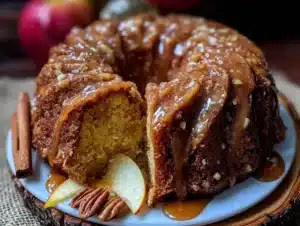
The first Saturday in November, when the light goes flat and gray by four o’clock, and the only thing I want is a warm cookie and a mug of something spiced. That’s when these apple cider snickerdoodles happened. I had a half-gallon of fresh cider in the fridge that I bought at the orchard on a whim (you know how it is—you go for the Honeycrisps and leave with a trunk full of stuff you didn’t plan for). And I had my go-to snickerdoodle dough chilling on the counter. It felt like a sign.
I simmered the cider down on the stove until the whole kitchen smelled like autumn in a pot—sweet, tart, and deeply concentrated. That little pot of reduction became the secret. I swapped it into my dough, added a pinch more cinnamon, and crossed my fingers. The first batch came out soft, crackly, and kissed with that unmistakable apple tang. Honestly, I ate three before they even cooled. These cookies aren’t fancy, and they don’t try to be. They’re just the right thing to bake when you need the house to smell like a reason to slow down.
Why You’ll Love This Recipe
I’ve tested this recipe more times than I care to admit. The first few batches were flat and gummy—not the vibe. But after tweaking the flour ratio and letting the dough rest long enough, I landed on a cookie that actually delivers on its promise. Here’s why this one stands out:
- Quick & Easy: From start to finish, you’re looking at about 30 minutes of active time. The dough needs a quick chill (30 minutes), but that’s mostly hands-off.
- Simple Ingredients: No weird extracts or hard-to-find spices. You probably have everything except the apple cider itself.
- Perfect for Fall Baking: This is the cookie you bring to a Friendsgiving, a cozy night in, or a holiday cookie swap. It fits right in with brown butter pumpkin pie bars on a dessert table.
- Crowd-Pleaser: Kids love the cinnamon-sugar coating. Adults love the subtle apple flavor that isn’t too sweet or artificial.
- Unbelievably Delicious: The texture is soft in the middle with a slightly crisp edge—exactly what a snickerdoodle should be. But that apple cider reduction adds a fruity depth you didn’t know this cookie needed.
This isn’t just another snickerdoodle. It’s the one where the apple flavor actually comes through (not just a vague hint of “fall spices”). And it’s the kind of cookie that makes you close your eyes after the first bite. I’m not exaggerating.
What Ingredients You Will Need
This recipe relies on a handful of pantry staples plus one star ingredient: fresh apple cider. Most of the heavy lifting is done by the reduced cider, which concentrates the apple flavor into something almost jammy.
- Fresh apple cider (2 cups): Not apple juice. Cider is unfiltered and has more body. You’ll reduce it down to about 1/4 cup of intensely flavored syrup. I like using local orchard cider when I can find it.
- Unsalted butter (1 cup, softened): Always unsalted so you control the salt level. Let it sit out for 30 minutes before starting.
- Granulated sugar (1 1/2 cups): Divided—1 cup goes into the dough, and 1/2 cup gets mixed with cinnamon for rolling.
- Large egg (1): Room temperature. Cold eggs can seize the butter and mess with the texture.
- Vanilla extract (1 teaspoon): Pure vanilla, not imitation. It rounds out the apple flavor nicely.
- All-purpose flour (2 3/4 cups): Spoon and level it—don’t scoop straight from the bag or you’ll end up with dry cookies.
- Cream of tartar (2 teaspoons): This is what gives snickerdoodles their signature tangy flavor and chewy texture. Don’t skip it.
- Baking soda (1 teaspoon): Works with the cream of tartar to lift the cookies just enough.
- Ground cinnamon (1 teaspoon in dough + 2 tablespoons for rolling): I use Saigon cinnamon for a warmer, spicier kick, but regular works fine too.
- Ground nutmeg (1/4 teaspoon): Optional but adds a subtle warmth that pairs beautifully with apple.
- Salt (1/2 teaspoon): Fine sea salt or table salt.
- Ground cloves (tiny pinch, optional): Adds depth without screaming “pumpkin spice.”
Ingredient substitution tips: If you’re gluten-free, swap the all-purpose flour with a 1:1 gluten-free baking blend (I like King Arthur Measure for Measure). The texture will be slightly more delicate, so handle the dough gently. For a dairy-free version, use plant-based butter sticks (not tub margarine). And if you can’t find fresh cider, you can use unfiltered apple juice—just know the flavor will be less robust.
Equipment Needed
Nothing too fancy here. You probably already have most of this in your kitchen.
- Small saucepan: For reducing the apple cider. A 1-quart size works great.
- Large mixing bowl: For the dry ingredients.
- Stand mixer or hand mixer: Creaming the butter and sugar by hand is possible but tiring. A mixer makes it easy.
- Whisk: For combining the dry ingredients evenly.
- Rubber spatula: For scraping down the bowl and folding in the flour.
- Baking sheets (2): Light-colored aluminum sheets give the most even browning. Dark sheets can over-brown the bottoms.
- Parchment paper or silicone baking mats: Non-negotiable for easy cleanup and even baking.
- Cookie scoop (1.5 tablespoons): Ensures uniform cookies that bake evenly. I’ve used a regular spoon in a pinch, but the scoop is worth it.
- Cooling rack: Lets the cookies set without steaming on the pan.
- Small shallow bowl: For the cinnamon-sugar coating.
If you don’t have a stand mixer, a hand mixer works just as well. And if you’re really in a bind, you can cream the butter and sugar with a wooden spoon—it just takes a little elbow grease.
Preparation Method
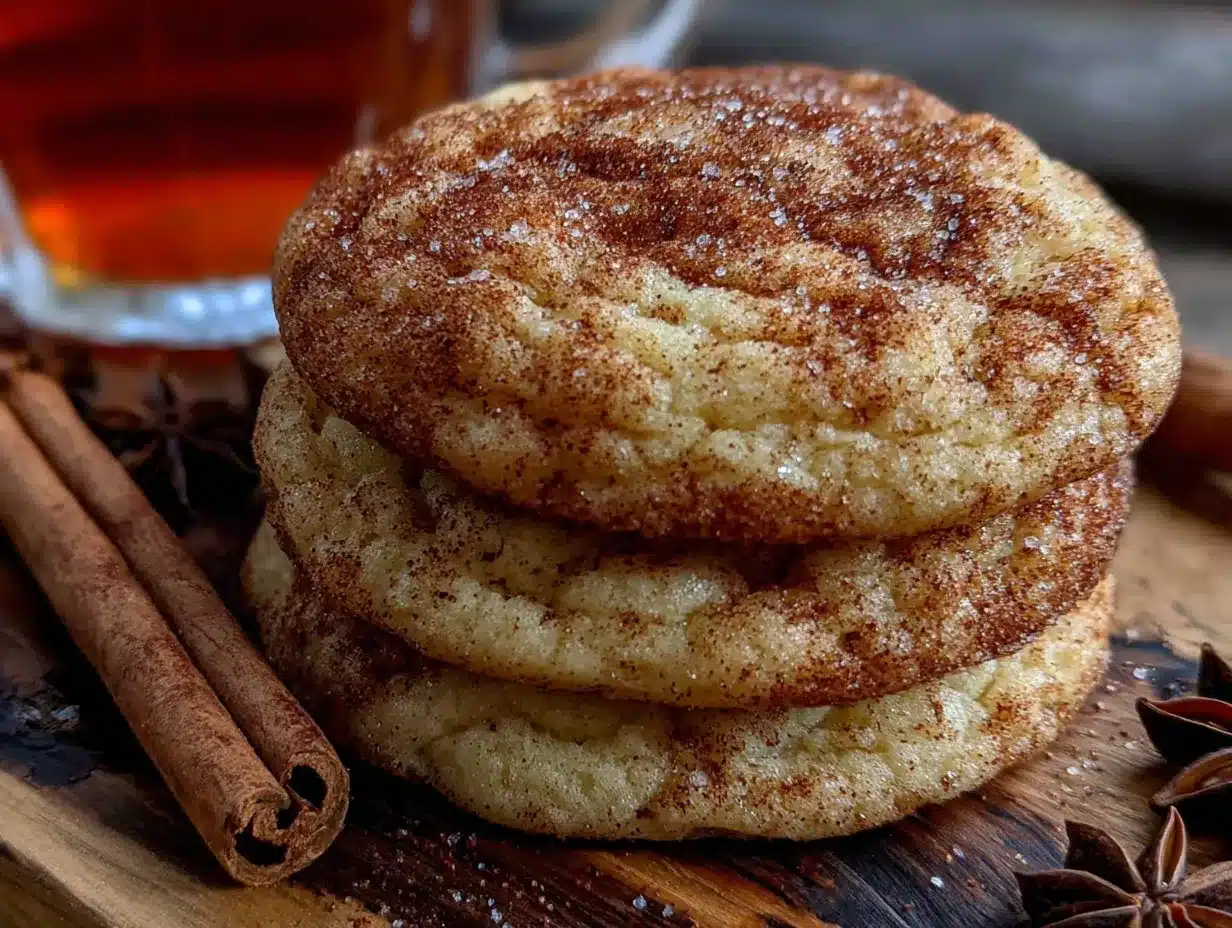
Let’s walk through this step by step. I’ll include all the little details I wish someone had told me the first time.
Step 1: Reduce the apple cider. Pour 2 cups of fresh apple cider into a small saucepan. Bring it to a boil over medium-high heat, then reduce the heat to medium-low and let it simmer. You want it to reduce down to about 1/4 cup of thick, syrupy liquid. This takes about 15-20 minutes. Stir occasionally to prevent scorching. The cider will look darker and smell intensely of cooked apples. Let it cool completely before using. (Pro tip: If you accidentally reduce it too much and it gets sticky like caramel, add a tablespoon of water and whisk it back to a syrup consistency.)
Step 2: Prep your dry ingredients. In a medium bowl, whisk together the flour, cream of tartar, baking soda, 1 teaspoon cinnamon, nutmeg, cloves (if using), and salt. Set aside. This ensures even distribution of the leavening agents.
Step 3: Cream the butter and sugar. In the bowl of a stand mixer fitted with the paddle attachment (or using a hand mixer), beat the softened butter and 1 cup of granulated sugar together on medium speed until light and fluffy—about 3 minutes. You want it pale and airy. Scrape down the sides of the bowl once or twice.
Step 4: Add the wet ingredients. Beat in the egg and vanilla extract until combined. Then add the cooled apple cider reduction. It might look slightly curdled at this point—don’t panic. That’s normal. The mixture will come together once you add the flour.
Step 5: Incorporate the dry ingredients. With the mixer on low speed, gradually add the flour mixture. Mix just until no streaks of flour remain. Overmixing will make the cookies tough. The dough will be soft and slightly sticky—that’s the goal.
Step 6: Chill the dough. Cover the bowl with plastic wrap and refrigerate for at least 30 minutes (or up to 48 hours). Chilling prevents the cookies from spreading too much and deepens the flavor. I’ve baked them after 10 minutes of chilling, and they spread into flat, thin discs. Trust the 30 minutes.
Step 7: Preheat and prep. Preheat your oven to 375°F (190°C). Line two baking sheets with parchment paper or silicone mats.
Step 8: Make the cinnamon-sugar coating. In a small shallow bowl, whisk together the remaining 1/2 cup granulated sugar and 2 tablespoons cinnamon.
Step 9: Shape and coat the cookies. Using a 1.5-tablespoon cookie scoop, portion out the dough. Roll each portion into a ball between your palms. Drop the ball into the cinnamon-sugar mixture and roll to coat completely. Place on the prepared baking sheet, spacing them about 2 inches apart. They don’t spread a ton, but they need room to breathe.
Step 10: Bake. Bake one sheet at a time for 10-12 minutes. The cookies should look puffed and slightly cracked on top, with golden edges. The centers will look soft and underdone—that’s exactly what you want. Overbaking dries them out. Let them cool on the baking sheet for 5 minutes before transferring to a wire rack. The residual heat finishes setting the centers.
Cooking Tips & Techniques
I’ve baked this recipe maybe seven or eight times now, and I’ve made every mistake you can imagine. Here’s what I learned so you don’t have to.
Don’t skip the cream of tartar. It’s not just there for tang. Cream of tartar stabilizes the cookie structure and gives snickerdoodles their signature chew. Without it, you’ll get a flat, cakey cookie that doesn’t taste right. I once thought I could substitute lemon juice (don’t ask), and the cookies were a disaster.
Measure your flour correctly. Spoon it into the measuring cup and level it off with a knife. Scooping directly from the bag packs in too much flour, which leads to dry, crumbly cookies. I learned this the hard way when my first batch came out like hockey pucks.
Chill the dough—no shortcuts. I know it’s tempting to skip this when you’re craving cookies immediately. But the cold dough spreads less, bakes up thicker, and has a better texture. If you’re in a rush, scoop the dough balls first, then chill them on a plate for 20 minutes. That works faster than chilling the whole bowl.
Watch the baking time closely. Every oven runs a little differently. Start checking at 10 minutes. The cookies should look puffy and just barely golden around the edges. If they’re fully golden all over, they’ve been in too long. They’ll continue cooking on the hot baking sheet after you pull them out.
Use a cookie scoop for even sizing. Uniform cookies bake evenly. If you eyeball it, some will be done before others, and you’ll end up with a mix of overbaked and underbaked cookies. A scoop also makes the rolling step faster.
Let them cool properly. Those 5 minutes on the baking sheet are crucial. If you try to move them too soon, they’ll fall apart. Be patient—I know it’s hard when the kitchen smells like apple cider and cinnamon.
Variations & Adaptations
This recipe is flexible, and I love messing with it depending on my mood or what I have on hand.
Gluten-Free Version: Swap the all-purpose flour with a 1:1 gluten-free baking blend that contains xanthan gum. I’ve tested this with King Arthur Measure for Measure, and the cookies turn out slightly more delicate but still delicious. Add an extra tablespoon of flour if the dough feels too sticky.
Dairy-Free Version: Use vegan butter sticks (I like Earth Balance or Miyoko’s). Avoid tub margarine—it has too much water and will make the cookies spread into puddles. The texture won’t be quite as tender, but the flavor is still spot-on.
Spiced Apple Cider Version: Add a cinnamon stick, two star anise, and a slice of fresh ginger to the cider while it reduces. Strain them out before using the syrup. This gives the cookies a warm, chai-like complexity that’s perfect for holiday baking.
Apple Cider Glaze: Whisk together 1 cup powdered sugar, 2 tablespoons of the reduced cider syrup, and a splash of milk until smooth. Drizzle over cooled cookies for an extra layer of apple flavor. I did this for a cookie swap, and they disappeared first.
Maple Variation: Replace 1/4 cup of the granulated sugar with maple sugar, and add 1 tablespoon of maple syrup to the dough along with the cider reduction. The maple and apple flavors are best friends.
I once tried a version with chopped dried apples folded into the dough. It was fine—not bad, but the dried apples got chewy in a way that distracted from the soft cookie texture. Stick with the reduction for the purest apple experience.
Serving & Storage Suggestions
These cookies are best served slightly warm, when the centers are still soft and the cinnamon-sugar coating is still crackly. I like to serve them with a tall glass of cold milk or a mug of hot apple cider (the unreduced kind). They’re also fantastic crumbled over a bowl of vanilla ice cream for a quick apple crisp situation.
If you’re bringing them to a gathering, arrange them on a platter with a dusting of extra cinnamon. They pair beautifully with cozy small batch pumpkin cheesecake for a full fall dessert spread.
Storage: Keep the cookies in an airtight container at room temperature for up to 5 days. Place a slice of bread in the container to keep them soft—the cookies will absorb moisture from the bread. (Replace the bread slice every day or two.)
Freezing: You can freeze the baked cookies for up to 3 months. Wrap them individually in plastic wrap, then place in a freezer bag. Thaw at room temperature for about 30 minutes. Or freeze the unbaked dough balls on a baking sheet, then transfer to a freezer bag. Bake straight from frozen, adding 2-3 minutes to the baking time.
Reheating: Pop a cookie in the microwave for 10 seconds to get that just-baked softness back. Or warm them in a 300°F oven for 5 minutes.
One thing I’ve noticed: the apple flavor actually deepens after a day or two. So if you can resist eating them all immediately, they’ll taste even better on day two.
Nutritional Information & Benefits
Let’s be real—these are cookies, not health food. But they’re made with real ingredients, and that counts for something. Here’s an approximate breakdown per cookie (based on 24 cookies):
- Calories: 185
- Fat: 8g
- Carbohydrates: 27g
- Sugar: 16g
- Protein: 2g
- Fiber: 0.5g
The apple cider reduction does add some natural fruit sugars, but it also brings a tiny amount of vitamin C and antioxidants from the apples. The cinnamon in the coating has anti-inflammatory properties and may help with blood sugar regulation (not that we’re eating these for medicinal reasons).
These cookies are vegetarian and can easily be made dairy-free or gluten-free with the substitutions I mentioned. They do contain wheat and dairy in the standard version, so keep that in mind for anyone with allergies.
I like to think of these as a “treat yourself” cookie—the kind you bake on a Sunday afternoon to make the week ahead feel a little cozier. Not everything has to be a superfood. Sometimes a good cookie is exactly what you need.
Conclusion
These apple cider snickerdoodles are the cookie I didn’t know I needed until I made them. They’ve got the classic snickerdoodle chew, the cinnamon-sugar crunch, and that subtle apple tang that makes you wonder why nobody thought of this sooner. They’re simple enough for a beginner baker but special enough to impress at a holiday party.
I love that this recipe starts with a real ingredient—actual apple cider—not artificial flavoring. It feels honest. And when the house fills with that smell of cinnamon and cooked apples, it’s hard not to feel a little bit happier.
Try them as-is, or make one of the variations your own. Swap in maple, add a glaze, or double the cinnamon. Baking should be flexible, and this recipe is forgiving enough to play with.
If you make these cookies, I’d love to hear about it. Leave a comment below, tag me in your photos, or tell me how you customized them. Happy baking, friends—go make your kitchen smell amazing.
Frequently Asked Questions
Can I use apple juice instead of apple cider?
You can, but the flavor will be less intense. Apple juice is filtered and often sweeter, with less apple character. If you use juice, reduce it the same way, and add an extra 1/4 teaspoon of cinnamon to the dough to compensate for the lost flavor.
Why did my cookies turn out flat?
Flat cookies usually mean the dough wasn’t chilled long enough, or the butter was too soft. Make sure you chill the dough for at least 30 minutes. Also check that your baking soda and cream of tartar are fresh—they lose potency over time.
Can I make the dough ahead of time?
Absolutely. The dough can be refrigerated for up to 48 hours. You can also freeze the dough balls for up to 3 months. Just bake from frozen, adding a couple of extra minutes to the baking time.
How do I store these cookies to keep them soft?
Store them in an airtight container at room temperature with a slice of bread. The bread absorbs excess air and keeps the cookies soft. Change the bread slice every day or two if you’re keeping them longer.
Can I double this recipe?
Yes, this recipe doubles beautifully. Just make sure you reduce the cider in two separate batches or use a larger saucepan—it takes longer to reduce a larger volume. And don’t overcrowd the oven; bake one sheet at a time for even results.
Pin This Recipe!
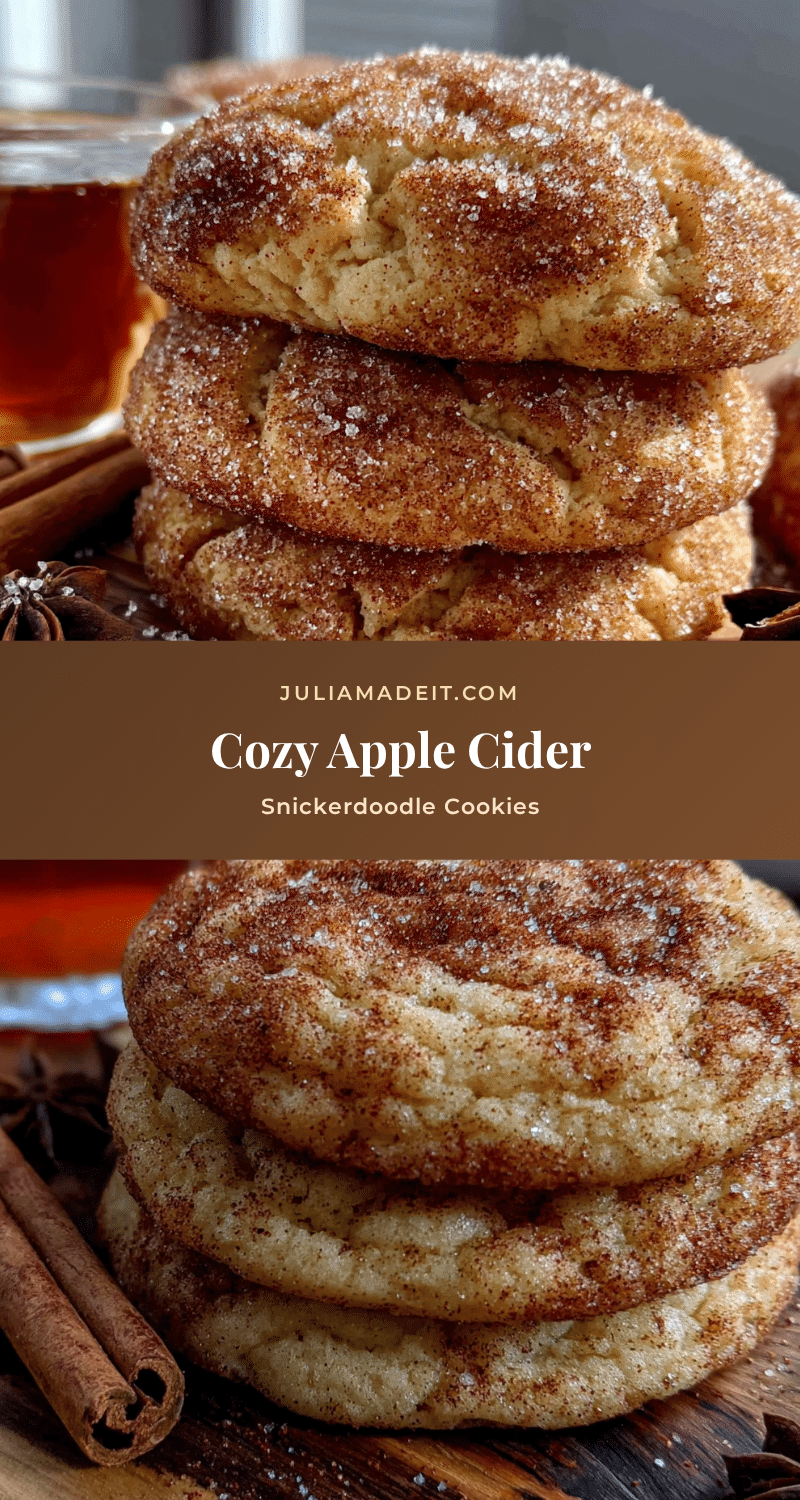
Best Easy Apple Cider Snickerdoodle Cookie Recipe

Soft, crackly snickerdoodles with a subtle apple tang from reduced fresh apple cider. Perfect for fall baking, these cookies are quick, easy, and made with simple ingredients.
- Prep Time: 30 minutes
- Cook Time: 12 minutes
- Total Time: 1 hour 12 minutes (including chilling)
- Yield: 24 cookies 1x
- Category: Dessert
- Cuisine: American
Ingredients
- 2 cups fresh apple cider
- 1 cup unsalted butter, softened
- 1 1/2 cups granulated sugar, divided (1 cup for dough, 1/2 cup for coating)
- 1 large egg, room temperature
- 1 teaspoon vanilla extract
- 2 3/4 cups all-purpose flour
- 2 teaspoons cream of tartar
- 1 teaspoon baking soda
- 1 teaspoon ground cinnamon (for dough)
- 2 tablespoons ground cinnamon (for coating)
- 1/4 teaspoon ground nutmeg (optional)
- 1/2 teaspoon fine sea salt
- Tiny pinch ground cloves (optional)
Instructions
- Reduce the apple cider: Pour 2 cups fresh apple cider into a small saucepan. Bring to a boil over medium-high heat, then reduce heat to medium-low and simmer until reduced to about 1/4 cup thick syrup, about 15-20 minutes. Stir occasionally. Let cool completely.
- Prep dry ingredients: In a medium bowl, whisk together flour, cream of tartar, baking soda, 1 teaspoon cinnamon, nutmeg, cloves (if using), and salt. Set aside.
- Cream butter and sugar: In a stand mixer with paddle attachment (or using a hand mixer), beat softened butter and 1 cup granulated sugar on medium speed until light and fluffy, about 3 minutes. Scrape down sides as needed.
- Add wet ingredients: Beat in egg and vanilla extract until combined. Add cooled apple cider reduction and mix until incorporated (mixture may look slightly curdled).
- Incorporate dry ingredients: With mixer on low, gradually add flour mixture. Mix just until no streaks remain. Dough will be soft and slightly sticky.
- Chill dough: Cover bowl with plastic wrap and refrigerate for at least 30 minutes (up to 48 hours).
- Preheat and prep: Preheat oven to 375°F (190°C). Line two baking sheets with parchment paper or silicone mats.
- Make cinnamon-sugar coating: In a small shallow bowl, whisk together remaining 1/2 cup granulated sugar and 2 tablespoons cinnamon.
- Shape and coat cookies: Using a 1.5-tablespoon cookie scoop, portion dough. Roll each portion into a ball, then roll in cinnamon-sugar mixture to coat. Place on prepared baking sheets, spacing 2 inches apart.
- Bake: Bake one sheet at a time for 10-12 minutes. Cookies should look puffed and slightly cracked on top with golden edges; centers will look soft. Let cool on baking sheet for 5 minutes, then transfer to wire rack.
Notes
Don’t skip the cream of tartar—it gives snickerdoodles their signature tang and chew. Measure flour correctly by spooning and leveling. Chilling dough is essential to prevent spreading. For best results, bake one sheet at a time. Cookies can be stored in an airtight container at room temperature for up to 5 days; add a slice of bread to keep them soft. Freeze baked cookies for up to 3 months or unbaked dough balls for up to 3 months.
Nutrition
- Serving Size: 1 cookie
- Calories: 185
- Sugar: 16
- Sodium: 120
- Fat: 8
- Saturated Fat: 5
- Carbohydrates: 27
- Fiber: 0.5
- Protein: 2
Keywords: apple cider snickerdoodles, fall cookies, snickerdoodle recipe, apple cider cookies, easy cookie recipe