Third time this week I pulled the salmon out of the fridge and just stood there, butter softening on the counter, lemon waiting to be sliced. The first time was an accident—I had a fillet that needed cooking and a half-wilted dill bunch I couldn’t bear to toss. The second time was curiosity, wondering if it had actually been as good as I remembered or if I was just hungry. By the third time, I knew something had clicked. The butter pooled around the fish in that specific way, the dill crisped at the edges, and the lemon did that thing where it perfumes the whole kitchen without making everything sour. I wasn’t testing a recipe anymore. I was making dinner because I couldn’t stop thinking about it.
This buttery lemon dill baked salmon isn’t complicated. That’s sort of the point. It’s the kind of dish that proves you don’t need fifteen ingredients or a fancy technique to make something that feels special on a Tuesday night. The butter melts into the salmon as it bakes, keeping it impossibly tender, while the lemon and dill do this bright, fresh thing that cuts through the richness. It’s balanced without trying hard. And honestly? It takes twenty minutes. From fridge to table in the time it takes to set out plates and pour a glass of wine. That’s not a compromise—that’s the whole reason I keep coming back.
I’ve made this for myself on a random Wednesday, for friends who showed up hungry, and for that one night when I needed dinner to just work without any drama. It works every single time. The salmon comes out flaky, the butter sauce is drinkable (don’t judge), and there’s something about the way the dill smells as it bakes that makes the whole kitchen feel like a real meal is happening. This recipe stuck because it’s the kind of cooking I actually want to do—simple, reliable, and so good I can’t stop making it.
Why You’ll Love This Recipe
I’ve tested this buttery lemon dill baked salmon more times than I care to admit. Some batches were too dry, others too lemony, and one memorable disaster where I forgot the butter entirely (don’t ask). But this version? It’s the one I keep coming back to, and here’s why it works so well.
- Quick & Easy: From start to finish, this comes together in about 20 minutes. No marinating, no complicated steps—just simple cooking that fits into a busy weeknight.
- Simple Ingredients: You probably have butter, lemon, garlic, and salt in your kitchen right now. Fresh dill is the only thing you might need to grab, and it’s worth the tiny effort.
- Perfect for Any Occasion: This works for a quiet dinner alone, a fancy-ish date night, or when you need to feed guests without breaking a sweat. It looks impressive but takes almost no effort.
- Crowd-Pleaser: I’ve served this to people who “don’t really like fish” and watched them ask for seconds. The butter and lemon do something magical that even skeptics can’t resist.
- Unbelievably Delicious: The salmon stays tender and flaky, the butter sauce is rich without being heavy, and the dill adds this fresh, herby brightness that makes every bite feel complete.
What makes this recipe different from all the other salmon recipes out there? It’s the ratio. Most recipes either drown the fish in butter or skimp on it entirely. I found the sweet spot—enough butter to keep the salmon moist and create a silky sauce, but not so much that it feels greasy. The lemon and dill aren’t just garnishes either. They’re cooked right into the dish, so every bite has that bright, herby flavor. It’s not just another salmon recipe. It’s the one I actually want to eat again and again.
What Ingredients You Will Need
This recipe uses simple, wholesome ingredients to deliver bold flavor and satisfying texture without the fuss. Most of these are pantry staples, and the fresh ones are easy to find at any grocery store.
- Salmon Fillets (4 pieces, about 6 oz each): Look for fillets that are similar in thickness so they cook evenly. I prefer center-cut fillets for the best texture. Skin-on or skinless both work, but skin-on helps keep the fish extra moist. If using frozen, thaw completely in the refrigerator overnight and pat very dry before cooking.
- Unsalted Butter (4 tablespoons, softened): This is the star of the show. Unsalted butter lets you control the salt level. I use Kerrygold when I want something extra rich, but any good quality butter works. Let it soften at room temperature so it spreads easily over the salmon.
- Fresh Dill (3 tablespoons, chopped, plus more for garnish): Fresh dill is non-negotiable here. Dried dill just doesn’t have the same bright, grassy flavor. Look for dill that’s perky and bright green, not wilted or slimy. The stems are fine to use too—just chop them finely.
- Fresh Lemon (1 large lemon): You’ll use both the zest and the juice. Zest the lemon before juicing it—trust me, trying to zest a squeezed lemon is a frustrating experience. Use a microplane for the zest and save the juice for the butter mixture. Meyer lemons work beautifully here if you can find them.
- Garlic (3 cloves, minced): Fresh garlic adds a savory depth that complements the butter and dill perfectly. Don’t use pre-minced garlic from a jar—it’s too wet and won’t distribute as well. If you’re in a pinch, you can use 1/2 teaspoon of garlic powder instead.
- Salt (1 teaspoon, preferably kosher): Kosher salt is ideal because it’s easier to pinch and distributes evenly. If using table salt, reduce to 3/4 teaspoon. Don’t skip this—salt is what makes the salmon taste like itself.
- Black Pepper (1/2 teaspoon, freshly ground): Freshly ground pepper adds a subtle warmth that plays nicely with the lemon and dill. Pre-ground pepper works in a pinch, but fresh really does taste better.
- Optional: Lemon Slices (for topping): Thin lemon slices placed on top of the salmon before baking add visual appeal and a bit more lemony flavor. They’ll soften as they bake and look beautiful on the plate.
Equipment Needed
You don’t need a fancy kitchen to make this buttery lemon dill baked salmon. Here’s what you’ll actually use:
- Baking Dish or Sheet Pan: A 9×13 baking dish works perfectly, or you can use a rimmed sheet pan. I prefer a ceramic or glass dish because it holds heat evenly, but metal works too. Just avoid anything too large—you want the butter to pool around the salmon, not spread out thin.
- Small Bowl: For mixing the butter, dill, lemon zest, garlic, salt, and pepper. Any small bowl will do.
- Microplane or Zester: For zesting the lemon. A regular grater works too, but a microplane is easier and gives you finer zest.
- Chef’s Knife and Cutting Board: For chopping the dill and mincing the garlic. A sharp knife makes this job so much easier.
- Measuring Spoons: For accuracy, especially with the salt. I’ve learned the hard way that eyeballing salt leads to salty salmon.
- Instant-Read Thermometer (optional but helpful): Salmon is perfectly cooked at 125-130°F for medium. If you cook salmon often, this is a worthwhile investment. I use a Thermapen and it’s never let me down.
Preparation Method
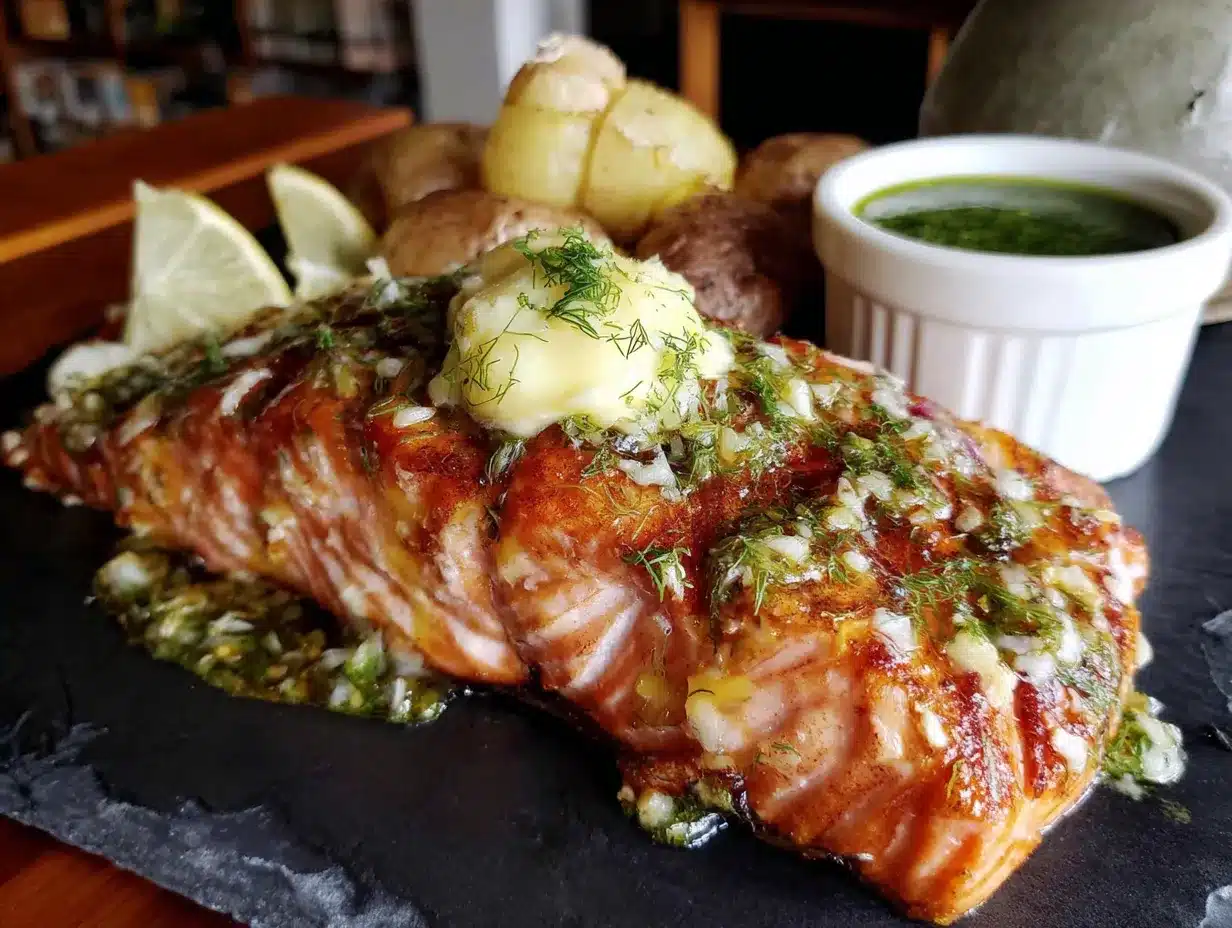
Let’s get cooking. This buttery lemon dill baked salmon comes together fast, so I like to have everything ready before I start. Here’s how to do it right.
- Preheat your oven to 400°F (200°C). Give it a full 15 minutes to come to temperature. A properly preheated oven ensures even cooking and that beautiful flaky texture.
- Prepare the salmon. Pat the fillets dry with paper towels. This is crucial—wet salmon steams instead of bakes, and you want that buttery, tender result. Place the fillets skin-side down (if using skin-on) in your baking dish, leaving a little space between each piece so they cook evenly.
- Make the butter mixture. In a small bowl, combine the softened butter, chopped dill, lemon zest, minced garlic, salt, and pepper. Mash it together with a fork until everything is evenly distributed. It should look like a soft, herby compound butter. Taste a tiny bit—it should taste bright and savory, not overwhelmingly salty.
- Spread the butter over the salmon. Divide the butter mixture evenly among the fillets and spread it over the top. Don’t worry about being perfect—it’ll melt and spread as it bakes. If you’re using lemon slices, arrange them on top of the butter.
- Bake the salmon. Place the dish in the oven and bake for 12-15 minutes, depending on the thickness of your fillets. At 12 minutes, start checking. The salmon is done when it flakes easily with a fork and the center is just slightly translucent. If you’re using a thermometer, look for 125°F for medium or 130°F for well-done.
- Add the finishing touch. Remove the salmon from the oven and squeeze the juice from the zested lemon over the top. The residual heat will mellow the acidity and meld it with the butter sauce. Let it rest for 2-3 minutes—this lets the juices redistribute and makes the salmon even more tender.
- Serve immediately. Spoon some of the buttery pan sauce over each fillet and garnish with extra fresh dill. The sauce is the best part, so don’t leave it behind in the dish.
A few things I’ve learned the hard way: Don’t overbake the salmon. It goes from perfectly flaky to dry and sad in about 60 seconds. If you’re unsure, take it out when it’s just barely done—it’ll continue cooking from residual heat. Also, if your fillets are different thicknesses, check the thinner ones first and remove them early if needed. I’ve had to learn this lesson more than once.
Cooking Tips & Techniques
After making this buttery lemon dill baked salmon more times than I can count, I’ve picked up a few tricks that make a real difference. Here’s what I wish someone had told me.
Room temperature butter is your friend. Cold butter won’t spread evenly over the salmon, and melted butter will just run off. Let it sit out for 30 minutes before you start. If you forget, microwave it in 5-second bursts until it’s soft but not melted. I’ve done this more times than I’d like to admit, and it works fine.
Don’t skip the lemon zest. The zest carries all the bright, fragrant lemon oil that makes this dish sing. The juice adds acidity, but the zest adds actual lemon flavor. I use a microplane and zest right over the bowl so none of those precious oils are wasted.
Pat the salmon dry. This is the single most important step for getting that perfect texture. Wet salmon creates steam, which makes the fish cook unevenly and prevents that beautiful buttery crust from forming. I use paper towels and really press them into the flesh to absorb as much moisture as possible.
Watch the clock carefully. Salmon cooks faster than you think. At 400°F, most fillets are done in 12-14 minutes. I start checking at 10 minutes if the fillets are thin. The difference between perfect and overdone is literally a minute or two, so stay close to the oven.
Let it rest. I know it’s tempting to dig in immediately, but letting the salmon rest for a few minutes makes it noticeably more tender. The juices redistribute, the butter sauce thickens slightly, and every bite is better. Use those two minutes to set the table or pour a drink.
Use the pan sauce. The buttery, lemony, dill-infused liquid in the bottom of the dish is liquid gold. Spoon it over the salmon, drizzle it on your side dishes, or soak it up with crusty bread. Don’t leave it behind—it’s half the reason this recipe is so good.
Variations & Adaptations
This buttery lemon dill baked salmon is pretty perfect as written, but I’ve played around with it enough to know what works and what doesn’t. Here are some variations I actually recommend.
Herb Swap: If you don’t have dill, fresh parsley, chives, or tarragon all work beautifully. Tarragon gives it a slightly anise-like flavor that’s surprisingly good with lemon. I’ve also used a mix of dill and parsley when I was running low on dill, and it turned out great.
Garlic Lover’s Version: Add an extra clove of garlic (or two) if you’re a garlic fan. Roasted garlic also works—just mash a few roasted cloves into the butter mixture for a sweeter, mellower flavor. I’ve done this for dinner parties and it always gets compliments.
Spicy Kick: Add a pinch of red pepper flakes or a tiny bit of cayenne to the butter mixture. The heat cuts through the richness and adds a nice warmth. Start small—you can always add more, but you can’t take it out.
Dairy-Free Option: Use a high-quality vegan butter or olive oil instead of regular butter. The texture will be slightly different, but it still works. I’ve used olive oil when I was out of butter, and while it’s not quite as rich, it’s still delicious.
Sheet Pan Meal: Add vegetables like asparagus, green beans, or cherry tomatoes to the pan around the salmon. Toss them in a little olive oil and salt, and they’ll roast alongside the fish. The vegetables soak up some of the buttery sauce as they cook, which is honestly the best part. This is my go-to when I want a complete meal with minimal cleanup.
Different Citrus: Try lime or orange instead of lemon. Lime gives it a brighter, more tropical vibe, while orange adds a subtle sweetness. Both work well with dill, though I still prefer lemon for its classic pairing.
Serving & Storage Suggestions
This buttery lemon dill baked salmon is incredibly versatile when it comes to serving. Here’s how I like to enjoy it.
Serving Temperature: Serve it hot, right out of the oven, with the pan sauce spooned over the top. The butter should be melted and glossy, and the salmon should be warm and flaky. If it sits too long, the butter will solidify, so eat it promptly.
What to Serve With It: This salmon pairs beautifully with almost anything. I love it with a simple side of roasted asparagus or green beans, a light salad with lemon vinaigrette, or fluffy jasmine rice that soaks up all that buttery sauce. For something heartier, try it with creamy roasted tomato basil soup and crusty bread for a complete meal. It also works well alongside crispy baked lemon herb chicken thighs if you’re feeding a crowd and want variety.
Beverage Pairing: A crisp white wine like Sauvignon Blanc or Pinot Grigio is perfect with the lemon and dill. For non-alcoholic options, sparkling water with a squeeze of lemon or a citrusy iced tea works beautifully.
Storage: Store leftover salmon in an airtight container in the refrigerator for up to 3 days. The flavor actually develops a bit overnight as the dill and lemon meld together. Don’t leave it at room temperature for more than 2 hours.
Reheating: The best way to reheat salmon is in a low oven (300°F) for about 10 minutes, covered loosely with foil. This prevents it from drying out. You can also reheat it in a skillet over medium-low heat with a splash of water or broth, covered, for 3-4 minutes. Avoid the microwave—it makes the salmon rubbery and unevenly heated.
Freezing: Cooked salmon freezes well for up to 2 months. Wrap each fillet individually in plastic wrap, then place in a freezer bag. Thaw in the refrigerator overnight and reheat gently. The texture won’t be quite as perfect as fresh, but it’s still delicious for meal prep.
Nutritional Information & Benefits
This buttery lemon dill baked salmon isn’t just delicious—it’s genuinely good for you. Here’s the breakdown per serving (one fillet with sauce):
- Calories: Approximately 380-420
- Protein: 35-40g
- Fat: 25-30g (mostly healthy fats from salmon and butter)
- Carbohydrates: 1-2g
- Fiber: 0g
- Sugar: 0g
Health Benefits: Salmon is packed with omega-3 fatty acids, which are great for heart health, brain function, and reducing inflammation. It’s also an excellent source of high-quality protein, B vitamins, and selenium. The dill adds antioxidants and has been traditionally used to aid digestion. Lemon provides a boost of vitamin C, which supports immune health. This is the kind of meal that makes you feel good from the inside out.
Dietary Considerations: This recipe is naturally gluten-free, low-carb, and keto-friendly. It’s also nut-free and soy-free. If you’re watching your sodium, you can reduce the salt to 1/2 teaspoon. For a dairy-free version, substitute the butter with olive oil or vegan butter as mentioned in the variations section.
Potential Allergens: This recipe contains fish (salmon) and dairy (butter). If you have a dairy allergy, use the dairy-free option. If you have a fish allergy, this recipe obviously isn’t for you, but you could try the same butter mixture on chicken or tofu.
Conclusion
This buttery lemon dill baked salmon is the kind of recipe that makes you feel like you’ve got your life together, even on a chaotic Tuesday. It’s simple enough for a weeknight but elegant enough for company. The butter keeps the salmon tender, the lemon and dill keep it bright, and the whole thing comes together in twenty minutes with almost no cleanup. That’s a win in my book.
I love this recipe because it reminds me that good food doesn’t have to be complicated. Sometimes the best meals are the ones where you let a few quality ingredients do the heavy lifting. The butter does its thing, the salmon cooks to perfection, and you get to sit down to a dinner that feels special without any stress.
Try it this week. Swap in different herbs, add a pinch of spice, or throw in some vegetables to make it a complete meal. Make it your own. And when you do, come back and tell me how it turned out. I’d love to hear about your version. Leave a comment below, tag me in your photos, or share your favorite variation. Happy cooking!
Frequently Asked Questions
Can I use frozen salmon for this recipe?
Yes, but thaw it completely in the refrigerator overnight first. Pat it very dry with paper towels before adding the butter mixture. Frozen salmon tends to release more water as it cooks, so drying it thoroughly is extra important to avoid steaming instead of baking.
How do I know when the salmon is done?
The salmon is done when it flakes easily with a fork and the center is just slightly translucent. For the most accurate result, use an instant-read thermometer—125°F for medium, 130°F for well-done. Remember, it continues cooking for a minute or two after you take it out of the oven.
Can I make this recipe with other types of fish?
Absolutely. This butter mixture works beautifully with trout, cod, halibut, or even thick white fish like sea bass. Adjust the cooking time based on the thickness of the fillet. Thinner fish like trout will cook faster, while thicker fish like halibut may need a few extra minutes.
What can I substitute for fresh dill?
Fresh parsley, chives, or tarragon are all good substitutes. If you only have dried dill, use 1 tablespoon instead of 3 tablespoons fresh. The flavor won’t be quite as bright, but it’ll still be tasty. Avoid using dried herbs that are more than a year old—they lose their potency.
Can I double this recipe for a crowd?
Yes! Just make sure your baking dish is large enough so the fillets aren’t crowded. Crowded fillets will steam instead of bake, and the butter sauce won’t reduce properly. Use two baking dishes if needed, and rotate them halfway through baking for even cooking. The cooking time should remain about the same if the fillets are similar in thickness.
Pin This Recipe!
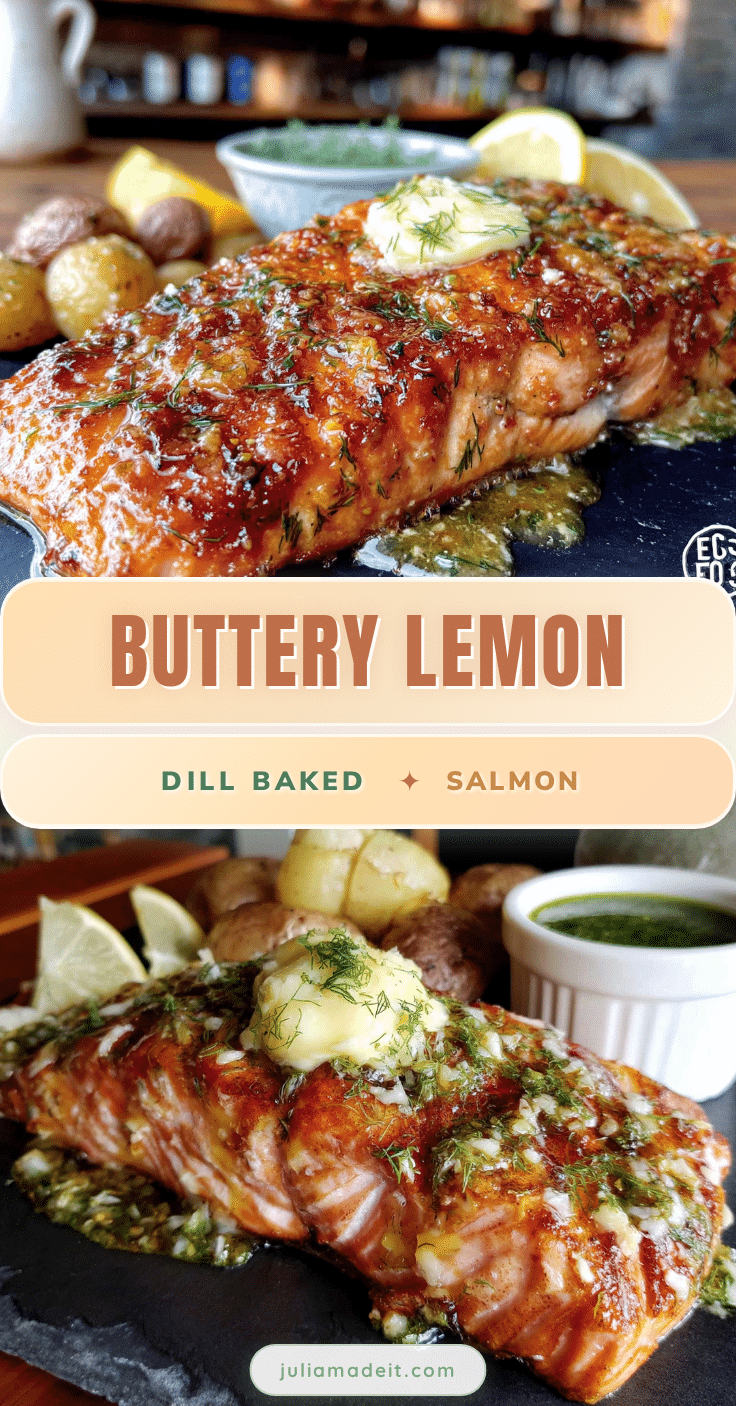
Buttery Lemon Dill Baked Salmon: Easy 20-Minute Dinner

This buttery lemon dill baked salmon is a quick and easy 20-minute dinner that proves you don’t need fancy ingredients or complicated techniques to make something special. The butter keeps the salmon tender and flaky, while lemon and dill add bright, fresh flavor.
- Prep Time: 5 minutes
- Cook Time: 15 minutes
- Total Time: 20 minutes
- Yield: 4 servings 1x
- Category: Main Course
- Cuisine: American
Ingredients
- 4 salmon fillets (about 6 oz each)
- 4 tablespoons unsalted butter, softened
- 3 tablespoons fresh dill, chopped, plus more for garnish
- 1 large lemon (zest and juice)
- 3 cloves garlic, minced
- 1 teaspoon kosher salt
- 1/2 teaspoon freshly ground black pepper
- Optional: lemon slices for topping
Instructions
- Preheat your oven to 400°F (200°C).
- Pat the salmon fillets dry with paper towels. Place them skin-side down in a baking dish, leaving space between each piece.
- In a small bowl, combine softened butter, chopped dill, lemon zest, minced garlic, salt, and pepper. Mash together with a fork until evenly distributed.
- Divide the butter mixture evenly among the fillets and spread over the top. If using, arrange lemon slices on top.
- Bake for 12-15 minutes, depending on thickness. Salmon is done when it flakes easily with a fork and the center is slightly translucent (125°F for medium, 130°F for well-done).
- Remove from oven and squeeze the juice from the zested lemon over the top. Let rest for 2-3 minutes.
- Serve immediately, spooning pan sauce over each fillet and garnishing with extra fresh dill.
Notes
Don’t overbake the salmon—it goes from perfectly flaky to dry quickly. Pat the salmon dry thoroughly to avoid steaming. Let the butter come to room temperature for easy spreading. The pan sauce is liquid gold—don’t leave it behind. For best results, use fresh dill, not dried.
Nutrition
- Serving Size: 1 fillet with sauce
- Calories: 400
- Sodium: 600
- Fat: 28
- Saturated Fat: 12
- Carbohydrates: 2
- Protein: 38
Keywords: baked salmon, lemon dill salmon, easy salmon recipe, quick dinner, healthy salmon, buttery salmon, 20-minute meal