I was standing at the stove, stirring a pot of butternut squash that I’d planned to turn into soup, when my husband walked in and asked, “Is that for mac and cheese?” Honestly, it wasn’t. But the second he said it, I knew he was right. I had a block of sharp cheddar in the fridge, some cream in the door, and a box of cavatappi in the pantry that I’d been saving for a rainy day. So I ditched the soup idea, grabbed my cast iron skillet, and decided to see if this could actually work. Twenty minutes later, he was scraping the edges of the pan with a fork, and I was mentally rewriting my entire dinner plan for the week.
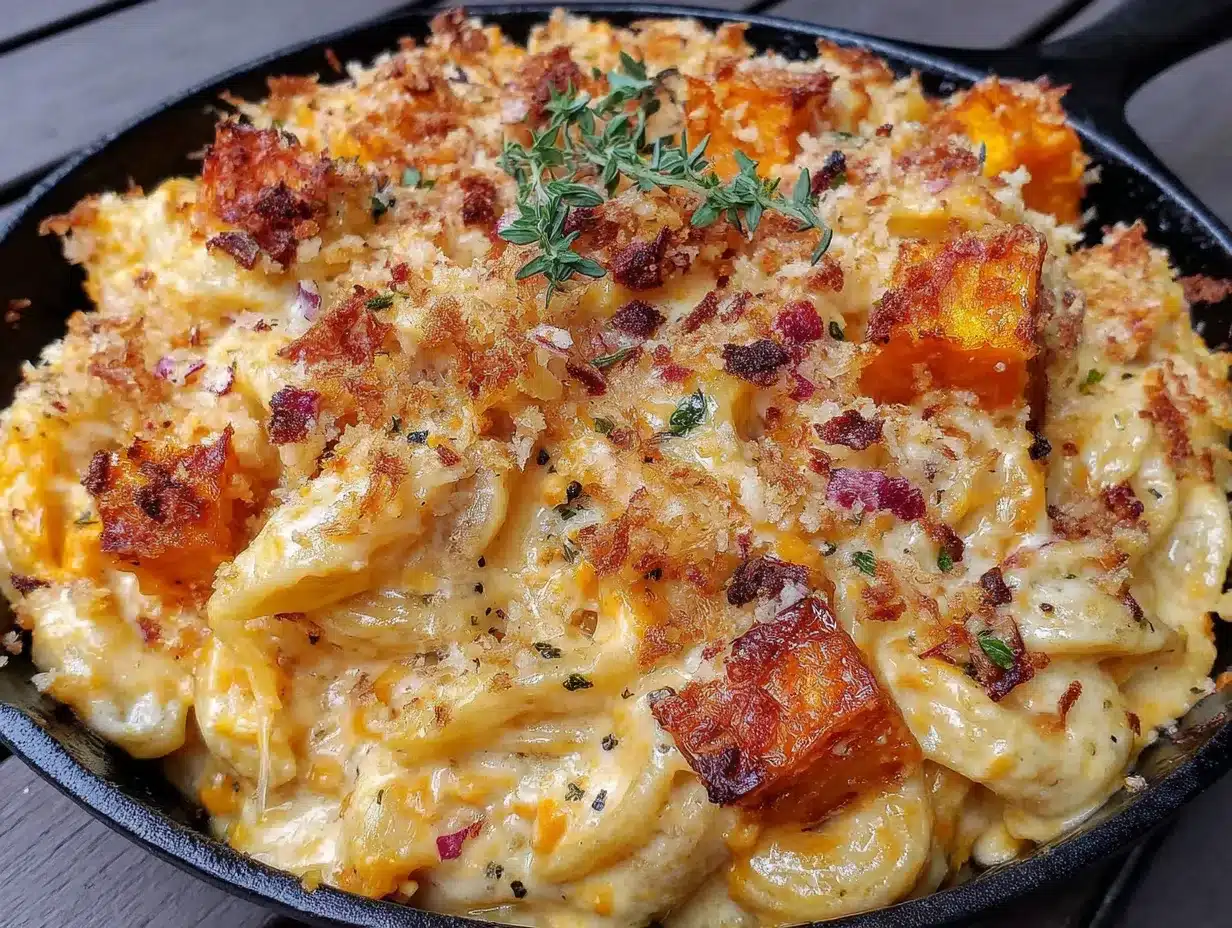
That’s the thing about this recipe—it wasn’t born from a careful plan or a Pinterest board. It came from a lazy Tuesday night and a husband who calls out flavor combos before I even think of them. I’ve made a lot of mac and cheese in my life, but this one? It’s different. The butternut squash doesn’t just blend in—it melts into the cheese sauce, making it velvety and rich without feeling heavy. And because you cook everything in one skillet (yes, even the pasta), it’s the kind of meal that feels fancy but actually saves you from a sink full of dishes.
I wasn’t trying to reinvent comfort food. I was just trying to get dinner on the table without anyone complaining. But somehow, this creamy skillet butternut mac and cheese became the one my family asks for by name. It’s the kind of recipe that proves you don’t need a lot of fuss to make something unforgettable. And honestly? That’s my favorite kind of cooking.
Why You’ll Love This Recipe
This isn’t just another mac and cheese recipe. It’s the one that makes you feel like you’re eating something indulgent, while secretly sneaking in a full serving of vegetables. Here’s why it works:
- Quick & Easy: From start to finish, this comes together in about 30 minutes. The pasta cooks right in the skillet with the squash and broth, so you don’t even need to boil a separate pot of water. It’s weeknight magic.
- Simple Ingredients: You’ll find everything at your regular grocery store. No obscure cheeses, no fancy creams—just butternut squash, cheddar, milk, and pantry staples. If you’ve got a sharp knife and a vegetable peeler, you’re already halfway there.
- Perfect for Fall (and Beyond): While it’s obviously cozy for autumn dinners, I’ve made this in the dead of winter and even on a cool spring evening. The squash gives it a natural sweetness that works year-round.
- Crowd-Pleaser: I’ve served this to kids who “don’t like vegetables” and adults who asked for the recipe before finishing their first bite. It’s one of those rare dishes that unites everyone at the table.
- Unbelievably Delicious: The texture is what gets people. The squash breaks down into the sauce, making it creamy without being gluey. And the sharp cheddar cuts through the sweetness perfectly. It’s comfort food that actually feels good to eat.
What makes this version different from all the other butternut mac and cheese recipes out there? It’s the skillet method. By cooking everything in one pan, the pasta absorbs the squash flavor as it cooks, so every single noodle is infused with that subtle sweetness. Plus, the sauce comes together right in the same pan—no separate béchamel, no double-boiler, no mess. I’ve tested this with different cheeses, different milks, and even different squashes, and this combination is the one that delivers every time. It’s not just another version—it’s the version I actually make on repeat.
What Ingredients You Will Need
This recipe uses simple, wholesome ingredients to deliver bold flavor and satisfying texture without the fuss. Most of these are pantry staples, and the ones that aren’t are easy to find at any grocery store.
- Butternut squash (about 2 cups, peeled and diced into ½-inch cubes): You can buy pre-cut cubes to save time, but I prefer cutting my own from a whole squash—the flavor is slightly fresher. Look for a squash that feels heavy for its size and has a smooth, unblemished skin.
- Elbow macaroni or cavatappi (8 ounces): I like cavatappi because the ridges catch the sauce beautifully, but any small pasta shape works. Gluten-free pasta works too, just adjust the cooking time slightly.
- Sharp cheddar cheese (2 cups, freshly grated): Please, please grate your own cheese. Pre-shredded cheese has anti-caking agents that prevent it from melting smoothly. I recommend Tillamook or Cabot for consistent results.
- Milk (1½ cups, whole milk preferred): Whole milk gives the creamiest sauce, but 2% works in a pinch. For a dairy-free option, use unsweetened oat milk—it’s thick enough to mimic whole milk’s texture.
- Chicken or vegetable broth (1 cup): This is the liquid that cooks the pasta and squash together. I use low-sodium broth so I can control the salt level. Homemade broth adds even more depth if you have it on hand.
- Butter (2 tablespoons, unsalted): Adds richness to the sauce and helps the roux come together smoothly.
- All-purpose flour (2 tablespoons): This thickens the cheese sauce. For a gluten-free version, use a 1:1 gluten-free flour blend.
- Garlic (2 cloves, minced): Fresh garlic is non-negotiable here. It adds a savory note that balances the sweetness of the squash.
- Dijon mustard (1 teaspoon): Don’t skip this—it doesn’t make the sauce taste like mustard. Instead, it brightens the cheese flavor and helps it pop.
- Salt and black pepper (to taste): I use about ½ teaspoon of salt and ¼ teaspoon of pepper, but adjust based on your broth and cheese.
- Optional toppings: Panko breadcrumbs (½ cup) mixed with 1 tablespoon melted butter for a crispy finish, or a pinch of smoked paprika for color.
Equipment Needed
You don’t need a fancy kitchen to make this recipe, but a few key tools make the process smoother:
- Large cast iron skillet or heavy-bottomed skillet (12-inch): Cast iron retains heat beautifully and gives you that nice browned edge on the pasta. If you don’t have cast iron, a stainless steel or non-stick skillet works fine—just make sure it’s oven-safe if you plan to broil the topping.
- Chef’s knife and cutting board: For dicing the squash. A sharp knife is crucial—butternut squash is dense and a dull blade can be dangerous.
- Vegetable peeler: To peel the squash. A Y-shaped peeler gives you more control than a straight one.
- Box grater or food processor: For grating the cheese. I’ve grated cheese by hand for years, but if you’re short on time, a food processor with a grating disc does the job in seconds.
- Wooden spoon or silicone spatula: For stirring the sauce and pasta. Wooden spoons are gentle on cast iron and don’t scratch the surface.
- Measuring cups and spoons: For accuracy, especially with the flour and broth.
If you’re new to cooking with cast iron, don’t be intimidated. It’s actually more forgiving than people think—just make sure your skillet is seasoned well and you don’t let it sit in water. I’ve had my Lodge skillet for over a decade, and it’s my go-to for one-pan meals like this one.
Preparation Method
- Prep the squash: Peel the butternut squash with a vegetable peeler, then cut it in half lengthwise. Scoop out the seeds and stringy bits with a spoon. Dice the flesh into ½-inch cubes—you should have about 2 cups. If you’re using pre-cut squash, just give it a quick rinse and pat it dry.
- Grate the cheese: Grate your sharp cheddar on the large holes of a box grater. Aim for about 2 cups loosely packed. Set it aside to come to room temperature while you cook—room-temperature cheese melts more smoothly into the sauce.
- Sauté the aromatics: Place your skillet over medium heat and add 1 tablespoon of the butter. Once it’s melted and bubbly, add the minced garlic. Cook for about 30 seconds, just until fragrant—don’t let it brown or it will turn bitter.
- Cook the squash and pasta: Add the diced butternut squash, the dry pasta, the broth, and 1 cup of the milk to the skillet. Stir to combine, then bring it to a gentle boil. Reduce the heat to medium-low, cover the skillet, and let it simmer for 12-15 minutes. Stir once halfway through to prevent sticking. The pasta should be al dente and the squash should be tender enough to mash with a fork.
- Make the sauce: Uncover the skillet and increase the heat to medium. Add the remaining ½ cup of milk and the Dijon mustard. In a small bowl, mash about half of the squash cubes with a fork (or use a potato masher right in the skillet) to thicken the sauce. This is the secret to that ultra-creamy texture without adding extra cream.
- Add the cheese: Reduce the heat to low. Sprinkle the grated cheddar over the pasta mixture, a handful at a time, stirring gently after each addition. Keep stirring until the cheese is fully melted and the sauce is smooth. Season with salt and pepper to taste. If the sauce seems too thick, add a splash of warm milk or broth to loosen it up.
- Optional crispy topping: If you want that golden, crunchy crust, preheat your broiler. In a small bowl, mix the panko breadcrumbs with the remaining 1 tablespoon of melted butter. Sprinkle the mixture evenly over the mac and cheese. Broil for 2-3 minutes, watching closely, until the breadcrumbs are golden brown. Let it rest for 2 minutes before serving—the sauce will thicken slightly as it cools.
Sensory cues to watch for: When the pasta is done, it should be tender but still have a slight bite. The squash should break apart easily when pressed with a spoon. The sauce should coat the back of a spoon—if it’s too thin, let it simmer uncovered for another minute or two. If it’s too thick, add a splash of milk.
Cooking Tips & Techniques
I’ve made this recipe more times than I can count, and I’ve learned a few things the hard way. Here are my best tips for getting it right every time:
- Don’t skip the Dijon mustard: I know it sounds weird in mac and cheese, but trust me on this one. The mustard doesn’t add flavor—it adds depth. It brightens the cheese and helps the sauce feel more complex. I once forgot to add it, and the sauce tasted flat. Never again.
- Use freshly grated cheese: This is the number one mistake people make with homemade mac and cheese. Pre-shredded cheese is coated in cellulose (wood pulp, basically) to prevent clumping, but that same coating prevents smooth melting. Spend the extra two minutes grating your own—it makes a world of difference.
- Don’t overcook the pasta in the skillet: Since the pasta continues to cook as the sauce thickens, take it off the heat when it’s just al dente. If you cook it until it’s fully tender, it will turn mushy by the time you serve it.
- Mash the squash strategically: You don’t want to mash all of it—leaving some chunks gives the dish texture and visual interest. I usually mash about half, leaving the rest as soft cubes that melt into the sauce as you stir.
- Low heat for melting cheese: High heat will cause the cheese to seize up and turn grainy. Keep the heat on low when you add the cheese, and stir gently but constantly until it’s fully incorporated.
- Let it rest: I know it’s tempting to dig in right away, but letting the mac and cheese sit for 2-3 minutes off the heat allows the sauce to thicken to the perfect consistency. If you serve it immediately, it might be a little loose.
Variations & Adaptations
This recipe is incredibly flexible. Here are some ways to make it your own:
- Make it vegetarian: Use vegetable broth instead of chicken broth. The recipe is already vegetarian-friendly, but swapping the broth makes it fully plant-based (if you also use dairy-free cheese and milk).
- Add protein: Stir in 1 cup of cooked, shredded chicken, crumbled bacon, or crispy pancetta after you add the cheese. I’ve done this with leftover roasted chicken from my simple crockpot honey garlic chicken thighs recipe, and it was incredible.
- Swap the cheese: Try a mix of sharp cheddar and Gruyère for a nuttier, more sophisticated flavor. Smoked Gouda adds a wonderful smoky note that pairs beautifully with the sweet squash.
- Make it dairy-free: Use unsweetened oat milk (it’s the thickest non-dairy milk) and a high-quality dairy-free cheddar shred. I’ve tested this with Violife and Miyoko’s, and both melt surprisingly well.
- Add greens: Stir in a handful of fresh spinach or chopped kale right before you add the cheese. The residual heat will wilt it perfectly without making it soggy.
- Seasonal twist: In the fall, swap half the butternut squash for roasted pumpkin or sweet potato. In the spring, add a handful of fresh peas and a squeeze of lemon juice at the end.
Serving & Storage Suggestions
This mac and cheese is best served hot, straight from the skillet. The cast iron keeps it warm for a surprisingly long time, which is great for family-style meals. I like to garnish it with a sprinkle of fresh thyme or a pinch of smoked paprika for color, and serve it alongside a simple green salad dressed with lemon vinaigrette to cut through the richness.
For a heartier meal, pair it with crispy baked lemon herb chicken thighs or a bowl of creamy roasted tomato basil soup for the ultimate comfort food dinner. It also works beautifully as a side dish for holiday gatherings—try it alongside cozy brown butter apple crisp for a fall-themed menu.
Storage: Leftovers keep well in an airtight container in the refrigerator for up to 4 days. The pasta will absorb some of the sauce as it sits, so it will be thicker when reheated—that’s normal.
Reheating: The best way to reheat is in a skillet over medium-low heat with a splash of milk or broth. Stir gently until warmed through, about 5 minutes. You can also microwave individual portions in 30-second bursts, stirring between each. If the sauce seems dry, add a little milk before reheating.
Freezing: This recipe freezes surprisingly well. Let it cool completely, then transfer to a freezer-safe container. Freeze for up to 3 months. Thaw overnight in the refrigerator, then reheat in a skillet with a splash of milk. The texture won’t be quite as creamy as fresh, but it’s still delicious.
Nutritional Information & Benefits
Here’s an approximate nutritional breakdown per serving (based on 6 servings):
- Calories: 420
- Total Fat: 22g
- Saturated Fat: 13g
- Cholesterol: 65mg
- Sodium: 580mg
- Total Carbohydrates: 38g
- Dietary Fiber: 4g
- Sugars: 6g
- Protein: 18g
Butternut squash is a nutritional powerhouse—it’s packed with vitamin A (over 400% of your daily needs per cup), vitamin C, and fiber. The squash also adds natural sweetness, which means you can use less salt without sacrificing flavor. Sharp cheddar provides calcium and protein, while the milk adds a dose of vitamin D and B12.
This recipe is naturally vegetarian and can be made gluten-free with a simple pasta swap. It’s also a great way to sneak vegetables into a meal for picky eaters—the squash blends so thoroughly into the sauce that even my veggie-averse nephew asked for seconds without realizing he was eating butternut squash.
Conclusion
This creamy skillet butternut mac and cheese has become my go-to for those nights when I want something that feels special but doesn’t require a lot of effort. It’s proof that a few simple ingredients, cooked with a little intention, can turn into something truly memorable. The sweetness of the squash, the sharpness of the cheddar, the slight crunch of the breadcrumb topping—it all comes together in one skillet, in under 30 minutes, with minimal cleanup.
I hope you give this recipe a try and make it your own. Maybe you’ll add bacon, or swap in Gruyère, or skip the breadcrumbs altogether. That’s the beauty of cooking—you get to decide. And when you do make it, I’d love to hear how it turned out. Drop a comment below, share a photo, or tag me in your creation. This is the kind of recipe that deserves to be celebrated, one forkful at a time.
Happy cooking!
Frequently Asked Questions
Can I use frozen butternut squash instead of fresh?
Absolutely. Frozen butternut squash works perfectly in this recipe—just add it directly to the skillet without thawing. You may need to add an extra 2-3 minutes of cooking time to allow the frozen squash to soften completely. The texture will be slightly softer than fresh, but it still blends beautifully into the sauce.
Can I make this recipe ahead of time?
Yes, you can assemble the mac and cheese up to the point of adding the breadcrumb topping, then refrigerate it for up to 24 hours. When you’re ready to serve, add the breadcrumbs and bake at 375°F for 15-20 minutes, or until heated through. You can also broil the topping for 2-3 minutes at the end for that golden crust.
Why did my cheese sauce turn out grainy?
Grainy cheese sauce usually happens for two reasons: the heat was too high, or the cheese was pre-shredded. Always melt cheese over low heat, and always grate your own from a block. If your sauce does turn grainy, try whisking in a teaspoon of lemon juice or a splash of cold milk—it won’t fix it completely, but it can help smooth it out a little.
Can I use a different type of squash?
Yes, you can substitute butternut squash with other winter squashes like kabocha, acorn, or even pumpkin. Keep in mind that different squashes have varying levels of sweetness and moisture. Kabocha is sweeter and denser, while acorn squash is slightly more watery. Adjust the cooking time as needed—softer squashes will cook faster.
How do I make this recipe gluten-free?
Simply swap the all-purpose flour for a 1:1 gluten-free flour blend, and use gluten-free pasta. The rest of the ingredients are naturally gluten-free. I’ve tested this with Barilla gluten-free elbows and Bob’s Red Mill 1:1 flour, and the results were excellent—the sauce was just as creamy and the pasta held up well.
Pin This Recipe!
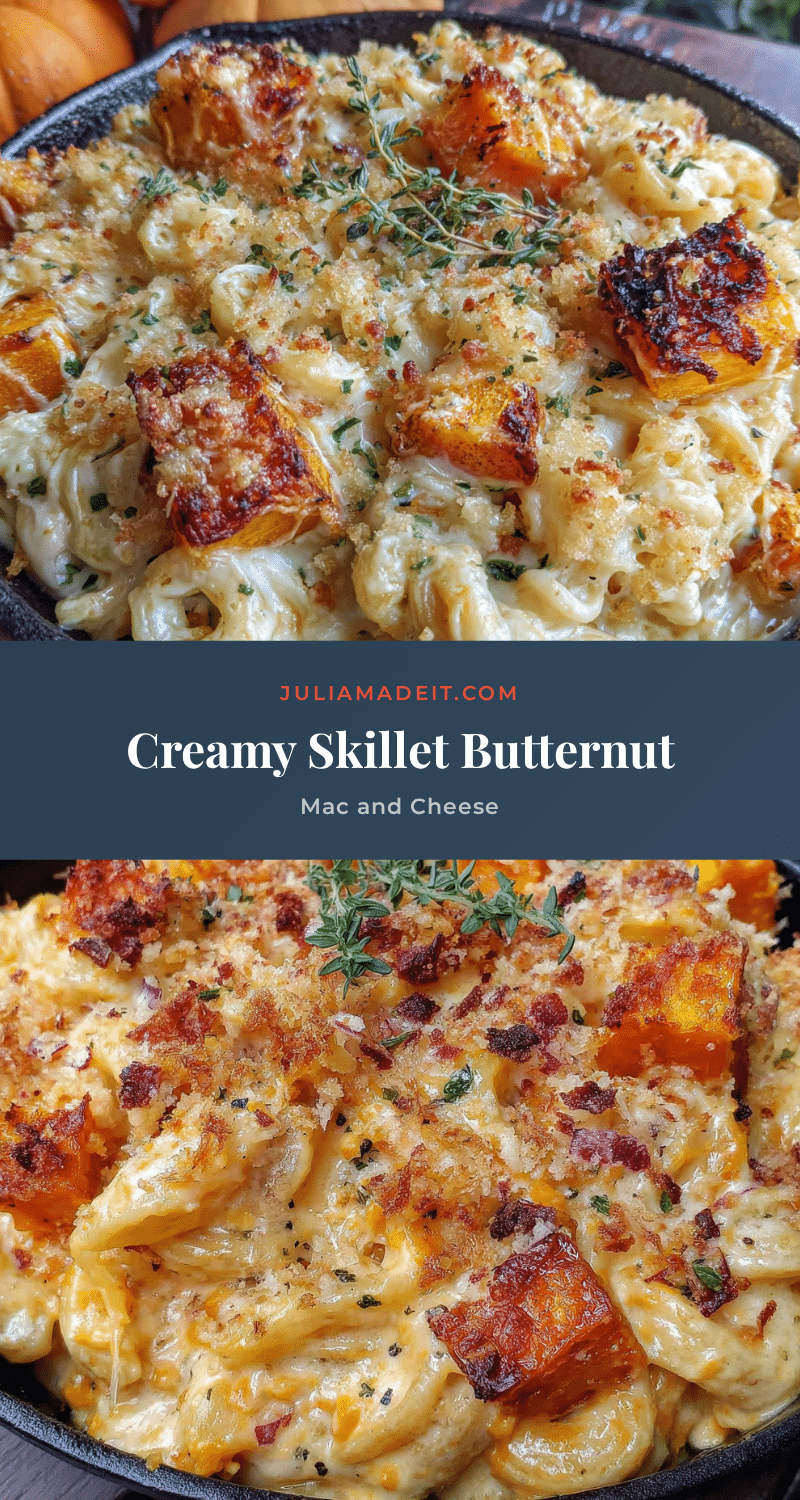
Creamy Skillet Butternut Mac and Cheese (Easy 30-Min Recipe)

This creamy skillet butternut mac and cheese is a quick, one-pan comfort food that combines velvety butternut squash sauce with sharp cheddar and pasta, all cooked in under 30 minutes. It’s a family-friendly, veggie-packed twist on a classic that feels indulgent but is secretly wholesome.
- Prep Time: 10 minutes
- Cook Time: 20 minutes
- Total Time: 30 minutes
- Yield: 6 servings 1x
- Category: Main Course
- Cuisine: American
Ingredients
- 2 cups butternut squash, peeled and diced into ½-inch cubes
- 8 ounces elbow macaroni or cavatappi
- 2 cups sharp cheddar cheese, freshly grated
- 1½ cups whole milk
- 1 cup low-sodium chicken or vegetable broth
- 2 tablespoons unsalted butter
- 2 tablespoons all-purpose flour
- 2 cloves garlic, minced
- 1 teaspoon Dijon mustard
- ½ teaspoon salt
- ¼ teaspoon black pepper
- ½ cup panko breadcrumbs (optional, for topping)
- 1 tablespoon melted butter (optional, for topping)
Instructions
- Prep the squash: Peel the butternut squash with a vegetable peeler, cut in half lengthwise, scoop out seeds, and dice into ½-inch cubes (about 2 cups). If using pre-cut squash, rinse and pat dry.
- Grate the cheese: Grate sharp cheddar on the large holes of a box grater to get about 2 cups loosely packed. Set aside to come to room temperature.
- Sauté the aromatics: Place a large cast iron or heavy-bottomed skillet over medium heat. Add 1 tablespoon butter. Once melted and bubbly, add minced garlic and cook for about 30 seconds until fragrant.
- Cook the squash and pasta: Add diced butternut squash, dry pasta, broth, and 1 cup of milk to the skillet. Stir to combine, bring to a gentle boil, then reduce heat to medium-low. Cover and simmer for 12-15 minutes, stirring once halfway, until pasta is al dente and squash is tender.
- Make the sauce: Uncover skillet and increase heat to medium. Add remaining ½ cup milk and Dijon mustard. Mash about half of the squash cubes with a fork or potato masher right in the skillet to thicken the sauce.
- Add the cheese: Reduce heat to low. Sprinkle grated cheddar over the pasta mixture, a handful at a time, stirring gently after each addition until fully melted and smooth. Season with salt and pepper to taste. If sauce is too thick, add a splash of warm milk or broth.
- Optional crispy topping: Preheat broiler. Mix panko breadcrumbs with remaining 1 tablespoon melted butter. Sprinkle evenly over mac and cheese. Broil for 2-3 minutes until golden brown. Let rest for 2 minutes before serving.
Notes
For best results, use freshly grated cheese to avoid graininess. Don’t skip the Dijon mustard—it brightens the cheese flavor. Let the dish rest for 2-3 minutes after cooking to allow the sauce to thicken. For a gluten-free version, use gluten-free pasta and a 1:1 gluten-free flour blend.
Nutrition
- Serving Size: 1 serving
- Calories: 420
- Sugar: 6
- Sodium: 580
- Fat: 22
- Saturated Fat: 13
- Carbohydrates: 38
- Fiber: 4
- Protein: 18
Keywords: butternut mac and cheese, skillet mac and cheese, one-pot mac and cheese, easy mac and cheese, fall comfort food, vegetarian mac and cheese