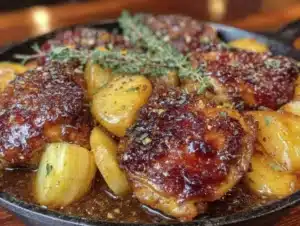
My partner took a bite of the Perfect Balsamic Fig Glazed Pork Tenderloin with Roasted Shallots and paused mid-chew, eyes widening just a bit. I remember thinking, “Well, this might actually be something special.” It wasn’t the usual “nice” or “good” comment — it was that rare, quiet moment when someone’s face says, “I didn’t expect that, but I’m hooked.” The tangy sweetness from the fig glaze, paired with the mellow roasted shallots, created a balance that surprised both of us. The kitchen filled with the rich aroma of balsamic vinegar and caramelized fruit, and honestly, it felt like the kind of dinner that makes you forget about any other plans for the evening.
That night, as I watched the last morsels disappear, I realized this recipe wasn’t just another pork tenderloin. It’s one of those dishes that quietly wins over even the most skeptical eaters — and it does so without fuss or fancy ingredients. The beauty lies in how simple ingredients come together with a touch of patience and care, turning a humble cut of pork into a centerpiece worthy of company or a cozy night in. Plus, the roasted shallots add a subtle sweetness and softness that perfectly complements the meaty richness.
After several tweaks and tasting sessions, this balsamic fig glaze recipe became a staple. I keep coming back to it because it’s reliable, forgiving, and, well, it just tastes like a little celebration on a plate — without making you work too hard. It’s the kind of dish that makes me quietly confident in the kitchen, knowing I can whip up something impressive yet approachable. If you’ve been hunting for a pork tenderloin recipe that’s both comforting and a bit unexpected, you’re in the right place.
Why You’ll Love This Recipe
Honestly, this Perfect Balsamic Fig Glazed Pork Tenderloin recipe checks so many boxes, it’s hard not to keep it in regular rotation. I’ve tested it multiple times, tweaking the glaze and roasting times to get that ideal balance — juicy pork with a sticky, flavorful crust. Here’s what makes it stand out:
- Quick & Easy : Ready in under an hour, making it perfect for busy weeknights or when you want a fuss-free dinner that feels special.
- Simple Ingredients : You probably have balsamic vinegar and dried figs in your pantry, or you can find them easily. No exotic or hard-to-find items here.
- Perfect for Dinner Parties or Family Meals : Looks fancy but is straightforward enough to make any night feel like an occasion.
- Crowd-Pleaser : The glaze’s sweet-tart flavor and the mellow shallots get raves whether you’re serving to kids or adults.
- Unbelievably Delicious : The pork stays moist and tender, while the sticky glaze adds a complexity that makes you close your eyes with the first bite.
What really separates this recipe from others is the glaze’s texture and flavor layering. Instead of just pouring on a sauce, the balsamic and fig reduction cooks down to a thick, shiny coat that caramelizes beautifully on the pork. The roasted shallots aren’t an afterthought either — they soak up some of that glaze magic, turning sweet and silky, adding a depth of flavor you don’t usually find with typical pork dinners.
It’s a recipe that feels like you put in effort, but the truth is, it’s mostly about timing and letting those flavors develop naturally. Whether you want to impress guests or treat yourself to something a bit luxurious without the stress, this pork tenderloin will do the trick every time.
What Ingredients You Will Need
This recipe leans on simple, wholesome ingredients that combine to deliver bold flavor and satisfying texture without the fuss. Most are pantry staples or easy to source, and substitutions are straightforward if needed.
- Pork Tenderloin (1.5 pounds / 680 grams, trimmed) – The star protein, lean yet tender when cooked right.
- Olive Oil (2 tablespoons) – For searing and roasting, pick a good quality extra virgin for the best flavor.
- Salt & Black Pepper (to taste) – Basic seasoning to bring out the pork’s natural flavor.
- Shallots (8 small, peeled and halved) – Roasted alongside the pork, they soften and sweeten beautifully.
- Dried Figs (½ cup / 75 grams, chopped) – Adds natural sweetness and chew, look for plump ones from a trusted brand like Stonemill or Sun-Maid.
- Balsamic Vinegar (¼ cup / 60 ml) – A good-quality aged balsamic gives that perfect tang and depth; don’t use the cheap stuff here.
- Honey (2 tablespoons) – Balances acidity with gentle sweetness; local or raw honey works best.
- Garlic (2 cloves, minced) – For that aromatic punch in the glaze.
- Dijon Mustard (1 teaspoon) – Adds subtle heat and complexity to the glaze.
- Fresh Thyme (1 tablespoon, chopped) – Earthy herbaceous note that complements the pork and glaze.
Substitution tips: If you don’t have dried figs, chopped dates or prunes can work in a pinch, though figs give the best texture. For a gluten-free option, all ingredients here are naturally gluten-free, just double-check your balsamic vinegar label. If you need to swap shallots, small red onions are okay but won’t caramelize quite as delicately.
Equipment Needed
- Ovenproof Skillet or Cast Iron Pan – Ideal for searing the pork and transferring directly to the oven (I love my Lodge cast iron for this).
- Baking Sheet or Roasting Pan – To roast the shallots alongside the pork if your skillet isn’t large enough.
- Sharp Chef’s Knife – For trimming the pork and chopping figs and shallots cleanly.
- Meat Thermometer – Helps to get the pork perfectly cooked without guesswork (I swear by instant-read thermometers like ThermoWorks).
- Spoon or Small Whisk – For mixing the glaze ingredients smoothly.
If you don’t have an ovenproof skillet, you can sear the pork in a regular pan and then transfer it to a preheated baking dish. For roasting shallots, a rimmed baking sheet lined with foil makes cleanup easier. A meat thermometer is a game-changer here—nothing beats knowing when your pork hits just the right temperature for juicy perfection.
Preparation Method
- Preheat your oven to 400°F (200°C). This temperature helps the pork develop a beautiful crust while keeping the inside juicy.
- Prepare the pork tenderloin: Pat it dry with paper towels. Season generously with salt and black pepper on all sides. This step is crucial because it helps build flavor and promotes a nice sear.
- Sear the pork: Heat 1 tablespoon olive oil in your ovenproof skillet over medium-high heat. Once shimmering, add the pork and sear for about 3-4 minutes per side until golden brown all around. This locks in the juices and adds depth.
- Prepare the glaze: While the pork sears, combine chopped dried figs, balsamic vinegar, honey, minced garlic, Dijon mustard, and fresh thyme in a small saucepan. Bring to a simmer over medium heat, stirring occasionally. Let it reduce gently for 8-10 minutes until thickened and syrupy. It should coat the back of a spoon.
- Roast the shallots: Toss halved shallots with remaining 1 tablespoon olive oil, salt, and pepper. Arrange them around the pork in the skillet or on a roasting pan if needed.
- Brush the pork generously with half of the fig glaze, reserving the rest for serving.
- Transfer the skillet (or pan) to the oven and roast for 15-20 minutes, or until the internal temperature of the pork reaches 145°F (63°C). Check with your meat thermometer to avoid overcooking.
- Rest the pork: Remove from oven, tent loosely with foil, and let it rest for 10 minutes. This step lets the juices redistribute, making every slice tender and juicy.
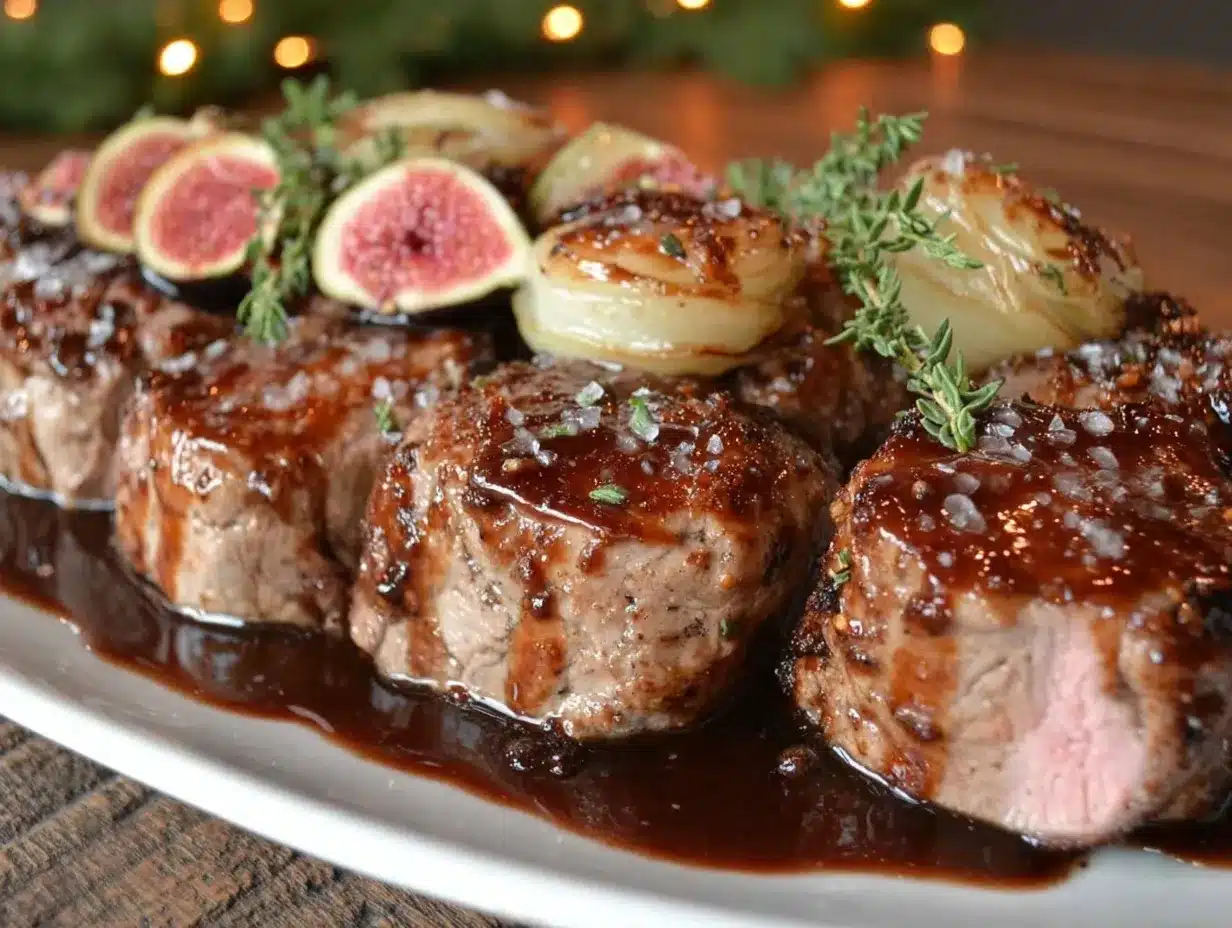
- Slice and serve: Cut the pork into medallions and drizzle with the remaining balsamic fig glaze. Serve alongside the caramelized roasted shallots for a perfect balance.
Pro tip: While the glaze simmers, keep an eye on it and stir often to prevent burning. If it gets too thick, splash in a little water or more balsamic to loosen. The shallots should be golden and soft but not mushy—roast them until just tender.
Cooking Tips & Techniques
Getting pork tenderloin just right can be tricky, but a few tricks have saved me many times.
- Don’t skip the sear. It’s tempting to throw the pork straight into the oven, but searing locks in flavor and texture. If you try one thing, make it this.
- Use a meat thermometer. Pork can dry out fast. Pull it at 145°F (63°C), then rest it. It’ll carry over cook a bit while resting, so no guesswork needed.
- Simmer the glaze low and slow. Rushing the reduction at high heat can burn the sugars in the honey and figs, leaving a bitter taste.
- Roast shallots separately if your pan is crowded. I’ve learned the hard way that overcrowding leads to steaming, not roasting. Crisp edges on shallots add a lovely texture contrast.
- Rest your meat. It sounds like a broken record, but it’s the difference between juicy pork and dry pork. Resist slicing immediately.
One time, I overcooked the pork by just a few degrees, and the whole dish felt flat and dry. After that, I never skip the thermometer—even if I’m in a rush. Also, pairing this with a simple side like creamy mashed potatoes helps soak up all that wonderful glaze.
Variations & Adaptations
This recipe is flexible enough to fit different dietary needs and flavor preferences without losing its core charm.
- Seasonal Twist: In summer, swap dried figs for fresh peaches or nectarines in the glaze for a bright, fruity punch. Just reduce cooking time slightly to keep the fresh fruit from breaking down too much.
- Low-Sugar Option: Cut the honey in half and add a splash of orange juice for natural sweetness without overdoing it.
- Herb Variations: Try rosemary or sage instead of thyme for a woodsy note that pairs beautifully with pork.
- Cooking Method: If you don’t have an ovenproof skillet, sear the pork on the stovetop and transfer to a roasting pan. Alternatively, finish the pork on a grill for a subtle smoky flavor.
- Allergen Swap: For those avoiding honey, maple syrup works as a natural substitute and adds a slightly different but equally lovely sweetness.
I once tried a version with a pinch of smoked paprika in the glaze — it gave a subtle warmth that was surprisingly addictive. Feel free to experiment; this pork tenderloin recipe is forgiving and ready for your personal touch.
Serving & Storage Suggestions
Serving this pork tenderloin warm is ideal, so the glaze is still glossy and the shallots are tender. Slice the pork into medallions and arrange them on a platter with the roasted shallots piled alongside. A sprinkle of fresh thyme or parsley brightens the presentation.
For sides, creamy mashed potatoes or a simple green salad balance the richness nicely. If you want to keep things lighter, roasted seasonal veggies or even crispy parmesan-crusted zucchini rounds add a delightful crunch and freshness.
Leftovers store well in an airtight container in the refrigerator for up to 3 days. Reheat gently in a low oven (around 300°F / 150°C) to avoid drying out the pork. The flavors actually deepen after a day or two, so it’s perfect for make-ahead meals or next-day lunches.
Nutritional Information & Benefits
This pork tenderloin recipe offers a balanced meal with lean protein from the pork, healthy fats from olive oil, and antioxidants from figs and shallots. A typical serving (about 6 ounces / 170 grams of cooked pork with glaze) has approximately:
| Calories | 320 |
|---|---|
| Protein | 35 grams |
| Fat | 12 grams |
| Carbohydrates | 15 grams |
| Fiber | 2 grams |
The balsamic vinegar and figs provide natural antioxidants and add flavor without added sugars. Pork tenderloin is a lean cut, making this recipe a great choice for those watching fat intake. Plus, the shallots contribute vitamins and minerals with minimal calories.
Conclusion
If you’re looking for a dinner that feels thoughtful but doesn’t demand hours in the kitchen, this Perfect Balsamic Fig Glazed Pork Tenderloin with Roasted Shallots fits the bill beautifully. It’s the kind of recipe that works for both midweek meals and special occasions, with a sweet-savory glaze that hits all the right notes. I love how forgiving it is—whether you’re an experienced cook or just getting started.
Make it your own by swapping herbs or trying different dried fruits. I personally find it pairs wonderfully with some creamy Tuscan butter shrimp pasta on the side for a full, comforting meal. Whenever I make this dish, I know it’s going to bring quiet smiles and satisfied bellies around the table — and honestly, isn’t that what cooking is all about?
Give it a try, and I’d love to hear how you put your own spin on it!
FAQs
Can I use fresh figs instead of dried for the glaze?
Yes, fresh figs can work in the glaze, especially in season. Just chop them finely and reduce the simmering time slightly to prevent the glaze from becoming too watery.
How do I know when the pork tenderloin is cooked perfectly?
Use a meat thermometer and remove the pork from the oven when it reaches 145°F (63°C). Let it rest for 10 minutes to finish cooking and stay juicy.
Can I prepare this recipe ahead of time?
You can make the glaze a day ahead and store it in the fridge. The pork is best cooked and served fresh, but leftovers keep well refrigerated for up to 3 days.
What can I serve with balsamic fig glazed pork tenderloin?
Mashed potatoes, roasted vegetables, or a green salad work well. I also recommend pairing it with crispy parmesan zucchini rounds for a crunchy side.
Is this recipe suitable for a gluten-free diet?
Yes, all ingredients are naturally gluten-free. Just double-check your balsamic vinegar label to avoid any hidden gluten additives.
Pin This Recipe!
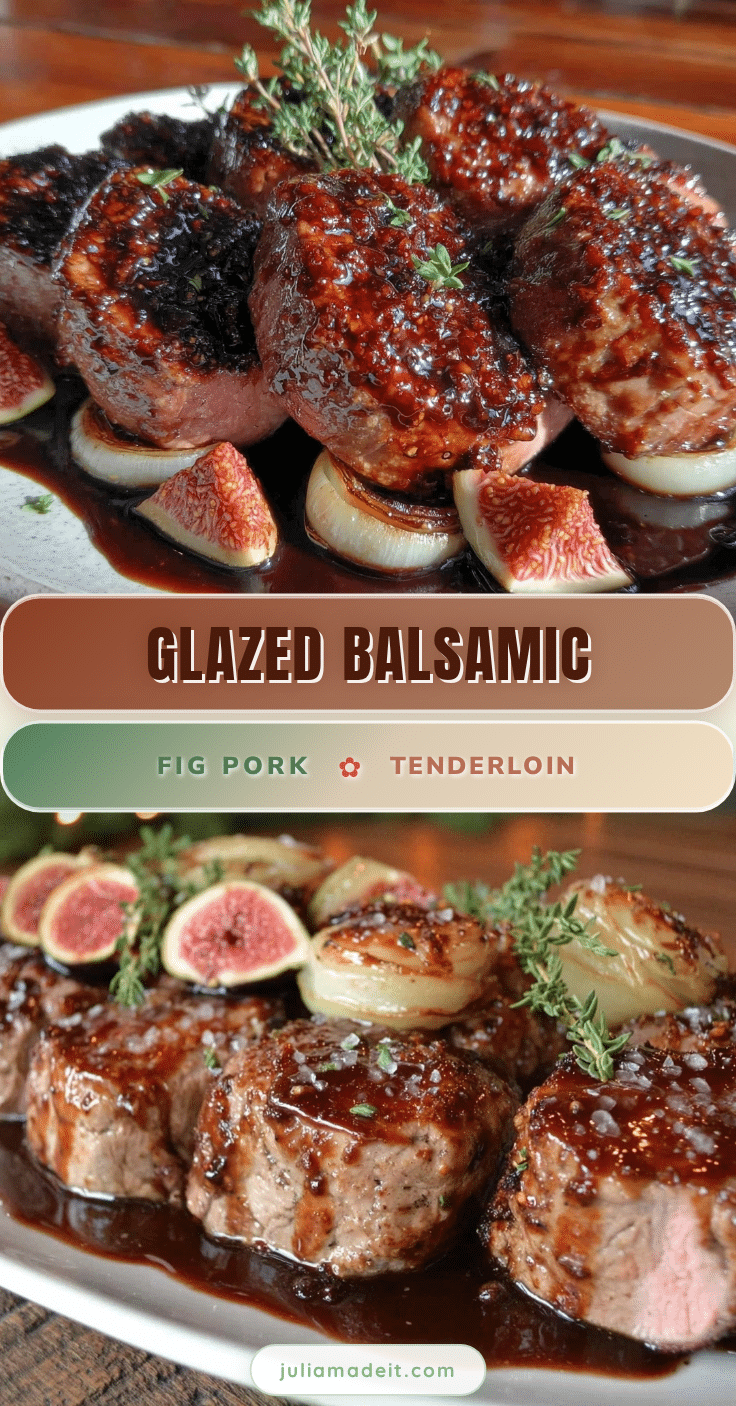
Perfect Balsamic Fig Glazed Pork Tenderloin
A juicy and tender pork tenderloin glazed with a sweet-tart balsamic fig reduction, paired with caramelized roasted shallots for a flavorful and elegant dinner.
- Prep Time: 15 minutes
- Cook Time: 30 minutes
- Total Time: 45 minutes
- Yield: 4 servings 1x
- Category: Main Course
- Cuisine: American
Ingredients
- 1.5 pounds (680 grams) pork tenderloin, trimmed
- 2 tablespoons olive oil, divided
- Salt and black pepper, to taste
- 8 small shallots, peeled and halved
- ½ cup (75 grams) dried figs, chopped
- ¼ cup (60 ml) balsamic vinegar
- 2 tablespoons honey
- 2 cloves garlic, minced
- 1 teaspoon Dijon mustard
- 1 tablespoon fresh thyme, chopped
Instructions
- Preheat your oven to 400°F (200°C).
- Pat the pork tenderloin dry with paper towels. Season generously with salt and black pepper on all sides.
- Heat 1 tablespoon olive oil in an ovenproof skillet over medium-high heat. Once shimmering, add the pork and sear for about 3-4 minutes per side until golden brown all around.
- While the pork sears, combine chopped dried figs, balsamic vinegar, honey, minced garlic, Dijon mustard, and fresh thyme in a small saucepan. Bring to a simmer over medium heat, stirring occasionally. Let it reduce gently for 8-10 minutes until thickened and syrupy.
- Toss halved shallots with remaining 1 tablespoon olive oil, salt, and pepper. Arrange them around the pork in the skillet or on a roasting pan if needed.
- Brush the pork generously with half of the fig glaze, reserving the rest for serving.
- Transfer the skillet (or pan) to the oven and roast for 15-20 minutes, or until the internal temperature of the pork reaches 145°F (63°C).
- Remove from oven, tent loosely with foil, and let rest for 10 minutes.
- Slice the pork into medallions and drizzle with the remaining balsamic fig glaze. Serve alongside the caramelized roasted shallots.
Notes
Use a meat thermometer to ensure the pork reaches 145°F for perfect juiciness. Simmer the glaze gently to avoid burning. Roast shallots separately if pan is crowded to prevent steaming. Let the pork rest before slicing to redistribute juices.
Nutrition
- Serving Size: Approximately 6 ounc
- Calories: 320
- Fat: 12
- Carbohydrates: 15
- Fiber: 2
- Protein: 35
Keywords: pork tenderloin, balsamic fig glaze, roasted shallots, easy dinner, weeknight meal, pork recipe, balsamic vinegar, dried figs